
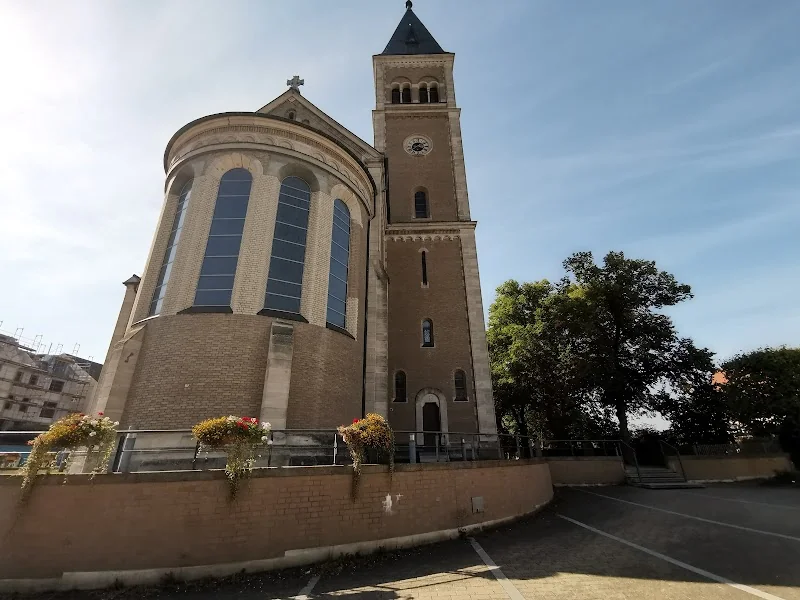
Wilhelmstraße 18, Aalen-Wasseralfingen
Wilhelmstraße 18, 73433 Aalen, Germany
St. Stephanus | Church & Wasseralfingen
St. Stephanus is much more than a church building for Wasseralfingen. The parish church connects the history of an old Catholic community with an interior that has been shaped by modern sacred art for decades. Those who enter here experience a neo-Romanesque basilica with a distinctive tower, which has grown out of the historical development of the place and is now considered a spiritual and cultural landmark of the district. At the same time, St. Stephanus is a vibrant community with services, groups, tours, and a very active community life. This mix of tradition, art, and everyday life makes the location equally attractive for visitors, believers, and architecture enthusiasts. ([se-wasseralfingen-hofen.drs.de](https://se-wasseralfingen-hofen.drs.de/kirchen-kapellen-gebaeude/wasseralfingen.html))
Services and Visiting Hours at St. Stephanus
The Catholic parish of St. Stephanus describes itself as an active community with approximately 6,800 members. In addition, there are many groups and institutions that shape life around the church. The parish newsletter, Stephanusbote, informs weekly about services and events, showing that St. Stephanus is not just a historical building, but a place with continuous daily life, lived spirituality, and many encounters. For seekers asking about services, programs, or church life in Wasseralfingen, this is a central anchor point. ([wasseralfingen.aalen.de](https://wasseralfingen.aalen.de/katholische-kirchengemeinde-st-stephanus-wasseralfingen.3165.267.htm))
The official information from the parish states clear Sunday services in the parish church of St. Stephanus in the town center: Saturday evening at 6:30 PM and Sunday at 8:30 AM and 11 AM. This means the church is not only accessible during the day but also regularly integrated into the liturgy. These times are particularly helpful for visitors who wish to combine a service with a church visit. Those who do not attend a service can visit the church during the specified opening hours in summer and winter from 8:00 AM to 6:00 PM. ([wasseralfingen.aalen.de](https://wasseralfingen.aalen.de/katholische-kirchengemeinde-st-stephanus-wasseralfingen.3165.267.htm))
The surroundings of the church also speak for a lively location. On the homepage of the pastoral unit, St. Stephanus is listed together with St. Georg Hofen as part of the new pastoral unit Braunenberg-Kochertal. This is important for orientation because visitors find not just a single church but a developed ecclesiastical space with several offerings. Those looking for a place where liturgy, pastoral care, and community life come together will find in St. Stephanus a reliable address with high continuity and clear structure. ([se-wasseralfingen-hofen.drs.de](https://se-wasseralfingen-hofen.drs.de/?utm_source=openai))
History from the Old Kirchle to the Neo-Romanesque Parish Church
The roots of St. Stephanus reach far back. The official description of the pastoral unit mentions the St. Stephanus Chapel, affectionately known as the Old Kirchle, as the original church of Wasseralfingen. It was founded in 1353 by Ulrich II of Ahelfingen. Around 1530, an expansion took place, which included a late Gothic wing altar by the Ulm painter Martin Schaffner. In 1832, another expansion was added. Shortly thereafter, the chapel of Wasseralfingen was separated from the parish association of Hofen, and St. Stephanus became an independent parish. This development shows how a small chapel has grown into a church center over centuries. ([se-wasseralfingen-hofen.drs.de](https://se-wasseralfingen-hofen.drs.de/kirchen-kapellen-gebaeude/wasseralfingen.html))
The current parish church was built between 1881 and 1883. The foundation stone was laid on November 30, 1881, the consecration followed on November 28, 1883, and the bell consecration on December 18, 1883. The church was built in the neo-Romanesque style and is described as a three-nave, monumental basilica. With its 56-meter-high tower, it is still visible from afar and is a true landmark in Wasseralfingen. Those who look at the building quickly understand why the church is referred to in official texts as the architectural landmark of the parish. ([aalen.de](https://www.aalen.de/katholische-pfarrkirche-st-stephanus.34885.htm))
This historical depth is more than mere construction history. It explains why St. Stephanus is so deeply rooted in the town. The Old Kirchle represents the long continuity of Catholic life in Wasseralfingen, while the parish church of the 19th century expresses the aspirations of a growing community. Together, both buildings tell a story of faith, expansion, and renewal. For visitors, this creates a particularly appealing contrast: here the Gothic origin site with late medieval heritage, there the large neo-Romanesque church as the representative center of modern community life. ([se-wasseralfingen-hofen.drs.de](https://se-wasseralfingen-hofen.drs.de/kirchen-kapellen-gebaeude/wasseralfingen.html))
Sieger Köder and Modern Art in the Church Space
The current appearance of the interior would hardly be conceivable without Sieger Köder. The city of Aalen describes that the main part of the modern furnishings created since 1965 goes back to the artist priest born in Wasseralfingen in 1925. Among other things, he created the wing altar, the baptismal font, two small rosettes, and the bronze works of the altar cross and the portals. It becomes clear: In St. Stephanus, art is not an accessory but a central medium of faith. Köder not only designed here but also interpreted theologically. ([aalen.de](https://www.aalen.de/katholische-pfarrkirche-st-stephanus.34885.htm))
The official church description adds two more influential names to this picture. Rudolf Walter Haegele executed the paintings of the five choir windows, while Professor Helmut Schuster designed the western rose window. Especially in connection with the lighting concept after the redesign in 1995/1996, a space is created where color, brightness, and symbolism interact closely. This is one of the great strengths of St. Stephanus: the interior is not just looked at but experienced. It is composed for movement, perception, and interpretation. ([aalen.de](https://www.aalen.de/katholische-pfarrkirche-st-stephanus.34885.htm))
The renovation and redesign phases of the 1960s and 1990s clearly show how consciously the community has engaged with the liturgy of the present. Between 1962 and 1966, the church was radically rethought as part of the Second Vatican Council; in 1995/1996, a second major reorganization took place according to the plans of the Stuttgart architects and lighting designers Kreuz + Kreuz. The goal was, among other things, to create a bright space understood as a pilgrimage church. The result is a church space that convincingly combines historical substance and modern design language. ([se-wasseralfingen-hofen.drs.de](https://se-wasseralfingen-hofen.drs.de/kirchen-kapellen-gebaeude/wasseralfingen.html))
Women’s Altar, Stained Glass Windows, and Sacred Details with Impact
Those who take the time for the details discover a remarkable density of symbols and artworks in St. Stephanus. On the front wall of the northern aisle, Sieger Köder created the so-called Women’s Altar between 2001 and 2003. It depicts women from the genealogy of Jesus as well as significant figures such as Joan of Arc, Elisabeth of Thuringia, Edith Stein, and Mother Teresa. This selection makes it clear that the altar not only has an aesthetic impact but also opens a theological and cultural-historical perspective. The connection of biblical motifs, saint history, and the present is particularly well achieved here. ([wasseralfingen.aalen.de](https://wasseralfingen.aalen.de/sieger-koeder-und-die-kunst-am-stefansplatz.33388.267.htm))
Above the Women’s Altar hovers an expressive bronze cross by Sieger Köder, symbolically summarizing the journey from life through death to resurrection. The tabernacle with its bronze doors also bears his signature. Looking back through the nave to the organ loft, the large rose window by Helmut Schuster stands out, which has the theme of the hymn to the Lamb of God. This is complemented in the entrance area by a small stained glass rosette with King David and the baptismal rosette in a side chapel. Even the bronze cover of the baptismal font is symbolically composed. ([wasseralfingen.aalen.de](https://wasseralfingen.aalen.de/sieger-koeder-und-die-kunst-am-stefansplatz.33388.267.htm))
It is also remarkable how strongly light and spatial atmosphere work together. The five tall round-arched stained glass windows in the choir unfold a nearly mystical play of colors when the light falls appropriately. This effect is one of the lasting impressions of St. Stephanus for many visitors. The church thus does not feel like a museum, but like a living spiritual space that intertwines art and liturgy. This is also a reason why tours here are so popular: they make visible how each detail is connected to the whole of the church space. ([wasseralfingen.aalen.de](https://wasseralfingen.aalen.de/sieger-koeder-und-die-kunst-am-stefansplatz.33388.267.htm))
Tours, Advent Crib, and Vibrant Community Work
St. Stephanus is not only open for quiet visits but also for tours. The official site mentions church tours for a general impression or focusing on the sacrament altar, women’s altar, or Stations of the Cross. The meeting point is the Sieger Köder bust between the church and the rectory. This shows that the community offers visitors a structured access to the art and faith language of the church. Those who want to experience the place intensively get much more than a quick tour here: the church becomes explainable, readable, and comprehensible in its theological concept. ([se-wasseralfingen-hofen.drs.de](https://se-wasseralfingen-hofen.drs.de/kirchen-kapellen-gebaeude/wasseralfingen.html))
During the Advent and Christmas season, another highlight is added: the Wasseralfingen Advent and Christmas crib. It was created by Sieger Köder and many talented artists from the community and invites visitors to discover something new during the Christmas season. The official description emphasizes that the art is hidden in the details. This is exactly what makes the charm: visitors do not experience a standardized church attraction, but a lovingly developed, locally connected crib landscape that is closely intertwined with the spiritual tradition of Wasseralfingen. ([se-wasseralfingen-hofen.drs.de](https://se-wasseralfingen-hofen.drs.de/kirchen-kapellen-gebaeude/wasseralfingen.html))
That St. Stephanus is a vibrant community is also evident in the wide range of groups and associations listed on the official homepage. The pages list, among other things, offerings for children, youth, families, seniors, church music, and social initiatives. There are also projects such as neighborhood assistance, free shop, and other forms of engagement. For SEO research, this is important: the search intention behind St. Stephanus is not only historical or tourist but often also very practical. People are looking for service times, encounters, music, pastoral care, and orientation in everyday life. St. Stephanus fulfills all these expectations at once. ([wasseralfingen.aalen.de](https://wasseralfingen.aalen.de/katholische-kirchengemeinde-st-stephanus-wasseralfingen.3165.267.htm))
Address, Directions, and Practical Information in Wasseralfingen
For a visit, the address is clear: The Catholic St. Stephanus Church is located at Wilhelmstraße 18, 73433 Aalen-Wasseralfingen. Those wishing to contact the parish or book a tour can use the parish office at Stefansplatz 7 in 73433 Aalen-Wasseralfingen. This clearly separates the church and rectory, but they are well connected within the same local context. For visitors, this address location is practical because liturgical, tourist, and organizational concerns can be clearly distinguished. ([wasseralfingen.aalen.de](https://wasseralfingen.aalen.de/katholische-st-stephanus-kirche.2668.267.htm?utm_source=openai))
The location in the town is also helpful for planning. The official information refers to the parish church in the town center. This fits with the function of St. Stephanus as the center of Catholic life in Wasseralfingen. Those planning a tour can connect the church visit with the historical surroundings: The Old Kirchle stands as the origin of the community in the background, and right by the church is the Stephanus-Saul fountain, designed by Sieger Köder in 2006. This creates a small but content-rich church and art location in the heart of the district. ([wasseralfingen.aalen.de](https://wasseralfingen.aalen.de/katholische-kirchengemeinde-st-stephanus-wasseralfingen.3165.267.htm))
Finally, it is practically important to combine clear times, reliable contacts, and a strong content density. Those who come by briefly can visit the church during the day; those who want to dive deeper should request a tour; and those who want to get to know community life can regularly find new impulses through the Stephanusbote and the homepage. For a location page, this mix of address, accessibility, cultural value, and spiritual depth is ideal. St. Stephanus is not just a point on the map but a place where history, art, and the present visibly belong together. ([se-wasseralfingen-hofen.drs.de](https://se-wasseralfingen-hofen.drs.de/kirchen-kapellen-gebaeude/wasseralfingen.html))
Sources:
- Catholic Parish of St. Stephanus, Wasseralfingen - City of Aalen ([wasseralfingen.aalen.de](https://wasseralfingen.aalen.de/katholische-kirchengemeinde-st-stephanus-wasseralfingen.3165.267.htm))
- Catholic St. Stephanus Church - City of Aalen ([wasseralfingen.aalen.de](https://wasseralfingen.aalen.de/katholische-st-stephanus-kirche.2668.267.htm?utm_source=openai))
- Sieger Köder and the Art at Stefansplatz - City of Aalen ([wasseralfingen.aalen.de](https://wasseralfingen.aalen.de/sieger-koeder-und-die-kunst-am-stefansplatz.33388.267.htm))
- Wasseralfingen - Parish Church St. Stephanus - Pastoral Unit Wasseralfingen-Hofen ([se-wasseralfingen-hofen.drs.de](https://se-wasseralfingen-hofen.drs.de/kirchen-kapellen-gebaeude/wasseralfingen.html))
- Catholic Pastoral Unit Wasseralfingen-Hofen - Homepage ([se-wasseralfingen-hofen.drs.de](https://se-wasseralfingen-hofen.drs.de/?utm_source=openai))
Show moreShow less
St. Stephanus | Church & Wasseralfingen
St. Stephanus is much more than a church building for Wasseralfingen. The parish church connects the history of an old Catholic community with an interior that has been shaped by modern sacred art for decades. Those who enter here experience a neo-Romanesque basilica with a distinctive tower, which has grown out of the historical development of the place and is now considered a spiritual and cultural landmark of the district. At the same time, St. Stephanus is a vibrant community with services, groups, tours, and a very active community life. This mix of tradition, art, and everyday life makes the location equally attractive for visitors, believers, and architecture enthusiasts. ([se-wasseralfingen-hofen.drs.de](https://se-wasseralfingen-hofen.drs.de/kirchen-kapellen-gebaeude/wasseralfingen.html))
Services and Visiting Hours at St. Stephanus
The Catholic parish of St. Stephanus describes itself as an active community with approximately 6,800 members. In addition, there are many groups and institutions that shape life around the church. The parish newsletter, Stephanusbote, informs weekly about services and events, showing that St. Stephanus is not just a historical building, but a place with continuous daily life, lived spirituality, and many encounters. For seekers asking about services, programs, or church life in Wasseralfingen, this is a central anchor point. ([wasseralfingen.aalen.de](https://wasseralfingen.aalen.de/katholische-kirchengemeinde-st-stephanus-wasseralfingen.3165.267.htm))
The official information from the parish states clear Sunday services in the parish church of St. Stephanus in the town center: Saturday evening at 6:30 PM and Sunday at 8:30 AM and 11 AM. This means the church is not only accessible during the day but also regularly integrated into the liturgy. These times are particularly helpful for visitors who wish to combine a service with a church visit. Those who do not attend a service can visit the church during the specified opening hours in summer and winter from 8:00 AM to 6:00 PM. ([wasseralfingen.aalen.de](https://wasseralfingen.aalen.de/katholische-kirchengemeinde-st-stephanus-wasseralfingen.3165.267.htm))
The surroundings of the church also speak for a lively location. On the homepage of the pastoral unit, St. Stephanus is listed together with St. Georg Hofen as part of the new pastoral unit Braunenberg-Kochertal. This is important for orientation because visitors find not just a single church but a developed ecclesiastical space with several offerings. Those looking for a place where liturgy, pastoral care, and community life come together will find in St. Stephanus a reliable address with high continuity and clear structure. ([se-wasseralfingen-hofen.drs.de](https://se-wasseralfingen-hofen.drs.de/?utm_source=openai))
History from the Old Kirchle to the Neo-Romanesque Parish Church
The roots of St. Stephanus reach far back. The official description of the pastoral unit mentions the St. Stephanus Chapel, affectionately known as the Old Kirchle, as the original church of Wasseralfingen. It was founded in 1353 by Ulrich II of Ahelfingen. Around 1530, an expansion took place, which included a late Gothic wing altar by the Ulm painter Martin Schaffner. In 1832, another expansion was added. Shortly thereafter, the chapel of Wasseralfingen was separated from the parish association of Hofen, and St. Stephanus became an independent parish. This development shows how a small chapel has grown into a church center over centuries. ([se-wasseralfingen-hofen.drs.de](https://se-wasseralfingen-hofen.drs.de/kirchen-kapellen-gebaeude/wasseralfingen.html))
The current parish church was built between 1881 and 1883. The foundation stone was laid on November 30, 1881, the consecration followed on November 28, 1883, and the bell consecration on December 18, 1883. The church was built in the neo-Romanesque style and is described as a three-nave, monumental basilica. With its 56-meter-high tower, it is still visible from afar and is a true landmark in Wasseralfingen. Those who look at the building quickly understand why the church is referred to in official texts as the architectural landmark of the parish. ([aalen.de](https://www.aalen.de/katholische-pfarrkirche-st-stephanus.34885.htm))
This historical depth is more than mere construction history. It explains why St. Stephanus is so deeply rooted in the town. The Old Kirchle represents the long continuity of Catholic life in Wasseralfingen, while the parish church of the 19th century expresses the aspirations of a growing community. Together, both buildings tell a story of faith, expansion, and renewal. For visitors, this creates a particularly appealing contrast: here the Gothic origin site with late medieval heritage, there the large neo-Romanesque church as the representative center of modern community life. ([se-wasseralfingen-hofen.drs.de](https://se-wasseralfingen-hofen.drs.de/kirchen-kapellen-gebaeude/wasseralfingen.html))
Sieger Köder and Modern Art in the Church Space
The current appearance of the interior would hardly be conceivable without Sieger Köder. The city of Aalen describes that the main part of the modern furnishings created since 1965 goes back to the artist priest born in Wasseralfingen in 1925. Among other things, he created the wing altar, the baptismal font, two small rosettes, and the bronze works of the altar cross and the portals. It becomes clear: In St. Stephanus, art is not an accessory but a central medium of faith. Köder not only designed here but also interpreted theologically. ([aalen.de](https://www.aalen.de/katholische-pfarrkirche-st-stephanus.34885.htm))
The official church description adds two more influential names to this picture. Rudolf Walter Haegele executed the paintings of the five choir windows, while Professor Helmut Schuster designed the western rose window. Especially in connection with the lighting concept after the redesign in 1995/1996, a space is created where color, brightness, and symbolism interact closely. This is one of the great strengths of St. Stephanus: the interior is not just looked at but experienced. It is composed for movement, perception, and interpretation. ([aalen.de](https://www.aalen.de/katholische-pfarrkirche-st-stephanus.34885.htm))
The renovation and redesign phases of the 1960s and 1990s clearly show how consciously the community has engaged with the liturgy of the present. Between 1962 and 1966, the church was radically rethought as part of the Second Vatican Council; in 1995/1996, a second major reorganization took place according to the plans of the Stuttgart architects and lighting designers Kreuz + Kreuz. The goal was, among other things, to create a bright space understood as a pilgrimage church. The result is a church space that convincingly combines historical substance and modern design language. ([se-wasseralfingen-hofen.drs.de](https://se-wasseralfingen-hofen.drs.de/kirchen-kapellen-gebaeude/wasseralfingen.html))
Women’s Altar, Stained Glass Windows, and Sacred Details with Impact
Those who take the time for the details discover a remarkable density of symbols and artworks in St. Stephanus. On the front wall of the northern aisle, Sieger Köder created the so-called Women’s Altar between 2001 and 2003. It depicts women from the genealogy of Jesus as well as significant figures such as Joan of Arc, Elisabeth of Thuringia, Edith Stein, and Mother Teresa. This selection makes it clear that the altar not only has an aesthetic impact but also opens a theological and cultural-historical perspective. The connection of biblical motifs, saint history, and the present is particularly well achieved here. ([wasseralfingen.aalen.de](https://wasseralfingen.aalen.de/sieger-koeder-und-die-kunst-am-stefansplatz.33388.267.htm))
Above the Women’s Altar hovers an expressive bronze cross by Sieger Köder, symbolically summarizing the journey from life through death to resurrection. The tabernacle with its bronze doors also bears his signature. Looking back through the nave to the organ loft, the large rose window by Helmut Schuster stands out, which has the theme of the hymn to the Lamb of God. This is complemented in the entrance area by a small stained glass rosette with King David and the baptismal rosette in a side chapel. Even the bronze cover of the baptismal font is symbolically composed. ([wasseralfingen.aalen.de](https://wasseralfingen.aalen.de/sieger-koeder-und-die-kunst-am-stefansplatz.33388.267.htm))
It is also remarkable how strongly light and spatial atmosphere work together. The five tall round-arched stained glass windows in the choir unfold a nearly mystical play of colors when the light falls appropriately. This effect is one of the lasting impressions of St. Stephanus for many visitors. The church thus does not feel like a museum, but like a living spiritual space that intertwines art and liturgy. This is also a reason why tours here are so popular: they make visible how each detail is connected to the whole of the church space. ([wasseralfingen.aalen.de](https://wasseralfingen.aalen.de/sieger-koeder-und-die-kunst-am-stefansplatz.33388.267.htm))
Tours, Advent Crib, and Vibrant Community Work
St. Stephanus is not only open for quiet visits but also for tours. The official site mentions church tours for a general impression or focusing on the sacrament altar, women’s altar, or Stations of the Cross. The meeting point is the Sieger Köder bust between the church and the rectory. This shows that the community offers visitors a structured access to the art and faith language of the church. Those who want to experience the place intensively get much more than a quick tour here: the church becomes explainable, readable, and comprehensible in its theological concept. ([se-wasseralfingen-hofen.drs.de](https://se-wasseralfingen-hofen.drs.de/kirchen-kapellen-gebaeude/wasseralfingen.html))
During the Advent and Christmas season, another highlight is added: the Wasseralfingen Advent and Christmas crib. It was created by Sieger Köder and many talented artists from the community and invites visitors to discover something new during the Christmas season. The official description emphasizes that the art is hidden in the details. This is exactly what makes the charm: visitors do not experience a standardized church attraction, but a lovingly developed, locally connected crib landscape that is closely intertwined with the spiritual tradition of Wasseralfingen. ([se-wasseralfingen-hofen.drs.de](https://se-wasseralfingen-hofen.drs.de/kirchen-kapellen-gebaeude/wasseralfingen.html))
That St. Stephanus is a vibrant community is also evident in the wide range of groups and associations listed on the official homepage. The pages list, among other things, offerings for children, youth, families, seniors, church music, and social initiatives. There are also projects such as neighborhood assistance, free shop, and other forms of engagement. For SEO research, this is important: the search intention behind St. Stephanus is not only historical or tourist but often also very practical. People are looking for service times, encounters, music, pastoral care, and orientation in everyday life. St. Stephanus fulfills all these expectations at once. ([wasseralfingen.aalen.de](https://wasseralfingen.aalen.de/katholische-kirchengemeinde-st-stephanus-wasseralfingen.3165.267.htm))
Address, Directions, and Practical Information in Wasseralfingen
For a visit, the address is clear: The Catholic St. Stephanus Church is located at Wilhelmstraße 18, 73433 Aalen-Wasseralfingen. Those wishing to contact the parish or book a tour can use the parish office at Stefansplatz 7 in 73433 Aalen-Wasseralfingen. This clearly separates the church and rectory, but they are well connected within the same local context. For visitors, this address location is practical because liturgical, tourist, and organizational concerns can be clearly distinguished. ([wasseralfingen.aalen.de](https://wasseralfingen.aalen.de/katholische-st-stephanus-kirche.2668.267.htm?utm_source=openai))
The location in the town is also helpful for planning. The official information refers to the parish church in the town center. This fits with the function of St. Stephanus as the center of Catholic life in Wasseralfingen. Those planning a tour can connect the church visit with the historical surroundings: The Old Kirchle stands as the origin of the community in the background, and right by the church is the Stephanus-Saul fountain, designed by Sieger Köder in 2006. This creates a small but content-rich church and art location in the heart of the district. ([wasseralfingen.aalen.de](https://wasseralfingen.aalen.de/katholische-kirchengemeinde-st-stephanus-wasseralfingen.3165.267.htm))
Finally, it is practically important to combine clear times, reliable contacts, and a strong content density. Those who come by briefly can visit the church during the day; those who want to dive deeper should request a tour; and those who want to get to know community life can regularly find new impulses through the Stephanusbote and the homepage. For a location page, this mix of address, accessibility, cultural value, and spiritual depth is ideal. St. Stephanus is not just a point on the map but a place where history, art, and the present visibly belong together. ([se-wasseralfingen-hofen.drs.de](https://se-wasseralfingen-hofen.drs.de/kirchen-kapellen-gebaeude/wasseralfingen.html))
Sources:
- Catholic Parish of St. Stephanus, Wasseralfingen - City of Aalen ([wasseralfingen.aalen.de](https://wasseralfingen.aalen.de/katholische-kirchengemeinde-st-stephanus-wasseralfingen.3165.267.htm))
- Catholic St. Stephanus Church - City of Aalen ([wasseralfingen.aalen.de](https://wasseralfingen.aalen.de/katholische-st-stephanus-kirche.2668.267.htm?utm_source=openai))
- Sieger Köder and the Art at Stefansplatz - City of Aalen ([wasseralfingen.aalen.de](https://wasseralfingen.aalen.de/sieger-koeder-und-die-kunst-am-stefansplatz.33388.267.htm))
- Wasseralfingen - Parish Church St. Stephanus - Pastoral Unit Wasseralfingen-Hofen ([se-wasseralfingen-hofen.drs.de](https://se-wasseralfingen-hofen.drs.de/kirchen-kapellen-gebaeude/wasseralfingen.html))
- Catholic Pastoral Unit Wasseralfingen-Hofen - Homepage ([se-wasseralfingen-hofen.drs.de](https://se-wasseralfingen-hofen.drs.de/?utm_source=openai))
St. Stephanus | Church & Wasseralfingen
St. Stephanus is much more than a church building for Wasseralfingen. The parish church connects the history of an old Catholic community with an interior that has been shaped by modern sacred art for decades. Those who enter here experience a neo-Romanesque basilica with a distinctive tower, which has grown out of the historical development of the place and is now considered a spiritual and cultural landmark of the district. At the same time, St. Stephanus is a vibrant community with services, groups, tours, and a very active community life. This mix of tradition, art, and everyday life makes the location equally attractive for visitors, believers, and architecture enthusiasts. ([se-wasseralfingen-hofen.drs.de](https://se-wasseralfingen-hofen.drs.de/kirchen-kapellen-gebaeude/wasseralfingen.html))
Services and Visiting Hours at St. Stephanus
The Catholic parish of St. Stephanus describes itself as an active community with approximately 6,800 members. In addition, there are many groups and institutions that shape life around the church. The parish newsletter, Stephanusbote, informs weekly about services and events, showing that St. Stephanus is not just a historical building, but a place with continuous daily life, lived spirituality, and many encounters. For seekers asking about services, programs, or church life in Wasseralfingen, this is a central anchor point. ([wasseralfingen.aalen.de](https://wasseralfingen.aalen.de/katholische-kirchengemeinde-st-stephanus-wasseralfingen.3165.267.htm))
The official information from the parish states clear Sunday services in the parish church of St. Stephanus in the town center: Saturday evening at 6:30 PM and Sunday at 8:30 AM and 11 AM. This means the church is not only accessible during the day but also regularly integrated into the liturgy. These times are particularly helpful for visitors who wish to combine a service with a church visit. Those who do not attend a service can visit the church during the specified opening hours in summer and winter from 8:00 AM to 6:00 PM. ([wasseralfingen.aalen.de](https://wasseralfingen.aalen.de/katholische-kirchengemeinde-st-stephanus-wasseralfingen.3165.267.htm))
The surroundings of the church also speak for a lively location. On the homepage of the pastoral unit, St. Stephanus is listed together with St. Georg Hofen as part of the new pastoral unit Braunenberg-Kochertal. This is important for orientation because visitors find not just a single church but a developed ecclesiastical space with several offerings. Those looking for a place where liturgy, pastoral care, and community life come together will find in St. Stephanus a reliable address with high continuity and clear structure. ([se-wasseralfingen-hofen.drs.de](https://se-wasseralfingen-hofen.drs.de/?utm_source=openai))
History from the Old Kirchle to the Neo-Romanesque Parish Church
The roots of St. Stephanus reach far back. The official description of the pastoral unit mentions the St. Stephanus Chapel, affectionately known as the Old Kirchle, as the original church of Wasseralfingen. It was founded in 1353 by Ulrich II of Ahelfingen. Around 1530, an expansion took place, which included a late Gothic wing altar by the Ulm painter Martin Schaffner. In 1832, another expansion was added. Shortly thereafter, the chapel of Wasseralfingen was separated from the parish association of Hofen, and St. Stephanus became an independent parish. This development shows how a small chapel has grown into a church center over centuries. ([se-wasseralfingen-hofen.drs.de](https://se-wasseralfingen-hofen.drs.de/kirchen-kapellen-gebaeude/wasseralfingen.html))
The current parish church was built between 1881 and 1883. The foundation stone was laid on November 30, 1881, the consecration followed on November 28, 1883, and the bell consecration on December 18, 1883. The church was built in the neo-Romanesque style and is described as a three-nave, monumental basilica. With its 56-meter-high tower, it is still visible from afar and is a true landmark in Wasseralfingen. Those who look at the building quickly understand why the church is referred to in official texts as the architectural landmark of the parish. ([aalen.de](https://www.aalen.de/katholische-pfarrkirche-st-stephanus.34885.htm))
This historical depth is more than mere construction history. It explains why St. Stephanus is so deeply rooted in the town. The Old Kirchle represents the long continuity of Catholic life in Wasseralfingen, while the parish church of the 19th century expresses the aspirations of a growing community. Together, both buildings tell a story of faith, expansion, and renewal. For visitors, this creates a particularly appealing contrast: here the Gothic origin site with late medieval heritage, there the large neo-Romanesque church as the representative center of modern community life. ([se-wasseralfingen-hofen.drs.de](https://se-wasseralfingen-hofen.drs.de/kirchen-kapellen-gebaeude/wasseralfingen.html))
Sieger Köder and Modern Art in the Church Space
The current appearance of the interior would hardly be conceivable without Sieger Köder. The city of Aalen describes that the main part of the modern furnishings created since 1965 goes back to the artist priest born in Wasseralfingen in 1925. Among other things, he created the wing altar, the baptismal font, two small rosettes, and the bronze works of the altar cross and the portals. It becomes clear: In St. Stephanus, art is not an accessory but a central medium of faith. Köder not only designed here but also interpreted theologically. ([aalen.de](https://www.aalen.de/katholische-pfarrkirche-st-stephanus.34885.htm))
The official church description adds two more influential names to this picture. Rudolf Walter Haegele executed the paintings of the five choir windows, while Professor Helmut Schuster designed the western rose window. Especially in connection with the lighting concept after the redesign in 1995/1996, a space is created where color, brightness, and symbolism interact closely. This is one of the great strengths of St. Stephanus: the interior is not just looked at but experienced. It is composed for movement, perception, and interpretation. ([aalen.de](https://www.aalen.de/katholische-pfarrkirche-st-stephanus.34885.htm))
The renovation and redesign phases of the 1960s and 1990s clearly show how consciously the community has engaged with the liturgy of the present. Between 1962 and 1966, the church was radically rethought as part of the Second Vatican Council; in 1995/1996, a second major reorganization took place according to the plans of the Stuttgart architects and lighting designers Kreuz + Kreuz. The goal was, among other things, to create a bright space understood as a pilgrimage church. The result is a church space that convincingly combines historical substance and modern design language. ([se-wasseralfingen-hofen.drs.de](https://se-wasseralfingen-hofen.drs.de/kirchen-kapellen-gebaeude/wasseralfingen.html))
Women’s Altar, Stained Glass Windows, and Sacred Details with Impact
Those who take the time for the details discover a remarkable density of symbols and artworks in St. Stephanus. On the front wall of the northern aisle, Sieger Köder created the so-called Women’s Altar between 2001 and 2003. It depicts women from the genealogy of Jesus as well as significant figures such as Joan of Arc, Elisabeth of Thuringia, Edith Stein, and Mother Teresa. This selection makes it clear that the altar not only has an aesthetic impact but also opens a theological and cultural-historical perspective. The connection of biblical motifs, saint history, and the present is particularly well achieved here. ([wasseralfingen.aalen.de](https://wasseralfingen.aalen.de/sieger-koeder-und-die-kunst-am-stefansplatz.33388.267.htm))
Above the Women’s Altar hovers an expressive bronze cross by Sieger Köder, symbolically summarizing the journey from life through death to resurrection. The tabernacle with its bronze doors also bears his signature. Looking back through the nave to the organ loft, the large rose window by Helmut Schuster stands out, which has the theme of the hymn to the Lamb of God. This is complemented in the entrance area by a small stained glass rosette with King David and the baptismal rosette in a side chapel. Even the bronze cover of the baptismal font is symbolically composed. ([wasseralfingen.aalen.de](https://wasseralfingen.aalen.de/sieger-koeder-und-die-kunst-am-stefansplatz.33388.267.htm))
It is also remarkable how strongly light and spatial atmosphere work together. The five tall round-arched stained glass windows in the choir unfold a nearly mystical play of colors when the light falls appropriately. This effect is one of the lasting impressions of St. Stephanus for many visitors. The church thus does not feel like a museum, but like a living spiritual space that intertwines art and liturgy. This is also a reason why tours here are so popular: they make visible how each detail is connected to the whole of the church space. ([wasseralfingen.aalen.de](https://wasseralfingen.aalen.de/sieger-koeder-und-die-kunst-am-stefansplatz.33388.267.htm))
Tours, Advent Crib, and Vibrant Community Work
St. Stephanus is not only open for quiet visits but also for tours. The official site mentions church tours for a general impression or focusing on the sacrament altar, women’s altar, or Stations of the Cross. The meeting point is the Sieger Köder bust between the church and the rectory. This shows that the community offers visitors a structured access to the art and faith language of the church. Those who want to experience the place intensively get much more than a quick tour here: the church becomes explainable, readable, and comprehensible in its theological concept. ([se-wasseralfingen-hofen.drs.de](https://se-wasseralfingen-hofen.drs.de/kirchen-kapellen-gebaeude/wasseralfingen.html))
During the Advent and Christmas season, another highlight is added: the Wasseralfingen Advent and Christmas crib. It was created by Sieger Köder and many talented artists from the community and invites visitors to discover something new during the Christmas season. The official description emphasizes that the art is hidden in the details. This is exactly what makes the charm: visitors do not experience a standardized church attraction, but a lovingly developed, locally connected crib landscape that is closely intertwined with the spiritual tradition of Wasseralfingen. ([se-wasseralfingen-hofen.drs.de](https://se-wasseralfingen-hofen.drs.de/kirchen-kapellen-gebaeude/wasseralfingen.html))
That St. Stephanus is a vibrant community is also evident in the wide range of groups and associations listed on the official homepage. The pages list, among other things, offerings for children, youth, families, seniors, church music, and social initiatives. There are also projects such as neighborhood assistance, free shop, and other forms of engagement. For SEO research, this is important: the search intention behind St. Stephanus is not only historical or tourist but often also very practical. People are looking for service times, encounters, music, pastoral care, and orientation in everyday life. St. Stephanus fulfills all these expectations at once. ([wasseralfingen.aalen.de](https://wasseralfingen.aalen.de/katholische-kirchengemeinde-st-stephanus-wasseralfingen.3165.267.htm))
Address, Directions, and Practical Information in Wasseralfingen
For a visit, the address is clear: The Catholic St. Stephanus Church is located at Wilhelmstraße 18, 73433 Aalen-Wasseralfingen. Those wishing to contact the parish or book a tour can use the parish office at Stefansplatz 7 in 73433 Aalen-Wasseralfingen. This clearly separates the church and rectory, but they are well connected within the same local context. For visitors, this address location is practical because liturgical, tourist, and organizational concerns can be clearly distinguished. ([wasseralfingen.aalen.de](https://wasseralfingen.aalen.de/katholische-st-stephanus-kirche.2668.267.htm?utm_source=openai))
The location in the town is also helpful for planning. The official information refers to the parish church in the town center. This fits with the function of St. Stephanus as the center of Catholic life in Wasseralfingen. Those planning a tour can connect the church visit with the historical surroundings: The Old Kirchle stands as the origin of the community in the background, and right by the church is the Stephanus-Saul fountain, designed by Sieger Köder in 2006. This creates a small but content-rich church and art location in the heart of the district. ([wasseralfingen.aalen.de](https://wasseralfingen.aalen.de/katholische-kirchengemeinde-st-stephanus-wasseralfingen.3165.267.htm))
Finally, it is practically important to combine clear times, reliable contacts, and a strong content density. Those who come by briefly can visit the church during the day; those who want to dive deeper should request a tour; and those who want to get to know community life can regularly find new impulses through the Stephanusbote and the homepage. For a location page, this mix of address, accessibility, cultural value, and spiritual depth is ideal. St. Stephanus is not just a point on the map but a place where history, art, and the present visibly belong together. ([se-wasseralfingen-hofen.drs.de](https://se-wasseralfingen-hofen.drs.de/kirchen-kapellen-gebaeude/wasseralfingen.html))
Sources:
- Catholic Parish of St. Stephanus, Wasseralfingen - City of Aalen ([wasseralfingen.aalen.de](https://wasseralfingen.aalen.de/katholische-kirchengemeinde-st-stephanus-wasseralfingen.3165.267.htm))
- Catholic St. Stephanus Church - City of Aalen ([wasseralfingen.aalen.de](https://wasseralfingen.aalen.de/katholische-st-stephanus-kirche.2668.267.htm?utm_source=openai))
- Sieger Köder and the Art at Stefansplatz - City of Aalen ([wasseralfingen.aalen.de](https://wasseralfingen.aalen.de/sieger-koeder-und-die-kunst-am-stefansplatz.33388.267.htm))
- Wasseralfingen - Parish Church St. Stephanus - Pastoral Unit Wasseralfingen-Hofen ([se-wasseralfingen-hofen.drs.de](https://se-wasseralfingen-hofen.drs.de/kirchen-kapellen-gebaeude/wasseralfingen.html))
- Catholic Pastoral Unit Wasseralfingen-Hofen - Homepage ([se-wasseralfingen-hofen.drs.de](https://se-wasseralfingen-hofen.drs.de/?utm_source=openai))
Frequently Asked Questions
Reviews
Rakesh Bethi
24. July 2019
Good to visit in the time of fest.
Vivek Joshi
22. February 2020
A local church
Johnny F.
4. August 2024
This Catholic church dates back to 1883 and was built in the Neo-Romanesque style by Felix von Berner, the Stuttgart court architect, after some modifications had been made, as the original chapel had become too small. Personally, I find the atmosphere quite pleasant and the lighting is truly impressive, but I do feel it lacks a few more works of art or paintings. Total stay in Aalen: 5.34 hours + approximately 50 minutes in the Wasseralfingen district.
Rudolf Drasch
14. July 2019
A very special church. Modern and with paintings by Siger Köder. And a pastor who preaches exceptionally well. He addresses current topics and engages visitors in his interpretation of the Gospel. It's not without reason that ZDF broadcast the Sunday service for the second time today.
Stefan Geist
1. October 2024
My church in my hometown, also named after my patron saint. A modern, open church. With the beautifully designed Stations of the Cross by the well-known priest and artist S. Köder. The Nativity scene at Christmas is also one of the most beautiful for me.