
Aalen
Wilhelmstraße 59, 73433 Aalen, Deutschland
SHW Foundry Monument | Stove Plate Museum & Art Casting
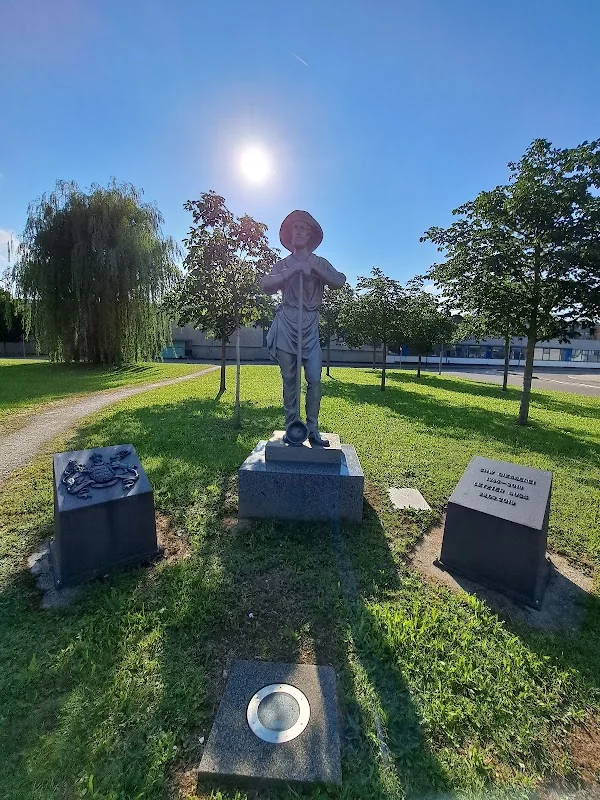
The SHW Foundry Monument in Aalen-Wasseralfingen is much more than a name from industrial history. It represents a place where mining heritage, technical development, artisanal precision, and cultural memory have condensed over many generations. Those searching for SHW Foundry, SHW Foundry Königsbronn, or SHW Foundry GmbH will quickly encounter a historically grown network of ore extraction, metallurgy, casting technology, and today's industry. The city of Aalen describes Wasseralfingen as a place with a strong connection to iron processing; SHW itself refers to its founding in the 14th century, making it one of the oldest industrial enterprises in Germany. This long history makes the monument at Wilhelmstraße 59 so interesting: Here, not only is the past preserved, but an industrial heritage is made visible that continues to shape the region today. ([shw.de](https://www.shw.de/de/unternehmen/standorte/aalen-wasseralfingen/))
The charm of this place lies in the connection between authenticity and narrative power. The monument is part of a historical complex that depicts the transition from iron smelting to iron processing, from traditional foundry to modern industrial enterprise, and from functional production to a culturally charged memorial site. For visitors interested in industrial culture, local history, stove plate museums, iron art casting, or the SHW model collection, Aalen-Wasseralfingen is a particularly dense destination. The significance of the site ranges from the early iron industry in the Kocher and Brenz region to today's forms of preservation and mediation. This is precisely why the SHW Foundry Monument works so well as an SEO topic: It connects a specific place with strong search terms, a clear historical core, and real added value for all those who want to discover industrial culture in Southern Germany. ([eisenfreunde1365.de](https://www.eisenfreunde1365.de/geschichte.php))
History of the Ironworks in Wasseralfingen
The history of the site does not begin with the foundry of the 19th century, but much earlier. The Eisenfreunde 1365 document the first recorded mention of iron extraction and processing in the year 1365. Later, additional ironworks and smithing locations emerged in the broader area of the Brenz and Kocher valleys, including Königsbronn, Oberkochen, and Wasseralfingen. For Wasseralfingen, the start of blast furnace operations in 1671 is particularly important; this established the place as a central focal point of regional iron production. When the area transitioned to the Duchy of Württemberg in 1803, the administrative and production structure changed, and in 1811, the royal main foundry was established in the Wasseralfingen ironworks. This date is key for today's monument as it marks the transition from older smelting to a more specialized casting production. ([eisenfreunde1365.de](https://www.eisenfreunde1365.de/geschichte.php))
In the following decades, the site was further expanded and technically modernized. In 1817, the mechanical workshop was added, in 1843 the first steam engine was installed, in 1855 followed the puddling and rolling mill, and in 1861 the ironworks received a railway connection. This development shows how closely Wasseralfingen was linked to the industrialization of Württemberg. The monument thus represents not just a single building, but an entire historical production and knowledge system that has grown over centuries. Search queries related to SHW Foundry GmbH & Co. KG or SHW Foundry GmbH reflect this tension between tradition and corporate history. The city of Aalen also emphasizes that Wasseralfingen was decisively shaped by ironworks, mining, and metallurgy, and that the site today is one of the oldest industrial contexts in the country. To understand the history of the monument, one must therefore look not only at the architecture but also at the long chain of ore discovery, blast furnace, workshop, steam engine, and industrial specialization. ([eisenfreunde1365.de](https://www.eisenfreunde1365.de/geschichte.php))
Stove Plate Museum and Iron Art Casting
The perhaps most fascinating aspect of the SHW Foundry Monument is its proximity to the Stove Plate Museum and the tradition of iron art casting. The Eisenfreunde 1365 describe that art casting in Wasseralfingen remained a niche product, even after the company increasingly focused on iron processing with the founding of the Swabian Ironworks. In addition to rational large and machine casting, the plant also produced machine tools, switches, and wheel sets, but the art foundry survived as a special cultural branch. This tradition was supported, among others, by Paul Reusch, who promoted the preservation of local iron art casting and later had birthday plates cast in Wasseralfingen. This not only created a technical heritage but also an aesthetic legacy that possesses a rare density in Germany. ([eisenfreunde1365.de](https://www.eisenfreunde1365.de/kunstguss.php))
For today's perception of the place, it is crucial that a highly regarded collection emerged from its own holdings and through purchases in the 1930s. In 1939, it became part of a factory museum established at the Wasseralfingen site and was later included in the monument book. In the historic storage building of the former foundry, one of the most extensive collections of cast iron stove plates and iron art casting in Germany is now preserved. The city of Aalen emphasizes that this collection is not only technically interesting but also documents the artistic development of decoration. This is precisely why the Stove Plate Museum is so important for the keyword profile: Those searching for Stove Plate Museum, Iron Art Casting, or Iron Casting Collection do not expect just individual exhibits but a comprehensible story about form, function, material, and design. The monument provides this story in an authentic environment because the historical material is preserved not in a random exhibition hall but in a former operational context. The place also tells how industrial history can be transformed into a cultural memory without losing its technical origins. ([eisenfreunde1365.de](https://www.eisenfreunde1365.de/kunstguss.php))
Model Collection, Factory Museum, and Monument Value
The SHW model collection is another core term that makes the monument particularly strong from an SEO perspective. The conference of the Eisenfreunde 1365 in 2025 explicitly focused on the model collection of the Swabian Ironworks and connected it with excursions to the stove plate and model magazine in Aalen-Wasseralfingen. This shows that it is not just a local memory but a regionally relevant cultural asset. The collection is closely linked to the historical plant and is part of a larger industrial archive of models, molds, plates, and art casting pieces. For researchers, local historians, and museum enthusiasts, it is therefore a key to the material and design history of the ironworks. The city of Aalen and the Eisenfreunde repeatedly emphasize that the collection is extraordinary due to its density and diversity. ([eisenfreunde1365.de](https://www.eisenfreunde1365.de/articles/20241126_kolloquium/index.php))
The monument value arises not only from the age of individual objects but from the interplay of place, collection, and transmission. The historic storage building itself is a testament to industrial use, as it once housed materials and models that kept the production process alive. Today, this connection is made readable for the public: The collection illustrates not only the technical advancement of casting technology but also the artistic development of ornamentation and decoration. At this point, the search interest of many people who search for SHW Foundry Monument, SHW Foundry GmbH, or SHW Foundry Königsbronn converges: They want to understand the connection between a well-known industrial company and its historical roots. The model collection provides the appropriate image for this. It makes visible how forms are created, how models standardize production, and how art casting found its place in the industrial age. The monument is thus an identity-forming place that tells not only of past work but also of the knowledge that made this work possible. ([eisenfreunde1365.de](https://www.eisenfreunde1365.de/articles/20241126_kolloquium/index.php))
SHW Today: From Traditional Works to Modern Industrial Corporation
Today, SHW AG continues this history in another way. On the official site for Aalen, the company describes its roots in the 14th century and refers to itself as one of the oldest industrial enterprises in Germany. At the same time, SHW today operates as a modern automotive supplier with products for pumps, engine components, and brake discs. At the Aalen site, SHW AG is located at Stiewingstraße 111; this is also where the Swabian Ironworks Automotive GmbH as the administration of the group and SHW Powder Systems GmbH in the field of powder metallurgy are based. This makes it clear that the name SHW is not just a historical memory but continues to be an active economic term with an industrial future. ([shw.de](https://www.shw.de/de/unternehmen/standorte/aalen-wasseralfingen/))
For the monument, this present is important because it does not sever the historical line. Particularly in Aalen-Wasseralfingen, it becomes visible how iron processing, foundry, and metal tradition could evolve into a modern technology company. The city describes Wasseralfingen as a place whose development has been shaped by mining and metallurgy for centuries. The more recent history also recalls breaks: In 2019, the production of iron art casting ended in Wasseralfingen, after which employees drew attention to the closure with a protest sign. This shows that the topic is not museum-like and frozen but possesses social relevance even today. Those searching for SHW Foundry GmbH & Co. KG or SHW Foundry GmbH often want to understand exactly this bridge: How does a traditional foundry fit into a modern industrial corporation, and what remains of the artisanal identity? The monument answers this question with history rather than assertion. It shows that industrial identity is more than just production; it consists of memory, places, objects, and people who carry on the knowledge. ([shw.de](https://www.shw.de/de/unternehmen/standorte/aalen-wasseralfingen/))
Location in Aalen-Wasseralfingen and Industrial Environment
The location also contributes significantly to the impact of the SHW Foundry Monument. Wasseralfingen lies at the foot of the Braunenberg and is the largest district of Aalen. The city of Aalen describes the place as being closely connected to ironworks, mining, and metallurgy for centuries. This landscape is not a neutral background but part of the history itself. Those moving through here traverse an urban space shaped by ore mining to modern industrial culture. Therefore, the monument thematically fits with other places in the region, such as visitor mines and industrial memorial sites. Aalen emphasizes that Wasseralfingen is particularly vividly presented with the Winter Museum and the visitor mine Tiefer Stollen. The SHW monument integrates into this historical network and expands it to include the area of foundry and art casting history. ([aalen.de](https://www.aalen.de/wasseralfingen.36824.htm?utm_source=openai))
For search intent, the location in Aalen is particularly relevant because many users search for location, surroundings, and historical context. This does not necessarily mean a classic event location with a hall plan or ticket shop, but rather a place with cultural depth and museum character. In this context, the SHW Foundry Monument is a clear anchor point for terms like Wasseralfingen, Aalen, industrial history Ostalb, and historic storage building. The connection between local history and corporate history is particularly strong because it generates concrete images: blast furnace, foundry, model magazine, stove plates, art casting, and the long tradition of metallurgy. Those who understand the location also understand the meaning of the monument. It is not an isolated object but part of a grown industrial geography. This is precisely what makes the region around Aalen so attractive for those interested in cultural history: Here, one can not only visit a single monument but trace an entire narrative of ore, work, technology, and design. ([aalen.de](https://www.aalen.de/wasseralfingen.36824.htm?utm_source=openai))
Visit, Tours, and Orientation
The SHW Foundry Monument is primarily to be understood as a memorial and research site that remains vibrant through tours, special events, and themed activities. The city of Aalen showcased the historic storage building on the Day of Open Monuments, making it clear that it is a publicly communicated cultural asset. The Eisenfreunde 1365 also organized a conference in 2025 on the iron industry in East Württemberg and the SHW model collection, including excursions to the stove plate and model magazine. Such formats are important because they do not limit access to mere viewing but convey background knowledge, material references, and regional contexts. Therefore, those searching for a classic event location will discover a different but very valuable type of place here: a monument that connects knowledge, collection, and history. ([wasseralfingen.aalen.de](https://wasseralfingen.aalen.de/tag-des-offenen-denkmals.217872.267.htm))
For visitors, the strength of the place lies in the combination of a concrete object and a grand narrative. One does not simply see old cast iron pieces but understands why they exist, how they were created, and why they are preserved. This is valuable for both SEO and user expectations, as search queries like SHW Foundry, Stove Plate Museum, or SHW Model Collection usually aim for real orientation. Those searching for historical traces on-site should view the monument in the broader context of Wasseralfingen: in the environment of mining, metallurgy, and the still visible industrial memory culture. The city of Aalen describes the place as identity-forming and highlights the long development of the site. This is where the special quality of this monument lies: It is not loud, not spectacular in the event sense, but strong in its message. It conveys the history of a place made of iron that continues to tell of iron to this day. ([aalen.de](https://www.aalen.de/wasseralfingen.36824.htm?utm_source=openai))
Sources:
- Eisenfreunde 1365 – History of the Ironworks ([eisenfreunde1365.de](https://www.eisenfreunde1365.de/geschichte.php))
- Eisenfreunde 1365 – Iron Art Casting on the Ostalb ([eisenfreunde1365.de](https://www.eisenfreunde1365.de/kunstguss.php))
- Eisenfreunde 1365 – Conference on the Iron Industry in East Württemberg and the SHW Model Collection ([eisenfreunde1365.de](https://www.eisenfreunde1365.de/articles/20241126_kolloquium/index.php))
- City of Aalen – Day of Open Monuments in Wasseralfingen ([wasseralfingen.aalen.de](https://wasseralfingen.aalen.de/tag-des-offenen-denkmals.217872.267.htm))
- SHW AG – Location Aalen-Wasseralfingen ([shw.de](https://www.shw.de/de/unternehmen/standorte/aalen-wasseralfingen/))
- City of Aalen – Wasseralfingen ([aalen.de](https://www.aalen.de/wasseralfingen.36824.htm?utm_source=openai))
- City of Aalen – Exhibition The Last Cast ([wasseralfingen.aalen.de](https://wasseralfingen.aalen.de/ausstellung-der-letzte-guss.166264.267.htm?utm_source=openai))
Show moreShow less
SHW Foundry Monument | Stove Plate Museum & Art Casting
The SHW Foundry Monument in Aalen-Wasseralfingen is much more than a name from industrial history. It represents a place where mining heritage, technical development, artisanal precision, and cultural memory have condensed over many generations. Those searching for SHW Foundry, SHW Foundry Königsbronn, or SHW Foundry GmbH will quickly encounter a historically grown network of ore extraction, metallurgy, casting technology, and today's industry. The city of Aalen describes Wasseralfingen as a place with a strong connection to iron processing; SHW itself refers to its founding in the 14th century, making it one of the oldest industrial enterprises in Germany. This long history makes the monument at Wilhelmstraße 59 so interesting: Here, not only is the past preserved, but an industrial heritage is made visible that continues to shape the region today. ([shw.de](https://www.shw.de/de/unternehmen/standorte/aalen-wasseralfingen/))
The charm of this place lies in the connection between authenticity and narrative power. The monument is part of a historical complex that depicts the transition from iron smelting to iron processing, from traditional foundry to modern industrial enterprise, and from functional production to a culturally charged memorial site. For visitors interested in industrial culture, local history, stove plate museums, iron art casting, or the SHW model collection, Aalen-Wasseralfingen is a particularly dense destination. The significance of the site ranges from the early iron industry in the Kocher and Brenz region to today's forms of preservation and mediation. This is precisely why the SHW Foundry Monument works so well as an SEO topic: It connects a specific place with strong search terms, a clear historical core, and real added value for all those who want to discover industrial culture in Southern Germany. ([eisenfreunde1365.de](https://www.eisenfreunde1365.de/geschichte.php))
History of the Ironworks in Wasseralfingen
The history of the site does not begin with the foundry of the 19th century, but much earlier. The Eisenfreunde 1365 document the first recorded mention of iron extraction and processing in the year 1365. Later, additional ironworks and smithing locations emerged in the broader area of the Brenz and Kocher valleys, including Königsbronn, Oberkochen, and Wasseralfingen. For Wasseralfingen, the start of blast furnace operations in 1671 is particularly important; this established the place as a central focal point of regional iron production. When the area transitioned to the Duchy of Württemberg in 1803, the administrative and production structure changed, and in 1811, the royal main foundry was established in the Wasseralfingen ironworks. This date is key for today's monument as it marks the transition from older smelting to a more specialized casting production. ([eisenfreunde1365.de](https://www.eisenfreunde1365.de/geschichte.php))
In the following decades, the site was further expanded and technically modernized. In 1817, the mechanical workshop was added, in 1843 the first steam engine was installed, in 1855 followed the puddling and rolling mill, and in 1861 the ironworks received a railway connection. This development shows how closely Wasseralfingen was linked to the industrialization of Württemberg. The monument thus represents not just a single building, but an entire historical production and knowledge system that has grown over centuries. Search queries related to SHW Foundry GmbH & Co. KG or SHW Foundry GmbH reflect this tension between tradition and corporate history. The city of Aalen also emphasizes that Wasseralfingen was decisively shaped by ironworks, mining, and metallurgy, and that the site today is one of the oldest industrial contexts in the country. To understand the history of the monument, one must therefore look not only at the architecture but also at the long chain of ore discovery, blast furnace, workshop, steam engine, and industrial specialization. ([eisenfreunde1365.de](https://www.eisenfreunde1365.de/geschichte.php))
Stove Plate Museum and Iron Art Casting
The perhaps most fascinating aspect of the SHW Foundry Monument is its proximity to the Stove Plate Museum and the tradition of iron art casting. The Eisenfreunde 1365 describe that art casting in Wasseralfingen remained a niche product, even after the company increasingly focused on iron processing with the founding of the Swabian Ironworks. In addition to rational large and machine casting, the plant also produced machine tools, switches, and wheel sets, but the art foundry survived as a special cultural branch. This tradition was supported, among others, by Paul Reusch, who promoted the preservation of local iron art casting and later had birthday plates cast in Wasseralfingen. This not only created a technical heritage but also an aesthetic legacy that possesses a rare density in Germany. ([eisenfreunde1365.de](https://www.eisenfreunde1365.de/kunstguss.php))
For today's perception of the place, it is crucial that a highly regarded collection emerged from its own holdings and through purchases in the 1930s. In 1939, it became part of a factory museum established at the Wasseralfingen site and was later included in the monument book. In the historic storage building of the former foundry, one of the most extensive collections of cast iron stove plates and iron art casting in Germany is now preserved. The city of Aalen emphasizes that this collection is not only technically interesting but also documents the artistic development of decoration. This is precisely why the Stove Plate Museum is so important for the keyword profile: Those searching for Stove Plate Museum, Iron Art Casting, or Iron Casting Collection do not expect just individual exhibits but a comprehensible story about form, function, material, and design. The monument provides this story in an authentic environment because the historical material is preserved not in a random exhibition hall but in a former operational context. The place also tells how industrial history can be transformed into a cultural memory without losing its technical origins. ([eisenfreunde1365.de](https://www.eisenfreunde1365.de/kunstguss.php))
Model Collection, Factory Museum, and Monument Value
The SHW model collection is another core term that makes the monument particularly strong from an SEO perspective. The conference of the Eisenfreunde 1365 in 2025 explicitly focused on the model collection of the Swabian Ironworks and connected it with excursions to the stove plate and model magazine in Aalen-Wasseralfingen. This shows that it is not just a local memory but a regionally relevant cultural asset. The collection is closely linked to the historical plant and is part of a larger industrial archive of models, molds, plates, and art casting pieces. For researchers, local historians, and museum enthusiasts, it is therefore a key to the material and design history of the ironworks. The city of Aalen and the Eisenfreunde repeatedly emphasize that the collection is extraordinary due to its density and diversity. ([eisenfreunde1365.de](https://www.eisenfreunde1365.de/articles/20241126_kolloquium/index.php))
The monument value arises not only from the age of individual objects but from the interplay of place, collection, and transmission. The historic storage building itself is a testament to industrial use, as it once housed materials and models that kept the production process alive. Today, this connection is made readable for the public: The collection illustrates not only the technical advancement of casting technology but also the artistic development of ornamentation and decoration. At this point, the search interest of many people who search for SHW Foundry Monument, SHW Foundry GmbH, or SHW Foundry Königsbronn converges: They want to understand the connection between a well-known industrial company and its historical roots. The model collection provides the appropriate image for this. It makes visible how forms are created, how models standardize production, and how art casting found its place in the industrial age. The monument is thus an identity-forming place that tells not only of past work but also of the knowledge that made this work possible. ([eisenfreunde1365.de](https://www.eisenfreunde1365.de/articles/20241126_kolloquium/index.php))
SHW Today: From Traditional Works to Modern Industrial Corporation
Today, SHW AG continues this history in another way. On the official site for Aalen, the company describes its roots in the 14th century and refers to itself as one of the oldest industrial enterprises in Germany. At the same time, SHW today operates as a modern automotive supplier with products for pumps, engine components, and brake discs. At the Aalen site, SHW AG is located at Stiewingstraße 111; this is also where the Swabian Ironworks Automotive GmbH as the administration of the group and SHW Powder Systems GmbH in the field of powder metallurgy are based. This makes it clear that the name SHW is not just a historical memory but continues to be an active economic term with an industrial future. ([shw.de](https://www.shw.de/de/unternehmen/standorte/aalen-wasseralfingen/))
For the monument, this present is important because it does not sever the historical line. Particularly in Aalen-Wasseralfingen, it becomes visible how iron processing, foundry, and metal tradition could evolve into a modern technology company. The city describes Wasseralfingen as a place whose development has been shaped by mining and metallurgy for centuries. The more recent history also recalls breaks: In 2019, the production of iron art casting ended in Wasseralfingen, after which employees drew attention to the closure with a protest sign. This shows that the topic is not museum-like and frozen but possesses social relevance even today. Those searching for SHW Foundry GmbH & Co. KG or SHW Foundry GmbH often want to understand exactly this bridge: How does a traditional foundry fit into a modern industrial corporation, and what remains of the artisanal identity? The monument answers this question with history rather than assertion. It shows that industrial identity is more than just production; it consists of memory, places, objects, and people who carry on the knowledge. ([shw.de](https://www.shw.de/de/unternehmen/standorte/aalen-wasseralfingen/))
Location in Aalen-Wasseralfingen and Industrial Environment
The location also contributes significantly to the impact of the SHW Foundry Monument. Wasseralfingen lies at the foot of the Braunenberg and is the largest district of Aalen. The city of Aalen describes the place as being closely connected to ironworks, mining, and metallurgy for centuries. This landscape is not a neutral background but part of the history itself. Those moving through here traverse an urban space shaped by ore mining to modern industrial culture. Therefore, the monument thematically fits with other places in the region, such as visitor mines and industrial memorial sites. Aalen emphasizes that Wasseralfingen is particularly vividly presented with the Winter Museum and the visitor mine Tiefer Stollen. The SHW monument integrates into this historical network and expands it to include the area of foundry and art casting history. ([aalen.de](https://www.aalen.de/wasseralfingen.36824.htm?utm_source=openai))
For search intent, the location in Aalen is particularly relevant because many users search for location, surroundings, and historical context. This does not necessarily mean a classic event location with a hall plan or ticket shop, but rather a place with cultural depth and museum character. In this context, the SHW Foundry Monument is a clear anchor point for terms like Wasseralfingen, Aalen, industrial history Ostalb, and historic storage building. The connection between local history and corporate history is particularly strong because it generates concrete images: blast furnace, foundry, model magazine, stove plates, art casting, and the long tradition of metallurgy. Those who understand the location also understand the meaning of the monument. It is not an isolated object but part of a grown industrial geography. This is precisely what makes the region around Aalen so attractive for those interested in cultural history: Here, one can not only visit a single monument but trace an entire narrative of ore, work, technology, and design. ([aalen.de](https://www.aalen.de/wasseralfingen.36824.htm?utm_source=openai))
Visit, Tours, and Orientation
The SHW Foundry Monument is primarily to be understood as a memorial and research site that remains vibrant through tours, special events, and themed activities. The city of Aalen showcased the historic storage building on the Day of Open Monuments, making it clear that it is a publicly communicated cultural asset. The Eisenfreunde 1365 also organized a conference in 2025 on the iron industry in East Württemberg and the SHW model collection, including excursions to the stove plate and model magazine. Such formats are important because they do not limit access to mere viewing but convey background knowledge, material references, and regional contexts. Therefore, those searching for a classic event location will discover a different but very valuable type of place here: a monument that connects knowledge, collection, and history. ([wasseralfingen.aalen.de](https://wasseralfingen.aalen.de/tag-des-offenen-denkmals.217872.267.htm))
For visitors, the strength of the place lies in the combination of a concrete object and a grand narrative. One does not simply see old cast iron pieces but understands why they exist, how they were created, and why they are preserved. This is valuable for both SEO and user expectations, as search queries like SHW Foundry, Stove Plate Museum, or SHW Model Collection usually aim for real orientation. Those searching for historical traces on-site should view the monument in the broader context of Wasseralfingen: in the environment of mining, metallurgy, and the still visible industrial memory culture. The city of Aalen describes the place as identity-forming and highlights the long development of the site. This is where the special quality of this monument lies: It is not loud, not spectacular in the event sense, but strong in its message. It conveys the history of a place made of iron that continues to tell of iron to this day. ([aalen.de](https://www.aalen.de/wasseralfingen.36824.htm?utm_source=openai))
Sources:
- Eisenfreunde 1365 – History of the Ironworks ([eisenfreunde1365.de](https://www.eisenfreunde1365.de/geschichte.php))
- Eisenfreunde 1365 – Iron Art Casting on the Ostalb ([eisenfreunde1365.de](https://www.eisenfreunde1365.de/kunstguss.php))
- Eisenfreunde 1365 – Conference on the Iron Industry in East Württemberg and the SHW Model Collection ([eisenfreunde1365.de](https://www.eisenfreunde1365.de/articles/20241126_kolloquium/index.php))
- City of Aalen – Day of Open Monuments in Wasseralfingen ([wasseralfingen.aalen.de](https://wasseralfingen.aalen.de/tag-des-offenen-denkmals.217872.267.htm))
- SHW AG – Location Aalen-Wasseralfingen ([shw.de](https://www.shw.de/de/unternehmen/standorte/aalen-wasseralfingen/))
- City of Aalen – Wasseralfingen ([aalen.de](https://www.aalen.de/wasseralfingen.36824.htm?utm_source=openai))
- City of Aalen – Exhibition The Last Cast ([wasseralfingen.aalen.de](https://wasseralfingen.aalen.de/ausstellung-der-letzte-guss.166264.267.htm?utm_source=openai))
SHW Foundry Monument | Stove Plate Museum & Art Casting
The SHW Foundry Monument in Aalen-Wasseralfingen is much more than a name from industrial history. It represents a place where mining heritage, technical development, artisanal precision, and cultural memory have condensed over many generations. Those searching for SHW Foundry, SHW Foundry Königsbronn, or SHW Foundry GmbH will quickly encounter a historically grown network of ore extraction, metallurgy, casting technology, and today's industry. The city of Aalen describes Wasseralfingen as a place with a strong connection to iron processing; SHW itself refers to its founding in the 14th century, making it one of the oldest industrial enterprises in Germany. This long history makes the monument at Wilhelmstraße 59 so interesting: Here, not only is the past preserved, but an industrial heritage is made visible that continues to shape the region today. ([shw.de](https://www.shw.de/de/unternehmen/standorte/aalen-wasseralfingen/))
The charm of this place lies in the connection between authenticity and narrative power. The monument is part of a historical complex that depicts the transition from iron smelting to iron processing, from traditional foundry to modern industrial enterprise, and from functional production to a culturally charged memorial site. For visitors interested in industrial culture, local history, stove plate museums, iron art casting, or the SHW model collection, Aalen-Wasseralfingen is a particularly dense destination. The significance of the site ranges from the early iron industry in the Kocher and Brenz region to today's forms of preservation and mediation. This is precisely why the SHW Foundry Monument works so well as an SEO topic: It connects a specific place with strong search terms, a clear historical core, and real added value for all those who want to discover industrial culture in Southern Germany. ([eisenfreunde1365.de](https://www.eisenfreunde1365.de/geschichte.php))
History of the Ironworks in Wasseralfingen
The history of the site does not begin with the foundry of the 19th century, but much earlier. The Eisenfreunde 1365 document the first recorded mention of iron extraction and processing in the year 1365. Later, additional ironworks and smithing locations emerged in the broader area of the Brenz and Kocher valleys, including Königsbronn, Oberkochen, and Wasseralfingen. For Wasseralfingen, the start of blast furnace operations in 1671 is particularly important; this established the place as a central focal point of regional iron production. When the area transitioned to the Duchy of Württemberg in 1803, the administrative and production structure changed, and in 1811, the royal main foundry was established in the Wasseralfingen ironworks. This date is key for today's monument as it marks the transition from older smelting to a more specialized casting production. ([eisenfreunde1365.de](https://www.eisenfreunde1365.de/geschichte.php))
In the following decades, the site was further expanded and technically modernized. In 1817, the mechanical workshop was added, in 1843 the first steam engine was installed, in 1855 followed the puddling and rolling mill, and in 1861 the ironworks received a railway connection. This development shows how closely Wasseralfingen was linked to the industrialization of Württemberg. The monument thus represents not just a single building, but an entire historical production and knowledge system that has grown over centuries. Search queries related to SHW Foundry GmbH & Co. KG or SHW Foundry GmbH reflect this tension between tradition and corporate history. The city of Aalen also emphasizes that Wasseralfingen was decisively shaped by ironworks, mining, and metallurgy, and that the site today is one of the oldest industrial contexts in the country. To understand the history of the monument, one must therefore look not only at the architecture but also at the long chain of ore discovery, blast furnace, workshop, steam engine, and industrial specialization. ([eisenfreunde1365.de](https://www.eisenfreunde1365.de/geschichte.php))
Stove Plate Museum and Iron Art Casting
The perhaps most fascinating aspect of the SHW Foundry Monument is its proximity to the Stove Plate Museum and the tradition of iron art casting. The Eisenfreunde 1365 describe that art casting in Wasseralfingen remained a niche product, even after the company increasingly focused on iron processing with the founding of the Swabian Ironworks. In addition to rational large and machine casting, the plant also produced machine tools, switches, and wheel sets, but the art foundry survived as a special cultural branch. This tradition was supported, among others, by Paul Reusch, who promoted the preservation of local iron art casting and later had birthday plates cast in Wasseralfingen. This not only created a technical heritage but also an aesthetic legacy that possesses a rare density in Germany. ([eisenfreunde1365.de](https://www.eisenfreunde1365.de/kunstguss.php))
For today's perception of the place, it is crucial that a highly regarded collection emerged from its own holdings and through purchases in the 1930s. In 1939, it became part of a factory museum established at the Wasseralfingen site and was later included in the monument book. In the historic storage building of the former foundry, one of the most extensive collections of cast iron stove plates and iron art casting in Germany is now preserved. The city of Aalen emphasizes that this collection is not only technically interesting but also documents the artistic development of decoration. This is precisely why the Stove Plate Museum is so important for the keyword profile: Those searching for Stove Plate Museum, Iron Art Casting, or Iron Casting Collection do not expect just individual exhibits but a comprehensible story about form, function, material, and design. The monument provides this story in an authentic environment because the historical material is preserved not in a random exhibition hall but in a former operational context. The place also tells how industrial history can be transformed into a cultural memory without losing its technical origins. ([eisenfreunde1365.de](https://www.eisenfreunde1365.de/kunstguss.php))
Model Collection, Factory Museum, and Monument Value
The SHW model collection is another core term that makes the monument particularly strong from an SEO perspective. The conference of the Eisenfreunde 1365 in 2025 explicitly focused on the model collection of the Swabian Ironworks and connected it with excursions to the stove plate and model magazine in Aalen-Wasseralfingen. This shows that it is not just a local memory but a regionally relevant cultural asset. The collection is closely linked to the historical plant and is part of a larger industrial archive of models, molds, plates, and art casting pieces. For researchers, local historians, and museum enthusiasts, it is therefore a key to the material and design history of the ironworks. The city of Aalen and the Eisenfreunde repeatedly emphasize that the collection is extraordinary due to its density and diversity. ([eisenfreunde1365.de](https://www.eisenfreunde1365.de/articles/20241126_kolloquium/index.php))
The monument value arises not only from the age of individual objects but from the interplay of place, collection, and transmission. The historic storage building itself is a testament to industrial use, as it once housed materials and models that kept the production process alive. Today, this connection is made readable for the public: The collection illustrates not only the technical advancement of casting technology but also the artistic development of ornamentation and decoration. At this point, the search interest of many people who search for SHW Foundry Monument, SHW Foundry GmbH, or SHW Foundry Königsbronn converges: They want to understand the connection between a well-known industrial company and its historical roots. The model collection provides the appropriate image for this. It makes visible how forms are created, how models standardize production, and how art casting found its place in the industrial age. The monument is thus an identity-forming place that tells not only of past work but also of the knowledge that made this work possible. ([eisenfreunde1365.de](https://www.eisenfreunde1365.de/articles/20241126_kolloquium/index.php))
SHW Today: From Traditional Works to Modern Industrial Corporation
Today, SHW AG continues this history in another way. On the official site for Aalen, the company describes its roots in the 14th century and refers to itself as one of the oldest industrial enterprises in Germany. At the same time, SHW today operates as a modern automotive supplier with products for pumps, engine components, and brake discs. At the Aalen site, SHW AG is located at Stiewingstraße 111; this is also where the Swabian Ironworks Automotive GmbH as the administration of the group and SHW Powder Systems GmbH in the field of powder metallurgy are based. This makes it clear that the name SHW is not just a historical memory but continues to be an active economic term with an industrial future. ([shw.de](https://www.shw.de/de/unternehmen/standorte/aalen-wasseralfingen/))
For the monument, this present is important because it does not sever the historical line. Particularly in Aalen-Wasseralfingen, it becomes visible how iron processing, foundry, and metal tradition could evolve into a modern technology company. The city describes Wasseralfingen as a place whose development has been shaped by mining and metallurgy for centuries. The more recent history also recalls breaks: In 2019, the production of iron art casting ended in Wasseralfingen, after which employees drew attention to the closure with a protest sign. This shows that the topic is not museum-like and frozen but possesses social relevance even today. Those searching for SHW Foundry GmbH & Co. KG or SHW Foundry GmbH often want to understand exactly this bridge: How does a traditional foundry fit into a modern industrial corporation, and what remains of the artisanal identity? The monument answers this question with history rather than assertion. It shows that industrial identity is more than just production; it consists of memory, places, objects, and people who carry on the knowledge. ([shw.de](https://www.shw.de/de/unternehmen/standorte/aalen-wasseralfingen/))
Location in Aalen-Wasseralfingen and Industrial Environment
The location also contributes significantly to the impact of the SHW Foundry Monument. Wasseralfingen lies at the foot of the Braunenberg and is the largest district of Aalen. The city of Aalen describes the place as being closely connected to ironworks, mining, and metallurgy for centuries. This landscape is not a neutral background but part of the history itself. Those moving through here traverse an urban space shaped by ore mining to modern industrial culture. Therefore, the monument thematically fits with other places in the region, such as visitor mines and industrial memorial sites. Aalen emphasizes that Wasseralfingen is particularly vividly presented with the Winter Museum and the visitor mine Tiefer Stollen. The SHW monument integrates into this historical network and expands it to include the area of foundry and art casting history. ([aalen.de](https://www.aalen.de/wasseralfingen.36824.htm?utm_source=openai))
For search intent, the location in Aalen is particularly relevant because many users search for location, surroundings, and historical context. This does not necessarily mean a classic event location with a hall plan or ticket shop, but rather a place with cultural depth and museum character. In this context, the SHW Foundry Monument is a clear anchor point for terms like Wasseralfingen, Aalen, industrial history Ostalb, and historic storage building. The connection between local history and corporate history is particularly strong because it generates concrete images: blast furnace, foundry, model magazine, stove plates, art casting, and the long tradition of metallurgy. Those who understand the location also understand the meaning of the monument. It is not an isolated object but part of a grown industrial geography. This is precisely what makes the region around Aalen so attractive for those interested in cultural history: Here, one can not only visit a single monument but trace an entire narrative of ore, work, technology, and design. ([aalen.de](https://www.aalen.de/wasseralfingen.36824.htm?utm_source=openai))
Visit, Tours, and Orientation
The SHW Foundry Monument is primarily to be understood as a memorial and research site that remains vibrant through tours, special events, and themed activities. The city of Aalen showcased the historic storage building on the Day of Open Monuments, making it clear that it is a publicly communicated cultural asset. The Eisenfreunde 1365 also organized a conference in 2025 on the iron industry in East Württemberg and the SHW model collection, including excursions to the stove plate and model magazine. Such formats are important because they do not limit access to mere viewing but convey background knowledge, material references, and regional contexts. Therefore, those searching for a classic event location will discover a different but very valuable type of place here: a monument that connects knowledge, collection, and history. ([wasseralfingen.aalen.de](https://wasseralfingen.aalen.de/tag-des-offenen-denkmals.217872.267.htm))
For visitors, the strength of the place lies in the combination of a concrete object and a grand narrative. One does not simply see old cast iron pieces but understands why they exist, how they were created, and why they are preserved. This is valuable for both SEO and user expectations, as search queries like SHW Foundry, Stove Plate Museum, or SHW Model Collection usually aim for real orientation. Those searching for historical traces on-site should view the monument in the broader context of Wasseralfingen: in the environment of mining, metallurgy, and the still visible industrial memory culture. The city of Aalen describes the place as identity-forming and highlights the long development of the site. This is where the special quality of this monument lies: It is not loud, not spectacular in the event sense, but strong in its message. It conveys the history of a place made of iron that continues to tell of iron to this day. ([aalen.de](https://www.aalen.de/wasseralfingen.36824.htm?utm_source=openai))
Sources:
- Eisenfreunde 1365 – History of the Ironworks ([eisenfreunde1365.de](https://www.eisenfreunde1365.de/geschichte.php))
- Eisenfreunde 1365 – Iron Art Casting on the Ostalb ([eisenfreunde1365.de](https://www.eisenfreunde1365.de/kunstguss.php))
- Eisenfreunde 1365 – Conference on the Iron Industry in East Württemberg and the SHW Model Collection ([eisenfreunde1365.de](https://www.eisenfreunde1365.de/articles/20241126_kolloquium/index.php))
- City of Aalen – Day of Open Monuments in Wasseralfingen ([wasseralfingen.aalen.de](https://wasseralfingen.aalen.de/tag-des-offenen-denkmals.217872.267.htm))
- SHW AG – Location Aalen-Wasseralfingen ([shw.de](https://www.shw.de/de/unternehmen/standorte/aalen-wasseralfingen/))
- City of Aalen – Wasseralfingen ([aalen.de](https://www.aalen.de/wasseralfingen.36824.htm?utm_source=openai))
- City of Aalen – Exhibition The Last Cast ([wasseralfingen.aalen.de](https://wasseralfingen.aalen.de/ausstellung-der-letzte-guss.166264.267.htm?utm_source=openai))
Upcoming Events
No events found
Frequently Asked Questions
Reviews
No reviews found