
Aalen
Bohlstraße 5, 73430 Aalen, Deutschland
Salvator Church Aalen | Services & Events
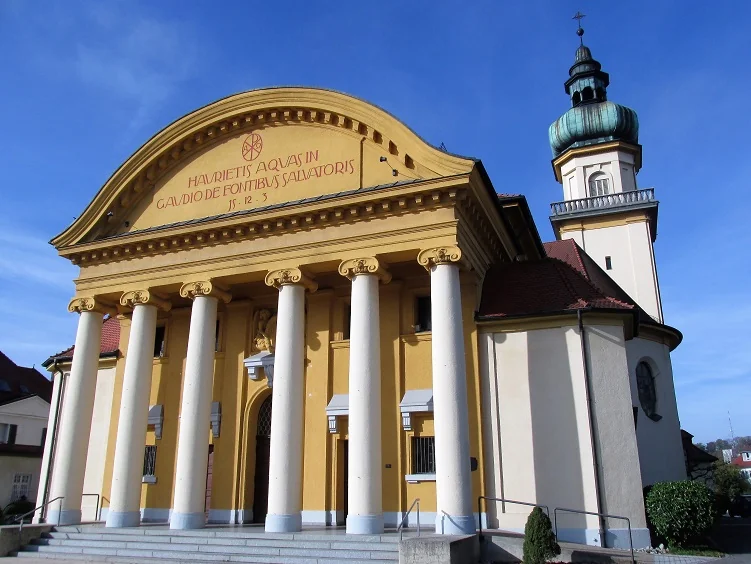
The Salvator Church has shaped the western suburb of Aalen for over a century as a prominently visible Catholic church on the Bohl. It is not only a place of liturgy but also a piece of city history, as it encapsulates the development of the Catholic community in Aalen, the emergence of church architecture at the beginning of the 20th century, and the close connection of faith, art, and music in one place. Therefore, those who visit the church do not experience an anonymous large church, but a grown ensemble with history, symbolism, and a strong connection to the city. This is precisely what makes the Salvator Church so relevant for inquiries about programs, services, concerts, directions, parking, and photos. ([aalen.de](https://www.aalen.de/kulturdenkmaeler.236471.25.htm))
History and Construction History of the Salvator Church Aalen
The history of the Salvator Church begins with the growth of the Catholic community in a city that was long predominantly Protestant. In the 19th century, a Catholic community emerged again due to confessional openness in Württemberg, which already used the Old Mary Church in 1868 and formed its own parish from 1873. When the Mary Church became too small due to industrialization, the influx of workers, and its growing congregation, the church foundation council decided in 1905 to build a second church. The commission was awarded in 1910 to the Stuttgart architect and government builder Hugo Schlösser. The church guide emphasizes that from the beginning, a clear view of the altar, a processional path, and generous space were required. ([katholische-kirche-aalen.de](https://katholische-kirche-aalen.de/wp-content/uploads/2024/09/Kirchenfuehrer_Salvator.pdf))
Between 1910 and 1913, a church almost four times larger than the old Mary Church was built in a prominent location on the Bohl. The city of Aalen describes the architecture as an expression of a new Catholic self-confidence that consciously inscribes itself visibly into the cityscape. At the inauguration on November 10, 1913, the high construction costs of 224,200 marks were met, of which King Wilhelm II contributed 51,000 marks. The building itself combines baroque basic and tower forms with elements from the Renaissance and Classicism. The tower with the cross measures 57 meters, and 140 steps lead up. Equally remarkable is the seating capacity: about 1,200 seats and 1,000 standing places show that the church was intended from the beginning for a large congregation. ([aalen.de](https://www.aalen.de/kulturdenkmaeler.236471.25.htm))
Services Today, Program, and Church Dates
Those looking for today's service or the current program of the Salvator Church should keep an eye on the official service schedule and church announcements of the Catholic Church Aalen. There, the dates for the Salvator community are continuously published and adjusted as needed. On the page for services, the community also explains the various forms of communal celebration: from the service schedule to children's church and family services to special liturgical forms. For inquiries such as Salvator Church today or Salvator Church program, the weekly schedule is therefore the most reliable guide, as the exact times can vary from week to week. The city of Aalen additionally publishes individual weekly notices for the Salvator Church. ([katholische-kirche-aalen.de](https://katholische-kirche-aalen.de/glaube-erleben-2/gottesdienste/))
Especially practical is that the community not only reflects Sunday masses but also liturgical offerings around everyday life. Depending on the period, confession opportunities, adoration, rosary prayers, and other celebrations appear in the church announcements, clearly defining the profile of Salvator as a lively community. For visitors, this means: The Salvator Church is not just a pure museum space, but a place where prayer, singing, and celebration occur regularly. Therefore, anyone planning a visit should always take a current look at the calendar, especially if the date coincides with a children's program, a festive mass, or a special event like Corpus Christi. The official website is the best point of contact for this, as it brings together services, calendars, and announcements. ([katholische-kirche-aalen.de](https://katholische-kirche-aalen.de/glaube-erleben-2/gottesdienste/))
Concerts, Choir, and Musical Highlights
The Salvator Church is known in Aalen not only for services but also as a musical venue with a strong profile. The choir of the Salvator Church was founded in 1868 as the Catholic Church Choir Aalen and has existed uninterrupted to this day. It mainly sings spiritual choral literature and, according to the city of Aalen, conducts about 10 to 12 services annually, especially at Christmas and Easter, often together with orchestras and soloists. The repertoire includes classical masses and choral works by Mozart, Haydn, Weber, Liszt, Diabelli, Dvořák, and also moderately modern compositions such as pieces by John Rutter. This musical continuity gives the church a sound image that goes far beyond a normal parish service. ([aalen.de](https://www.aalen.de/chor-der-salvatorkirche-aalen.3258.htm))
The church is also firmly established as a concert venue. At regular intervals, the choir organizes larger concerts; the city chronicle mentions Haydn's The Creation, among others. A current example is the traditional Advent concert of the Aalen City Orchestra, which took place in 2025 at the Salvator Church and was announced with Christmas and contemplative works of symphonic wind music. The church is particularly suitable for this because its size, special acoustics, and liturgical atmosphere make music not only audible but also tangible. Those searching for Salvator Church concert or Salvator Church Aachen concert often end up at other locations, but in Aalen, it is very clear: Salvator is a church space that is also used intensively for cultural and musical purposes. ([aalen.de](https://www.aalen.de/chor-der-salvatorkirche-aalen.3258.htm))
Architecture, Furnishings, and Organ of the Salvator Church
The current church space was deliberately rethought during the major renovations of the 20th century. Particularly influential was the first interior renovation in 1958, when the altar area and liturgical order were redesigned. At that time, numerous older furnishings such as side altars, communion rail, choir stalls, pulpit, Stations of the Cross, and figurative decorations were removed to make the space appear more contemporary and focused. For the artistic redesign, the community won the Munich sculptor Josef Henselmann, who created a wide altar from green Shandong granite, the large cross with the then still suspended Christ, and other figurative elements. The consecration of the new altar took place in 1959. This made the Salvator Church an example of how historical church spaces could develop liturgically and artistically in the 20th century. ([katholische-kirche-aalen.de](https://katholische-kirche-aalen.de/wp-content/uploads/2024/09/Kirchenfuehrer_Salvator.pdf))
The later interior renovation and furnishings also show an unusually dense symbolic language. The church guide describes a modern protective mantle Madonna by Josef Henselmann, twelve candlesticks with individually designed apostle crosses, a divided Stations of the Cross in the rear nave, and a valuable late Gothic Pietà from the Ulm school around 1500. Additionally, there is a figure of the Risen One from the late 15th century and a tabernacle door with a reduced crucifixion motif so that it does not compete with the Pietà. The Albiez organ is also particularly powerful: 44 registers, 3,333 pipes, three manuals and pedal, mechanical play actions, and electric register actions. Two horizontally protruding registers from the prospect, the so-called Spanish trumpets, give it a brilliant sound. The colored window was designed by the artist Rudolf Walter Haegele, who hails from Aalen. ([katholische-kirche-aalen.de](https://katholische-kirche-aalen.de/wp-content/uploads/2024/09/Kirchenfuehrer_Salvator.pdf))
Directions and Parking in Aalen
The Salvator Church is located at Bohlstraße 5 in 73430 Aalen and thus in an area that clearly belongs to the city center and the historical urban structure. The official city website describes the church as a prominently visible building on the Bohl, and this elevated position makes it easily recognizable in the cityscape. For visitors with cars, it is important that Aalen has a dense parking system. The city points out a sufficient number of public parking spaces, mentions short walking distances to destinations in the city center, and refers to a dynamic parking guidance system that leads to the nearest available spaces. Therefore, those wishing to visit the Salvator Church can generally plan for central city parking instead of searching for a direct parking space at the church. ([aalen.de](https://www.aalen.de/katholische-salvatorkirche.3093.25.htm))
Particularly relevant are the municipal parking garages: Rathaus-Tiefgarage and KUBUS (P1), parking garage Reichsstädter Markt (P2), underground garage Spritzenhausplatz (P3), parking garage Spitalstraße (P5), and the P+R parking garage at the main train station (P6). The city also mentions numerous disabled parking spaces and the option to park via PayByPhone app. This is practical for visitors from outside the area, as the app shows the nearest parking space and the correct parking zone via GPS. Those who combine their visit to the church with a city center visit, a concert, or a walk through Aalen benefit from a well-organized parking infrastructure. For the search Salvator Church Aalen parking, this combination of central location, parking guidance system, and short distances is crucial. ([aalen.de](https://www.aalen.de/parken.565.25.htm))
Children's Church, Community Life, and On-Site Visits
The Salvator Church is not only a venue but also a vibrant community space with family, youth, and children's offerings. On the official service page, the children's church Salvator is listed as a small church in the meditation room; parallel to some Sunday services, there is a separate celebration for children aged three to eight. Crafting, singing, clapping, and dancing are part of it, as well as child-friendly access to a biblical text, a saint, or a religious topic. This makes the church interesting for families who are not only participating in a mass but are looking for an accessible entry into the church space. Additionally, the community refers to family services, youth offerings, and other forms of communal celebration. ([katholische-kirche-aalen.de](https://katholische-kirche-aalen.de/glaube-erleben-2/gottesdienste/))
The community life around Salvator is broadly structured. The Catholic Church Aalen encompasses under the Salvator community, St. Mary, and St. Boniface also an Italian and Croatian community. The parish office is located in the Salvator rectory at Bohlstraße 3, with fixed office hours so that visitors and community members can clarify practical questions directly on-site. Those wishing to visit the Salvator Church should also pay attention to church announcements besides service times and concerts, as confession times, special celebrations, and other dates are published there. This creates the image of a church that is at once a historical monument, a spiritual meeting point, and a cultural space. This mixture is precisely what ensures that the Salvator Church Aalen frequently appears in inquiries about photos, history, programs, and today's dates. ([katholische-kirche-aalen.de](https://katholische-kirche-aalen.de/glaube-erleben-2/gottesdienste/))
Why the Salvator Church Aalen is Worth a Visit
The Salvator Church uniquely combines urban presence, liturgical vitality, and artistic quality. Its historical origin as the first Catholic church after the Reformation, its deliberately representative building on the Bohl, the strong orientation towards the altar, and the rich furnishings with sculptures, organ, and windows make it a place where Aalen can be experienced in a condensed form. Those wandering in the city center will find here not only a house of worship but a quiet, meaningful space with visible history. Those who love music will experience in Salvator a sound space for choir, orchestra, and organ. Those interested in architecture will discover a building that has reorganized itself over the decades while preserving its identity. ([aalen.de](https://www.aalen.de/kulturdenkmaeler.236471.25.htm))
For visitors, the best strategy is simple: check the current service schedule in advance, review the community and city programs as needed, and use the city center parking garages for directions. This way, a short visit quickly turns into a well-rounded impression of history, present, and communal life. This is why the Salvator Church Aalen is more than just a point on the map for seekers. It is a place where faith, culture, and city identity come together and continues to visibly show how vibrant a historical church can be in a modern city center. ([katholische-kirche-aalen.de](https://katholische-kirche-aalen.de/glaube-erleben-2/gottesdienste/))
Sources:
Mehr anzeigenWeniger anzeigen
Salvator Church Aalen | Services & Events
The Salvator Church has shaped the western suburb of Aalen for over a century as a prominently visible Catholic church on the Bohl. It is not only a place of liturgy but also a piece of city history, as it encapsulates the development of the Catholic community in Aalen, the emergence of church architecture at the beginning of the 20th century, and the close connection of faith, art, and music in one place. Therefore, those who visit the church do not experience an anonymous large church, but a grown ensemble with history, symbolism, and a strong connection to the city. This is precisely what makes the Salvator Church so relevant for inquiries about programs, services, concerts, directions, parking, and photos. ([aalen.de](https://www.aalen.de/kulturdenkmaeler.236471.25.htm))
History and Construction History of the Salvator Church Aalen
The history of the Salvator Church begins with the growth of the Catholic community in a city that was long predominantly Protestant. In the 19th century, a Catholic community emerged again due to confessional openness in Württemberg, which already used the Old Mary Church in 1868 and formed its own parish from 1873. When the Mary Church became too small due to industrialization, the influx of workers, and its growing congregation, the church foundation council decided in 1905 to build a second church. The commission was awarded in 1910 to the Stuttgart architect and government builder Hugo Schlösser. The church guide emphasizes that from the beginning, a clear view of the altar, a processional path, and generous space were required. ([katholische-kirche-aalen.de](https://katholische-kirche-aalen.de/wp-content/uploads/2024/09/Kirchenfuehrer_Salvator.pdf))
Between 1910 and 1913, a church almost four times larger than the old Mary Church was built in a prominent location on the Bohl. The city of Aalen describes the architecture as an expression of a new Catholic self-confidence that consciously inscribes itself visibly into the cityscape. At the inauguration on November 10, 1913, the high construction costs of 224,200 marks were met, of which King Wilhelm II contributed 51,000 marks. The building itself combines baroque basic and tower forms with elements from the Renaissance and Classicism. The tower with the cross measures 57 meters, and 140 steps lead up. Equally remarkable is the seating capacity: about 1,200 seats and 1,000 standing places show that the church was intended from the beginning for a large congregation. ([aalen.de](https://www.aalen.de/kulturdenkmaeler.236471.25.htm))
Services Today, Program, and Church Dates
Those looking for today's service or the current program of the Salvator Church should keep an eye on the official service schedule and church announcements of the Catholic Church Aalen. There, the dates for the Salvator community are continuously published and adjusted as needed. On the page for services, the community also explains the various forms of communal celebration: from the service schedule to children's church and family services to special liturgical forms. For inquiries such as Salvator Church today or Salvator Church program, the weekly schedule is therefore the most reliable guide, as the exact times can vary from week to week. The city of Aalen additionally publishes individual weekly notices for the Salvator Church. ([katholische-kirche-aalen.de](https://katholische-kirche-aalen.de/glaube-erleben-2/gottesdienste/))
Especially practical is that the community not only reflects Sunday masses but also liturgical offerings around everyday life. Depending on the period, confession opportunities, adoration, rosary prayers, and other celebrations appear in the church announcements, clearly defining the profile of Salvator as a lively community. For visitors, this means: The Salvator Church is not just a pure museum space, but a place where prayer, singing, and celebration occur regularly. Therefore, anyone planning a visit should always take a current look at the calendar, especially if the date coincides with a children's program, a festive mass, or a special event like Corpus Christi. The official website is the best point of contact for this, as it brings together services, calendars, and announcements. ([katholische-kirche-aalen.de](https://katholische-kirche-aalen.de/glaube-erleben-2/gottesdienste/))
Concerts, Choir, and Musical Highlights
The Salvator Church is known in Aalen not only for services but also as a musical venue with a strong profile. The choir of the Salvator Church was founded in 1868 as the Catholic Church Choir Aalen and has existed uninterrupted to this day. It mainly sings spiritual choral literature and, according to the city of Aalen, conducts about 10 to 12 services annually, especially at Christmas and Easter, often together with orchestras and soloists. The repertoire includes classical masses and choral works by Mozart, Haydn, Weber, Liszt, Diabelli, Dvořák, and also moderately modern compositions such as pieces by John Rutter. This musical continuity gives the church a sound image that goes far beyond a normal parish service. ([aalen.de](https://www.aalen.de/chor-der-salvatorkirche-aalen.3258.htm))
The church is also firmly established as a concert venue. At regular intervals, the choir organizes larger concerts; the city chronicle mentions Haydn's The Creation, among others. A current example is the traditional Advent concert of the Aalen City Orchestra, which took place in 2025 at the Salvator Church and was announced with Christmas and contemplative works of symphonic wind music. The church is particularly suitable for this because its size, special acoustics, and liturgical atmosphere make music not only audible but also tangible. Those searching for Salvator Church concert or Salvator Church Aachen concert often end up at other locations, but in Aalen, it is very clear: Salvator is a church space that is also used intensively for cultural and musical purposes. ([aalen.de](https://www.aalen.de/chor-der-salvatorkirche-aalen.3258.htm))
Architecture, Furnishings, and Organ of the Salvator Church
The current church space was deliberately rethought during the major renovations of the 20th century. Particularly influential was the first interior renovation in 1958, when the altar area and liturgical order were redesigned. At that time, numerous older furnishings such as side altars, communion rail, choir stalls, pulpit, Stations of the Cross, and figurative decorations were removed to make the space appear more contemporary and focused. For the artistic redesign, the community won the Munich sculptor Josef Henselmann, who created a wide altar from green Shandong granite, the large cross with the then still suspended Christ, and other figurative elements. The consecration of the new altar took place in 1959. This made the Salvator Church an example of how historical church spaces could develop liturgically and artistically in the 20th century. ([katholische-kirche-aalen.de](https://katholische-kirche-aalen.de/wp-content/uploads/2024/09/Kirchenfuehrer_Salvator.pdf))
The later interior renovation and furnishings also show an unusually dense symbolic language. The church guide describes a modern protective mantle Madonna by Josef Henselmann, twelve candlesticks with individually designed apostle crosses, a divided Stations of the Cross in the rear nave, and a valuable late Gothic Pietà from the Ulm school around 1500. Additionally, there is a figure of the Risen One from the late 15th century and a tabernacle door with a reduced crucifixion motif so that it does not compete with the Pietà. The Albiez organ is also particularly powerful: 44 registers, 3,333 pipes, three manuals and pedal, mechanical play actions, and electric register actions. Two horizontally protruding registers from the prospect, the so-called Spanish trumpets, give it a brilliant sound. The colored window was designed by the artist Rudolf Walter Haegele, who hails from Aalen. ([katholische-kirche-aalen.de](https://katholische-kirche-aalen.de/wp-content/uploads/2024/09/Kirchenfuehrer_Salvator.pdf))
Directions and Parking in Aalen
The Salvator Church is located at Bohlstraße 5 in 73430 Aalen and thus in an area that clearly belongs to the city center and the historical urban structure. The official city website describes the church as a prominently visible building on the Bohl, and this elevated position makes it easily recognizable in the cityscape. For visitors with cars, it is important that Aalen has a dense parking system. The city points out a sufficient number of public parking spaces, mentions short walking distances to destinations in the city center, and refers to a dynamic parking guidance system that leads to the nearest available spaces. Therefore, those wishing to visit the Salvator Church can generally plan for central city parking instead of searching for a direct parking space at the church. ([aalen.de](https://www.aalen.de/katholische-salvatorkirche.3093.25.htm))
Particularly relevant are the municipal parking garages: Rathaus-Tiefgarage and KUBUS (P1), parking garage Reichsstädter Markt (P2), underground garage Spritzenhausplatz (P3), parking garage Spitalstraße (P5), and the P+R parking garage at the main train station (P6). The city also mentions numerous disabled parking spaces and the option to park via PayByPhone app. This is practical for visitors from outside the area, as the app shows the nearest parking space and the correct parking zone via GPS. Those who combine their visit to the church with a city center visit, a concert, or a walk through Aalen benefit from a well-organized parking infrastructure. For the search Salvator Church Aalen parking, this combination of central location, parking guidance system, and short distances is crucial. ([aalen.de](https://www.aalen.de/parken.565.25.htm))
Children's Church, Community Life, and On-Site Visits
The Salvator Church is not only a venue but also a vibrant community space with family, youth, and children's offerings. On the official service page, the children's church Salvator is listed as a small church in the meditation room; parallel to some Sunday services, there is a separate celebration for children aged three to eight. Crafting, singing, clapping, and dancing are part of it, as well as child-friendly access to a biblical text, a saint, or a religious topic. This makes the church interesting for families who are not only participating in a mass but are looking for an accessible entry into the church space. Additionally, the community refers to family services, youth offerings, and other forms of communal celebration. ([katholische-kirche-aalen.de](https://katholische-kirche-aalen.de/glaube-erleben-2/gottesdienste/))
The community life around Salvator is broadly structured. The Catholic Church Aalen encompasses under the Salvator community, St. Mary, and St. Boniface also an Italian and Croatian community. The parish office is located in the Salvator rectory at Bohlstraße 3, with fixed office hours so that visitors and community members can clarify practical questions directly on-site. Those wishing to visit the Salvator Church should also pay attention to church announcements besides service times and concerts, as confession times, special celebrations, and other dates are published there. This creates the image of a church that is at once a historical monument, a spiritual meeting point, and a cultural space. This mixture is precisely what ensures that the Salvator Church Aalen frequently appears in inquiries about photos, history, programs, and today's dates. ([katholische-kirche-aalen.de](https://katholische-kirche-aalen.de/glaube-erleben-2/gottesdienste/))
Why the Salvator Church Aalen is Worth a Visit
The Salvator Church uniquely combines urban presence, liturgical vitality, and artistic quality. Its historical origin as the first Catholic church after the Reformation, its deliberately representative building on the Bohl, the strong orientation towards the altar, and the rich furnishings with sculptures, organ, and windows make it a place where Aalen can be experienced in a condensed form. Those wandering in the city center will find here not only a house of worship but a quiet, meaningful space with visible history. Those who love music will experience in Salvator a sound space for choir, orchestra, and organ. Those interested in architecture will discover a building that has reorganized itself over the decades while preserving its identity. ([aalen.de](https://www.aalen.de/kulturdenkmaeler.236471.25.htm))
For visitors, the best strategy is simple: check the current service schedule in advance, review the community and city programs as needed, and use the city center parking garages for directions. This way, a short visit quickly turns into a well-rounded impression of history, present, and communal life. This is why the Salvator Church Aalen is more than just a point on the map for seekers. It is a place where faith, culture, and city identity come together and continues to visibly show how vibrant a historical church can be in a modern city center. ([katholische-kirche-aalen.de](https://katholische-kirche-aalen.de/glaube-erleben-2/gottesdienste/))
Sources:
Salvator Church Aalen | Services & Events
The Salvator Church has shaped the western suburb of Aalen for over a century as a prominently visible Catholic church on the Bohl. It is not only a place of liturgy but also a piece of city history, as it encapsulates the development of the Catholic community in Aalen, the emergence of church architecture at the beginning of the 20th century, and the close connection of faith, art, and music in one place. Therefore, those who visit the church do not experience an anonymous large church, but a grown ensemble with history, symbolism, and a strong connection to the city. This is precisely what makes the Salvator Church so relevant for inquiries about programs, services, concerts, directions, parking, and photos. ([aalen.de](https://www.aalen.de/kulturdenkmaeler.236471.25.htm))
History and Construction History of the Salvator Church Aalen
The history of the Salvator Church begins with the growth of the Catholic community in a city that was long predominantly Protestant. In the 19th century, a Catholic community emerged again due to confessional openness in Württemberg, which already used the Old Mary Church in 1868 and formed its own parish from 1873. When the Mary Church became too small due to industrialization, the influx of workers, and its growing congregation, the church foundation council decided in 1905 to build a second church. The commission was awarded in 1910 to the Stuttgart architect and government builder Hugo Schlösser. The church guide emphasizes that from the beginning, a clear view of the altar, a processional path, and generous space were required. ([katholische-kirche-aalen.de](https://katholische-kirche-aalen.de/wp-content/uploads/2024/09/Kirchenfuehrer_Salvator.pdf))
Between 1910 and 1913, a church almost four times larger than the old Mary Church was built in a prominent location on the Bohl. The city of Aalen describes the architecture as an expression of a new Catholic self-confidence that consciously inscribes itself visibly into the cityscape. At the inauguration on November 10, 1913, the high construction costs of 224,200 marks were met, of which King Wilhelm II contributed 51,000 marks. The building itself combines baroque basic and tower forms with elements from the Renaissance and Classicism. The tower with the cross measures 57 meters, and 140 steps lead up. Equally remarkable is the seating capacity: about 1,200 seats and 1,000 standing places show that the church was intended from the beginning for a large congregation. ([aalen.de](https://www.aalen.de/kulturdenkmaeler.236471.25.htm))
Services Today, Program, and Church Dates
Those looking for today's service or the current program of the Salvator Church should keep an eye on the official service schedule and church announcements of the Catholic Church Aalen. There, the dates for the Salvator community are continuously published and adjusted as needed. On the page for services, the community also explains the various forms of communal celebration: from the service schedule to children's church and family services to special liturgical forms. For inquiries such as Salvator Church today or Salvator Church program, the weekly schedule is therefore the most reliable guide, as the exact times can vary from week to week. The city of Aalen additionally publishes individual weekly notices for the Salvator Church. ([katholische-kirche-aalen.de](https://katholische-kirche-aalen.de/glaube-erleben-2/gottesdienste/))
Especially practical is that the community not only reflects Sunday masses but also liturgical offerings around everyday life. Depending on the period, confession opportunities, adoration, rosary prayers, and other celebrations appear in the church announcements, clearly defining the profile of Salvator as a lively community. For visitors, this means: The Salvator Church is not just a pure museum space, but a place where prayer, singing, and celebration occur regularly. Therefore, anyone planning a visit should always take a current look at the calendar, especially if the date coincides with a children's program, a festive mass, or a special event like Corpus Christi. The official website is the best point of contact for this, as it brings together services, calendars, and announcements. ([katholische-kirche-aalen.de](https://katholische-kirche-aalen.de/glaube-erleben-2/gottesdienste/))
Concerts, Choir, and Musical Highlights
The Salvator Church is known in Aalen not only for services but also as a musical venue with a strong profile. The choir of the Salvator Church was founded in 1868 as the Catholic Church Choir Aalen and has existed uninterrupted to this day. It mainly sings spiritual choral literature and, according to the city of Aalen, conducts about 10 to 12 services annually, especially at Christmas and Easter, often together with orchestras and soloists. The repertoire includes classical masses and choral works by Mozart, Haydn, Weber, Liszt, Diabelli, Dvořák, and also moderately modern compositions such as pieces by John Rutter. This musical continuity gives the church a sound image that goes far beyond a normal parish service. ([aalen.de](https://www.aalen.de/chor-der-salvatorkirche-aalen.3258.htm))
The church is also firmly established as a concert venue. At regular intervals, the choir organizes larger concerts; the city chronicle mentions Haydn's The Creation, among others. A current example is the traditional Advent concert of the Aalen City Orchestra, which took place in 2025 at the Salvator Church and was announced with Christmas and contemplative works of symphonic wind music. The church is particularly suitable for this because its size, special acoustics, and liturgical atmosphere make music not only audible but also tangible. Those searching for Salvator Church concert or Salvator Church Aachen concert often end up at other locations, but in Aalen, it is very clear: Salvator is a church space that is also used intensively for cultural and musical purposes. ([aalen.de](https://www.aalen.de/chor-der-salvatorkirche-aalen.3258.htm))
Architecture, Furnishings, and Organ of the Salvator Church
The current church space was deliberately rethought during the major renovations of the 20th century. Particularly influential was the first interior renovation in 1958, when the altar area and liturgical order were redesigned. At that time, numerous older furnishings such as side altars, communion rail, choir stalls, pulpit, Stations of the Cross, and figurative decorations were removed to make the space appear more contemporary and focused. For the artistic redesign, the community won the Munich sculptor Josef Henselmann, who created a wide altar from green Shandong granite, the large cross with the then still suspended Christ, and other figurative elements. The consecration of the new altar took place in 1959. This made the Salvator Church an example of how historical church spaces could develop liturgically and artistically in the 20th century. ([katholische-kirche-aalen.de](https://katholische-kirche-aalen.de/wp-content/uploads/2024/09/Kirchenfuehrer_Salvator.pdf))
The later interior renovation and furnishings also show an unusually dense symbolic language. The church guide describes a modern protective mantle Madonna by Josef Henselmann, twelve candlesticks with individually designed apostle crosses, a divided Stations of the Cross in the rear nave, and a valuable late Gothic Pietà from the Ulm school around 1500. Additionally, there is a figure of the Risen One from the late 15th century and a tabernacle door with a reduced crucifixion motif so that it does not compete with the Pietà. The Albiez organ is also particularly powerful: 44 registers, 3,333 pipes, three manuals and pedal, mechanical play actions, and electric register actions. Two horizontally protruding registers from the prospect, the so-called Spanish trumpets, give it a brilliant sound. The colored window was designed by the artist Rudolf Walter Haegele, who hails from Aalen. ([katholische-kirche-aalen.de](https://katholische-kirche-aalen.de/wp-content/uploads/2024/09/Kirchenfuehrer_Salvator.pdf))
Directions and Parking in Aalen
The Salvator Church is located at Bohlstraße 5 in 73430 Aalen and thus in an area that clearly belongs to the city center and the historical urban structure. The official city website describes the church as a prominently visible building on the Bohl, and this elevated position makes it easily recognizable in the cityscape. For visitors with cars, it is important that Aalen has a dense parking system. The city points out a sufficient number of public parking spaces, mentions short walking distances to destinations in the city center, and refers to a dynamic parking guidance system that leads to the nearest available spaces. Therefore, those wishing to visit the Salvator Church can generally plan for central city parking instead of searching for a direct parking space at the church. ([aalen.de](https://www.aalen.de/katholische-salvatorkirche.3093.25.htm))
Particularly relevant are the municipal parking garages: Rathaus-Tiefgarage and KUBUS (P1), parking garage Reichsstädter Markt (P2), underground garage Spritzenhausplatz (P3), parking garage Spitalstraße (P5), and the P+R parking garage at the main train station (P6). The city also mentions numerous disabled parking spaces and the option to park via PayByPhone app. This is practical for visitors from outside the area, as the app shows the nearest parking space and the correct parking zone via GPS. Those who combine their visit to the church with a city center visit, a concert, or a walk through Aalen benefit from a well-organized parking infrastructure. For the search Salvator Church Aalen parking, this combination of central location, parking guidance system, and short distances is crucial. ([aalen.de](https://www.aalen.de/parken.565.25.htm))
Children's Church, Community Life, and On-Site Visits
The Salvator Church is not only a venue but also a vibrant community space with family, youth, and children's offerings. On the official service page, the children's church Salvator is listed as a small church in the meditation room; parallel to some Sunday services, there is a separate celebration for children aged three to eight. Crafting, singing, clapping, and dancing are part of it, as well as child-friendly access to a biblical text, a saint, or a religious topic. This makes the church interesting for families who are not only participating in a mass but are looking for an accessible entry into the church space. Additionally, the community refers to family services, youth offerings, and other forms of communal celebration. ([katholische-kirche-aalen.de](https://katholische-kirche-aalen.de/glaube-erleben-2/gottesdienste/))
The community life around Salvator is broadly structured. The Catholic Church Aalen encompasses under the Salvator community, St. Mary, and St. Boniface also an Italian and Croatian community. The parish office is located in the Salvator rectory at Bohlstraße 3, with fixed office hours so that visitors and community members can clarify practical questions directly on-site. Those wishing to visit the Salvator Church should also pay attention to church announcements besides service times and concerts, as confession times, special celebrations, and other dates are published there. This creates the image of a church that is at once a historical monument, a spiritual meeting point, and a cultural space. This mixture is precisely what ensures that the Salvator Church Aalen frequently appears in inquiries about photos, history, programs, and today's dates. ([katholische-kirche-aalen.de](https://katholische-kirche-aalen.de/glaube-erleben-2/gottesdienste/))
Why the Salvator Church Aalen is Worth a Visit
The Salvator Church uniquely combines urban presence, liturgical vitality, and artistic quality. Its historical origin as the first Catholic church after the Reformation, its deliberately representative building on the Bohl, the strong orientation towards the altar, and the rich furnishings with sculptures, organ, and windows make it a place where Aalen can be experienced in a condensed form. Those wandering in the city center will find here not only a house of worship but a quiet, meaningful space with visible history. Those who love music will experience in Salvator a sound space for choir, orchestra, and organ. Those interested in architecture will discover a building that has reorganized itself over the decades while preserving its identity. ([aalen.de](https://www.aalen.de/kulturdenkmaeler.236471.25.htm))
For visitors, the best strategy is simple: check the current service schedule in advance, review the community and city programs as needed, and use the city center parking garages for directions. This way, a short visit quickly turns into a well-rounded impression of history, present, and communal life. This is why the Salvator Church Aalen is more than just a point on the map for seekers. It is a place where faith, culture, and city identity come together and continues to visibly show how vibrant a historical church can be in a modern city center. ([katholische-kirche-aalen.de](https://katholische-kirche-aalen.de/glaube-erleben-2/gottesdienste/))
Sources:
Frequently Asked Questions
Reviews
Walter Weber
5. November 2025
Classic meets Rock, it was great
Robert Stanic
15. May 2017
Nice church
Michael Göggerle
10. January 2024
Sehr schöne Kirche ohne Schnörkel mit grandiosem Altarbild. Sehr tolle Akustik, wir besuchten ein Konzert mit Mark Marschall, es war einfach schön.
Sascha76 Weschenfelder
14. May 2024
Many paths lead to the Salvatorkirche, that could be the first sentence. But if you ask different people and don't know the area, it's not exactly easy. However, once you climb the path, whether stairs or road, you stand in front of a really beautiful church. Inside, everything is kept simple in white. Therefore, it feels larger than you would expect from the outside.
Andreas Furrer
18. December 2025
Big church, but too bare for me...