
Aalen
Ebnater Hauptstraße 12, 73432 Aalen-Ebnat, Deutschland
Immaculate Conception | Parish Church & Baroque
The parish church of the Immaculate Conception in Aalen-Ebnat is much more than a church building with a strong Marian title. It is located in a district at the western end of the Härtsfeld on the heights of the Swabian Jura, belongs to the large district town of Aalen, and is the center of a Catholic community with around 2,400 members. The official parish website emphasizes that not only services are celebrated here, but also groups, kindergartens, and a library are part of community life. This mix of history, place, and everyday life makes the church so interesting for seekers. It connects a sacred space that has grown over centuries with a modern extension, and it is closely linked to Maria Eich, a place of prayer and pilgrimage for the community. Therefore, those looking for photos, reviews, history, or practical information will find a church that stands out both spiritually and architecturally. ([se-haertsfeld-kochertal.de](https://se-haertsfeld-kochertal.de/ebnat))
Why the Immaculate Conception in Ebnat is Searched So Often
The search queries surrounding this church show a very clear pattern: people first want to know what type of church they have in front of them, where it is located, and why it has such a strong presence in Ebnat. The answer is quick yet multifaceted. It is the Catholic parish community of the Immaculate Conception in Aalen-Ebnat, located at Ebnater Hauptstraße 12, with its own parish office structure visible on the community page. At the same time, the church is not just any religious building on the outskirts of a town, but the center of a vibrant community life. The official page describes Ebnat as a district of the large district town of Aalen and makes it clear that many community groups are active here. So, those searching for the Immaculate Conception are often looking not just for a building, but also for orientation: Is it the parish church? Is it the Catholic church in Ebnat? Is it the place with the long history and special architecture? Exactly in this mix of place name, church function, and local identity lies the search intention. ([ebnat.aalen.de](https://ebnat.aalen.de/katholische-kirchengemeinde-mariae-unbefleckte-empfaengnis-ebnat.3849.261.htm))
Moreover, the name itself piques the curiosity of seekers. The designation “Immaculate Conception” refers to a central Catholic Marian patronage, which many people know more from liturgy or church calendars than from a specific local reference. In Ebnat, this name takes on a very visible form: a parish church that has been shaped by Marian devotion, pilgrimage, and local history for centuries. Ebnat is also not isolated but located in a geographically significant area between Härtsfeld and Kochertal. This location on the heights of the Swabian Jura gives the church an additional presence, as it is not only a spiritual center but also a visual anchor of the district. Those interested in photos or reviews often end up asking the same question: Why is this church searched so frequently? The obvious answer is that here, historical depth, a distinctive architectural style, and a vibrant community life come together. This makes the church equally interesting for visitors, locals, and digital search queries. ([se-haertsfeld-kochertal.de](https://se-haertsfeld-kochertal.de/ebnat))
History of the Parish Church from 1298 to the Present Form
The history of this church begins much earlier than the current building might suggest. As early as 1298, a papal document from Boniface VIII mentions a Marian church in Ebnat, and at that time, the settlement was already a larger community with a parish church and Marian patronage. The pastoral unit and the city page also make it clear that Ebnat has an even older settlement history that dates back to Celtic times, although the church and local history are more important for today's identity. Local tradition mentions an early Romanesque church that was one of the oldest churches in the Härtsfeld and was demolished in 1480 for a new building. It was followed by a late Gothic building from 1481 to 1485, which was also dedicated to the Mother of God. This early history shows that Ebnat has been a religious center for centuries and that the present church rests on a very old foundation of piety and local significance. ([se-haertsfeld-kochertal.de](https://se-haertsfeld-kochertal.de/ebnat))
The actual current church building was then constructed in the early Baroque period. Between 1721 and 1725, the second parish church was demolished and replaced by the third church building. In 1745, at the order of the then Bishop of Augsburg, the miraculous image from Maria Eich was transferred to the church; a grace altar was created for this purpose, and to this day, the feast of Ebnater Freude on the sixth Sunday of Easter commemorates this transfer. The period between 1790 and 1792 is also important for the history of the church: at that time, the parish church was expanded, and the Baroque altars were replaced by altars of the classical Baroque style. This shows that the church has a rare historical layering that does not remain at a single architectural style but brings together several epochs. This makes it particularly exciting for history enthusiasts: it is not a static monument but a building that has evolved with the community while preserving the religious core of local identity over many centuries. ([se-haertsfeld-kochertal.de](https://se-haertsfeld-kochertal.de/ebnat-pfarrkirche))
Baroque, Modernity, and the Special North Wall
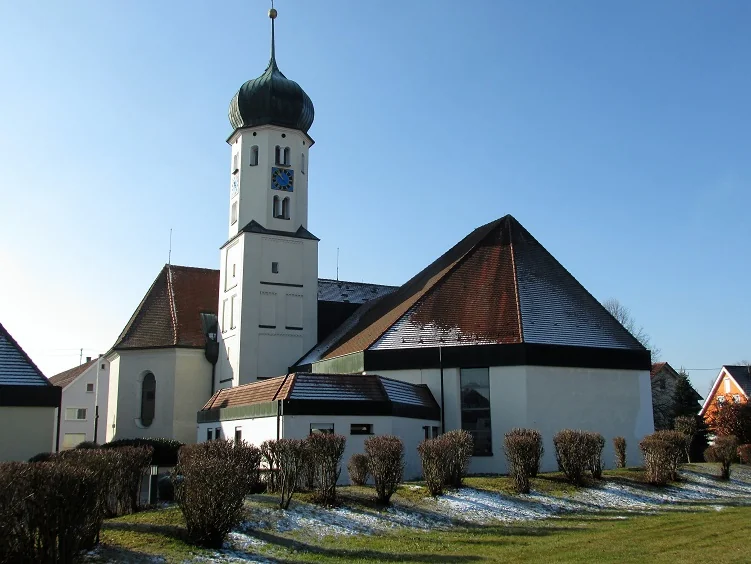
The striking form of the Ebnat parish church today did not arise from a complete new building but from a clever and unusual renovation. After World War II, the community grew significantly, partly due to the influx of displaced persons and the economic development of the area. The Baroque church simply became too small. Instead of demolishing the old house of worship, a solution was chosen that is remarkable in its spatial logic: the north wall of the old church was opened, and incorporating the oriented church space, a new nave with a new choir was built in the modern style facing north. The first groundbreaking and laying of the foundation stone took place in 1973, and on October 11, 1981, the expanded church was solemnly consecrated. The result is a sacred space that does not work against each other but consciously connects old and new. That is why the church is described in the community as a place where Baroque and modernity coexist harmoniously. ([se-haertsfeld-kochertal.de](https://se-haertsfeld-kochertal.de/ebnat-pfarrkirche))
This connection continues inside as well. The choir windows renewed in 1920 and the ceiling paintings added in 1931 are just as much part of the appearance as the later added modern elements. The community description mentions artworks that are still visible today, including windows and artistic details that shape the space. In 1992, a new two-manual organ with 23 registers from the company Reiser from Biberach was added, completing the current state of the church. Such details are important for visitors because they show that this is not just a historical backdrop but a living church space that is liturgically used and acoustically as well as visually oriented towards the present. For SEO search queries, this combination of architecture, furnishings, and history is valuable: those searching for Baroque church, modern extension, organ, or church space will find a very clear and unusual example in Ebnat. ([se-haertsfeld-kochertal.de](https://se-haertsfeld-kochertal.de/ebnat-pfarrkirche))
Maria Eich, Pilgrimage, and Lived Community
A central feature of this parish community is its connection to Maria Eich. The official community page explicitly states that the prayer and pilgrimage site of Maria Eich is also part of the parish community. This is enormously important for many search queries because it clarifies that the church does not only function as a parish church but is part of a larger spiritual place. The transfer of the miraculous image from Maria Eich to the church in 1745 and the subsequent establishment of a grace altar show how strongly pilgrimage and parish life are intertwined in Ebnat. The annually celebrated feast of Ebnater Freude is therefore more than a local custom. It is a living reminder that the community has identified with this Marian devotion over generations. So, those searching for the term Immaculate Conception will not only encounter a Marian title in Ebnat but a developed system of church, pilgrimage, and local faith practice. ([ebnat.aalen.de](https://ebnat.aalen.de/katholische-kirchengemeinde-mariae-unbefleckte-empfaengnis-ebnat.3849.261.htm))
Equally important is the current community life. The pastoral unit describes the Ebnat parish community as lively and refers to groups that allow people to connect and participate. The page mentions, among other things, the library, the groups and associations, as well as the Catholic kindergartens St. Maria and St. Martin, which are supported by the parish community. In addition, there are current announcements, dates, and information on services, which shows that the church is not just a monument but a place of everyday life. For visitors looking for information through photos or reviews, this is particularly relevant: a sacred place appears particularly strong online when it is historically impressive and simultaneously lives in an active community. In Ebnat, this mix is very pronounced. The church does not stand still in the past but is continuously filled with life through groups, families, children's work, liturgy, and community communication. This makes it attractive for seekers, locals, and those interested in the church alike. ([se-haertsfeld-kochertal.de](https://se-haertsfeld-kochertal.de/ebnat))
Directions, Address, and Practical Orientation in Aalen-Ebnat
Those wishing to visit the Immaculate Conception in Ebnat will find the most important practical information on the official pages of the city of Aalen and the parish community. The address is Ebnater Hauptstraße 12, 73432 Aalen-Ebnat. At the same time, the community page refers to the parish office and provides contact options, making it clear that visitors and interested parties can directly get in touch with the parish community. For orientation, the place itself is also important: Ebnat is located at the western end of the Härtsfeld on the heights of the Swabian Jura, and the city page describes the district as picturesque, situated in a hollow depression. Thus, it becomes clear even before the visit why the church plays such a central role in the local landscape. It is not hidden but part of a clearly readable, historically grown town center. This makes it easily accessible for both walkers and those specifically traveling to visit the church. ([ebnat.aalen.de](https://ebnat.aalen.de/katholische-kirchengemeinde-mariae-unbefleckte-empfaengnis-ebnat.3849.261.htm))
However, specific visitor information such as a dedicated parking lot or a separate access description is not separately listed on the official pages. This is an important point for seekers because many first ask about parking, accessibility, or direct access when it comes to churches. In this case, the official websites mainly provide secured basic data: address, parish office, and classification in the pastoral unit Härtsfeld-Kochertal. Therefore, those planning a very precise trip should contact the parish community in advance or include additional local knowledge. However, the available data is already sufficient to place the location well: centrally in the district, in immediate proximity to community infrastructure, and embedded in an active Catholic community with several facilities. For SEO texts, this type of practical orientation is valuable because it does not overwhelm seekers with invented details but provides them with reliable information. ([ebnat.aalen.de](https://ebnat.aalen.de/katholische-kirchengemeinde-mariae-unbefleckte-empfaengnis-ebnat.3849.261.htm))
Photos, Reviews, and the Outside View of the Church
Many people are not only looking for factual data but also for images. This is understandable for the Immaculate Conception in Ebnat, as the building thrives on its contrast: here the old Baroque substance, there the modern extension. Even the official pages show several image motifs of the church, including views of the church tower, panoramic shots, and representations of the parish church in the surrounding area. Additionally, there is a public media category with photos of the church, which further emphasizes the visual presence of the building online. Therefore, those searching for photos will not find just any village church but a very characteristic motif with high recognizability. The combination of a historic church, modern expansion, and a strong focus on Marian devotion provides images that differ from many other churches. This explains why the church also receives attention in digital searches and frequently appears as a vivid example of a developed parish church. ([se-haertsfeld-kochertal.de](https://se-haertsfeld-kochertal.de/ebnat))
The interest in reviews is also understandable from the perspective of many seekers, as ratings today often serve as the first substitute for personal recommendations. However, for the Ebnat church, the official information mainly comes from the parish and the city, meaning from sources that provide factual, ecclesiastical, and historical data. This is a deliberately sober, trustworthy approach. Therefore, those wanting to form an impression should distinguish between two levels. First, the secured facts about history, architecture, and community; second, the personal perceptions on external platforms that collect visitor opinions and ratings. The official website shows that the community focuses on current services, groups, kindergartens, and the library, thus on life rather than self-presentation. This restraint makes the church credible online and helps seekers who expect not just beautiful words but reliable information. For a search engine, this is particularly valuable because the church can thus be described both in depth and practically clearly. ([ebnat.aalen.de](https://ebnat.aalen.de/katholische-kirchengemeinde-mariae-unbefleckte-empfaengnis-ebnat.3849.261.htm))
Sources:
- City of Aalen - Catholic Parish Community of the Immaculate Conception, Ebnat
- Pastoral Unit Härtsfeld-Kochertal - Ebnat
- Pastoral Unit Härtsfeld-Kochertal - Ebnat Parish Church
- City of Aalen - Ebnat
- Archdiocese of Freiburg - Feast of the Immaculate Conception
- Wikimedia Commons - Immaculate Conception (Ebnat)
Mehr anzeigenWeniger anzeigen
Immaculate Conception | Parish Church & Baroque
The parish church of the Immaculate Conception in Aalen-Ebnat is much more than a church building with a strong Marian title. It is located in a district at the western end of the Härtsfeld on the heights of the Swabian Jura, belongs to the large district town of Aalen, and is the center of a Catholic community with around 2,400 members. The official parish website emphasizes that not only services are celebrated here, but also groups, kindergartens, and a library are part of community life. This mix of history, place, and everyday life makes the church so interesting for seekers. It connects a sacred space that has grown over centuries with a modern extension, and it is closely linked to Maria Eich, a place of prayer and pilgrimage for the community. Therefore, those looking for photos, reviews, history, or practical information will find a church that stands out both spiritually and architecturally. ([se-haertsfeld-kochertal.de](https://se-haertsfeld-kochertal.de/ebnat))
Why the Immaculate Conception in Ebnat is Searched So Often
The search queries surrounding this church show a very clear pattern: people first want to know what type of church they have in front of them, where it is located, and why it has such a strong presence in Ebnat. The answer is quick yet multifaceted. It is the Catholic parish community of the Immaculate Conception in Aalen-Ebnat, located at Ebnater Hauptstraße 12, with its own parish office structure visible on the community page. At the same time, the church is not just any religious building on the outskirts of a town, but the center of a vibrant community life. The official page describes Ebnat as a district of the large district town of Aalen and makes it clear that many community groups are active here. So, those searching for the Immaculate Conception are often looking not just for a building, but also for orientation: Is it the parish church? Is it the Catholic church in Ebnat? Is it the place with the long history and special architecture? Exactly in this mix of place name, church function, and local identity lies the search intention. ([ebnat.aalen.de](https://ebnat.aalen.de/katholische-kirchengemeinde-mariae-unbefleckte-empfaengnis-ebnat.3849.261.htm))
Moreover, the name itself piques the curiosity of seekers. The designation “Immaculate Conception” refers to a central Catholic Marian patronage, which many people know more from liturgy or church calendars than from a specific local reference. In Ebnat, this name takes on a very visible form: a parish church that has been shaped by Marian devotion, pilgrimage, and local history for centuries. Ebnat is also not isolated but located in a geographically significant area between Härtsfeld and Kochertal. This location on the heights of the Swabian Jura gives the church an additional presence, as it is not only a spiritual center but also a visual anchor of the district. Those interested in photos or reviews often end up asking the same question: Why is this church searched so frequently? The obvious answer is that here, historical depth, a distinctive architectural style, and a vibrant community life come together. This makes the church equally interesting for visitors, locals, and digital search queries. ([se-haertsfeld-kochertal.de](https://se-haertsfeld-kochertal.de/ebnat))
History of the Parish Church from 1298 to the Present Form
The history of this church begins much earlier than the current building might suggest. As early as 1298, a papal document from Boniface VIII mentions a Marian church in Ebnat, and at that time, the settlement was already a larger community with a parish church and Marian patronage. The pastoral unit and the city page also make it clear that Ebnat has an even older settlement history that dates back to Celtic times, although the church and local history are more important for today's identity. Local tradition mentions an early Romanesque church that was one of the oldest churches in the Härtsfeld and was demolished in 1480 for a new building. It was followed by a late Gothic building from 1481 to 1485, which was also dedicated to the Mother of God. This early history shows that Ebnat has been a religious center for centuries and that the present church rests on a very old foundation of piety and local significance. ([se-haertsfeld-kochertal.de](https://se-haertsfeld-kochertal.de/ebnat))
The actual current church building was then constructed in the early Baroque period. Between 1721 and 1725, the second parish church was demolished and replaced by the third church building. In 1745, at the order of the then Bishop of Augsburg, the miraculous image from Maria Eich was transferred to the church; a grace altar was created for this purpose, and to this day, the feast of Ebnater Freude on the sixth Sunday of Easter commemorates this transfer. The period between 1790 and 1792 is also important for the history of the church: at that time, the parish church was expanded, and the Baroque altars were replaced by altars of the classical Baroque style. This shows that the church has a rare historical layering that does not remain at a single architectural style but brings together several epochs. This makes it particularly exciting for history enthusiasts: it is not a static monument but a building that has evolved with the community while preserving the religious core of local identity over many centuries. ([se-haertsfeld-kochertal.de](https://se-haertsfeld-kochertal.de/ebnat-pfarrkirche))
Baroque, Modernity, and the Special North Wall
The striking form of the Ebnat parish church today did not arise from a complete new building but from a clever and unusual renovation. After World War II, the community grew significantly, partly due to the influx of displaced persons and the economic development of the area. The Baroque church simply became too small. Instead of demolishing the old house of worship, a solution was chosen that is remarkable in its spatial logic: the north wall of the old church was opened, and incorporating the oriented church space, a new nave with a new choir was built in the modern style facing north. The first groundbreaking and laying of the foundation stone took place in 1973, and on October 11, 1981, the expanded church was solemnly consecrated. The result is a sacred space that does not work against each other but consciously connects old and new. That is why the church is described in the community as a place where Baroque and modernity coexist harmoniously. ([se-haertsfeld-kochertal.de](https://se-haertsfeld-kochertal.de/ebnat-pfarrkirche))
This connection continues inside as well. The choir windows renewed in 1920 and the ceiling paintings added in 1931 are just as much part of the appearance as the later added modern elements. The community description mentions artworks that are still visible today, including windows and artistic details that shape the space. In 1992, a new two-manual organ with 23 registers from the company Reiser from Biberach was added, completing the current state of the church. Such details are important for visitors because they show that this is not just a historical backdrop but a living church space that is liturgically used and acoustically as well as visually oriented towards the present. For SEO search queries, this combination of architecture, furnishings, and history is valuable: those searching for Baroque church, modern extension, organ, or church space will find a very clear and unusual example in Ebnat. ([se-haertsfeld-kochertal.de](https://se-haertsfeld-kochertal.de/ebnat-pfarrkirche))
Maria Eich, Pilgrimage, and Lived Community
A central feature of this parish community is its connection to Maria Eich. The official community page explicitly states that the prayer and pilgrimage site of Maria Eich is also part of the parish community. This is enormously important for many search queries because it clarifies that the church does not only function as a parish church but is part of a larger spiritual place. The transfer of the miraculous image from Maria Eich to the church in 1745 and the subsequent establishment of a grace altar show how strongly pilgrimage and parish life are intertwined in Ebnat. The annually celebrated feast of Ebnater Freude is therefore more than a local custom. It is a living reminder that the community has identified with this Marian devotion over generations. So, those searching for the term Immaculate Conception will not only encounter a Marian title in Ebnat but a developed system of church, pilgrimage, and local faith practice. ([ebnat.aalen.de](https://ebnat.aalen.de/katholische-kirchengemeinde-mariae-unbefleckte-empfaengnis-ebnat.3849.261.htm))
Equally important is the current community life. The pastoral unit describes the Ebnat parish community as lively and refers to groups that allow people to connect and participate. The page mentions, among other things, the library, the groups and associations, as well as the Catholic kindergartens St. Maria and St. Martin, which are supported by the parish community. In addition, there are current announcements, dates, and information on services, which shows that the church is not just a monument but a place of everyday life. For visitors looking for information through photos or reviews, this is particularly relevant: a sacred place appears particularly strong online when it is historically impressive and simultaneously lives in an active community. In Ebnat, this mix is very pronounced. The church does not stand still in the past but is continuously filled with life through groups, families, children's work, liturgy, and community communication. This makes it attractive for seekers, locals, and those interested in the church alike. ([se-haertsfeld-kochertal.de](https://se-haertsfeld-kochertal.de/ebnat))
Directions, Address, and Practical Orientation in Aalen-Ebnat
Those wishing to visit the Immaculate Conception in Ebnat will find the most important practical information on the official pages of the city of Aalen and the parish community. The address is Ebnater Hauptstraße 12, 73432 Aalen-Ebnat. At the same time, the community page refers to the parish office and provides contact options, making it clear that visitors and interested parties can directly get in touch with the parish community. For orientation, the place itself is also important: Ebnat is located at the western end of the Härtsfeld on the heights of the Swabian Jura, and the city page describes the district as picturesque, situated in a hollow depression. Thus, it becomes clear even before the visit why the church plays such a central role in the local landscape. It is not hidden but part of a clearly readable, historically grown town center. This makes it easily accessible for both walkers and those specifically traveling to visit the church. ([ebnat.aalen.de](https://ebnat.aalen.de/katholische-kirchengemeinde-mariae-unbefleckte-empfaengnis-ebnat.3849.261.htm))
However, specific visitor information such as a dedicated parking lot or a separate access description is not separately listed on the official pages. This is an important point for seekers because many first ask about parking, accessibility, or direct access when it comes to churches. In this case, the official websites mainly provide secured basic data: address, parish office, and classification in the pastoral unit Härtsfeld-Kochertal. Therefore, those planning a very precise trip should contact the parish community in advance or include additional local knowledge. However, the available data is already sufficient to place the location well: centrally in the district, in immediate proximity to community infrastructure, and embedded in an active Catholic community with several facilities. For SEO texts, this type of practical orientation is valuable because it does not overwhelm seekers with invented details but provides them with reliable information. ([ebnat.aalen.de](https://ebnat.aalen.de/katholische-kirchengemeinde-mariae-unbefleckte-empfaengnis-ebnat.3849.261.htm))
Photos, Reviews, and the Outside View of the Church
Many people are not only looking for factual data but also for images. This is understandable for the Immaculate Conception in Ebnat, as the building thrives on its contrast: here the old Baroque substance, there the modern extension. Even the official pages show several image motifs of the church, including views of the church tower, panoramic shots, and representations of the parish church in the surrounding area. Additionally, there is a public media category with photos of the church, which further emphasizes the visual presence of the building online. Therefore, those searching for photos will not find just any village church but a very characteristic motif with high recognizability. The combination of a historic church, modern expansion, and a strong focus on Marian devotion provides images that differ from many other churches. This explains why the church also receives attention in digital searches and frequently appears as a vivid example of a developed parish church. ([se-haertsfeld-kochertal.de](https://se-haertsfeld-kochertal.de/ebnat))
The interest in reviews is also understandable from the perspective of many seekers, as ratings today often serve as the first substitute for personal recommendations. However, for the Ebnat church, the official information mainly comes from the parish and the city, meaning from sources that provide factual, ecclesiastical, and historical data. This is a deliberately sober, trustworthy approach. Therefore, those wanting to form an impression should distinguish between two levels. First, the secured facts about history, architecture, and community; second, the personal perceptions on external platforms that collect visitor opinions and ratings. The official website shows that the community focuses on current services, groups, kindergartens, and the library, thus on life rather than self-presentation. This restraint makes the church credible online and helps seekers who expect not just beautiful words but reliable information. For a search engine, this is particularly valuable because the church can thus be described both in depth and practically clearly. ([ebnat.aalen.de](https://ebnat.aalen.de/katholische-kirchengemeinde-mariae-unbefleckte-empfaengnis-ebnat.3849.261.htm))
Sources:
- City of Aalen - Catholic Parish Community of the Immaculate Conception, Ebnat
- Pastoral Unit Härtsfeld-Kochertal - Ebnat
- Pastoral Unit Härtsfeld-Kochertal - Ebnat Parish Church
- City of Aalen - Ebnat
- Archdiocese of Freiburg - Feast of the Immaculate Conception
- Wikimedia Commons - Immaculate Conception (Ebnat)
Immaculate Conception | Parish Church & Baroque
The parish church of the Immaculate Conception in Aalen-Ebnat is much more than a church building with a strong Marian title. It is located in a district at the western end of the Härtsfeld on the heights of the Swabian Jura, belongs to the large district town of Aalen, and is the center of a Catholic community with around 2,400 members. The official parish website emphasizes that not only services are celebrated here, but also groups, kindergartens, and a library are part of community life. This mix of history, place, and everyday life makes the church so interesting for seekers. It connects a sacred space that has grown over centuries with a modern extension, and it is closely linked to Maria Eich, a place of prayer and pilgrimage for the community. Therefore, those looking for photos, reviews, history, or practical information will find a church that stands out both spiritually and architecturally. ([se-haertsfeld-kochertal.de](https://se-haertsfeld-kochertal.de/ebnat))
Why the Immaculate Conception in Ebnat is Searched So Often
The search queries surrounding this church show a very clear pattern: people first want to know what type of church they have in front of them, where it is located, and why it has such a strong presence in Ebnat. The answer is quick yet multifaceted. It is the Catholic parish community of the Immaculate Conception in Aalen-Ebnat, located at Ebnater Hauptstraße 12, with its own parish office structure visible on the community page. At the same time, the church is not just any religious building on the outskirts of a town, but the center of a vibrant community life. The official page describes Ebnat as a district of the large district town of Aalen and makes it clear that many community groups are active here. So, those searching for the Immaculate Conception are often looking not just for a building, but also for orientation: Is it the parish church? Is it the Catholic church in Ebnat? Is it the place with the long history and special architecture? Exactly in this mix of place name, church function, and local identity lies the search intention. ([ebnat.aalen.de](https://ebnat.aalen.de/katholische-kirchengemeinde-mariae-unbefleckte-empfaengnis-ebnat.3849.261.htm))
Moreover, the name itself piques the curiosity of seekers. The designation “Immaculate Conception” refers to a central Catholic Marian patronage, which many people know more from liturgy or church calendars than from a specific local reference. In Ebnat, this name takes on a very visible form: a parish church that has been shaped by Marian devotion, pilgrimage, and local history for centuries. Ebnat is also not isolated but located in a geographically significant area between Härtsfeld and Kochertal. This location on the heights of the Swabian Jura gives the church an additional presence, as it is not only a spiritual center but also a visual anchor of the district. Those interested in photos or reviews often end up asking the same question: Why is this church searched so frequently? The obvious answer is that here, historical depth, a distinctive architectural style, and a vibrant community life come together. This makes the church equally interesting for visitors, locals, and digital search queries. ([se-haertsfeld-kochertal.de](https://se-haertsfeld-kochertal.de/ebnat))
History of the Parish Church from 1298 to the Present Form
The history of this church begins much earlier than the current building might suggest. As early as 1298, a papal document from Boniface VIII mentions a Marian church in Ebnat, and at that time, the settlement was already a larger community with a parish church and Marian patronage. The pastoral unit and the city page also make it clear that Ebnat has an even older settlement history that dates back to Celtic times, although the church and local history are more important for today's identity. Local tradition mentions an early Romanesque church that was one of the oldest churches in the Härtsfeld and was demolished in 1480 for a new building. It was followed by a late Gothic building from 1481 to 1485, which was also dedicated to the Mother of God. This early history shows that Ebnat has been a religious center for centuries and that the present church rests on a very old foundation of piety and local significance. ([se-haertsfeld-kochertal.de](https://se-haertsfeld-kochertal.de/ebnat))
The actual current church building was then constructed in the early Baroque period. Between 1721 and 1725, the second parish church was demolished and replaced by the third church building. In 1745, at the order of the then Bishop of Augsburg, the miraculous image from Maria Eich was transferred to the church; a grace altar was created for this purpose, and to this day, the feast of Ebnater Freude on the sixth Sunday of Easter commemorates this transfer. The period between 1790 and 1792 is also important for the history of the church: at that time, the parish church was expanded, and the Baroque altars were replaced by altars of the classical Baroque style. This shows that the church has a rare historical layering that does not remain at a single architectural style but brings together several epochs. This makes it particularly exciting for history enthusiasts: it is not a static monument but a building that has evolved with the community while preserving the religious core of local identity over many centuries. ([se-haertsfeld-kochertal.de](https://se-haertsfeld-kochertal.de/ebnat-pfarrkirche))
Baroque, Modernity, and the Special North Wall
The striking form of the Ebnat parish church today did not arise from a complete new building but from a clever and unusual renovation. After World War II, the community grew significantly, partly due to the influx of displaced persons and the economic development of the area. The Baroque church simply became too small. Instead of demolishing the old house of worship, a solution was chosen that is remarkable in its spatial logic: the north wall of the old church was opened, and incorporating the oriented church space, a new nave with a new choir was built in the modern style facing north. The first groundbreaking and laying of the foundation stone took place in 1973, and on October 11, 1981, the expanded church was solemnly consecrated. The result is a sacred space that does not work against each other but consciously connects old and new. That is why the church is described in the community as a place where Baroque and modernity coexist harmoniously. ([se-haertsfeld-kochertal.de](https://se-haertsfeld-kochertal.de/ebnat-pfarrkirche))
This connection continues inside as well. The choir windows renewed in 1920 and the ceiling paintings added in 1931 are just as much part of the appearance as the later added modern elements. The community description mentions artworks that are still visible today, including windows and artistic details that shape the space. In 1992, a new two-manual organ with 23 registers from the company Reiser from Biberach was added, completing the current state of the church. Such details are important for visitors because they show that this is not just a historical backdrop but a living church space that is liturgically used and acoustically as well as visually oriented towards the present. For SEO search queries, this combination of architecture, furnishings, and history is valuable: those searching for Baroque church, modern extension, organ, or church space will find a very clear and unusual example in Ebnat. ([se-haertsfeld-kochertal.de](https://se-haertsfeld-kochertal.de/ebnat-pfarrkirche))
Maria Eich, Pilgrimage, and Lived Community
A central feature of this parish community is its connection to Maria Eich. The official community page explicitly states that the prayer and pilgrimage site of Maria Eich is also part of the parish community. This is enormously important for many search queries because it clarifies that the church does not only function as a parish church but is part of a larger spiritual place. The transfer of the miraculous image from Maria Eich to the church in 1745 and the subsequent establishment of a grace altar show how strongly pilgrimage and parish life are intertwined in Ebnat. The annually celebrated feast of Ebnater Freude is therefore more than a local custom. It is a living reminder that the community has identified with this Marian devotion over generations. So, those searching for the term Immaculate Conception will not only encounter a Marian title in Ebnat but a developed system of church, pilgrimage, and local faith practice. ([ebnat.aalen.de](https://ebnat.aalen.de/katholische-kirchengemeinde-mariae-unbefleckte-empfaengnis-ebnat.3849.261.htm))
Equally important is the current community life. The pastoral unit describes the Ebnat parish community as lively and refers to groups that allow people to connect and participate. The page mentions, among other things, the library, the groups and associations, as well as the Catholic kindergartens St. Maria and St. Martin, which are supported by the parish community. In addition, there are current announcements, dates, and information on services, which shows that the church is not just a monument but a place of everyday life. For visitors looking for information through photos or reviews, this is particularly relevant: a sacred place appears particularly strong online when it is historically impressive and simultaneously lives in an active community. In Ebnat, this mix is very pronounced. The church does not stand still in the past but is continuously filled with life through groups, families, children's work, liturgy, and community communication. This makes it attractive for seekers, locals, and those interested in the church alike. ([se-haertsfeld-kochertal.de](https://se-haertsfeld-kochertal.de/ebnat))
Directions, Address, and Practical Orientation in Aalen-Ebnat
Those wishing to visit the Immaculate Conception in Ebnat will find the most important practical information on the official pages of the city of Aalen and the parish community. The address is Ebnater Hauptstraße 12, 73432 Aalen-Ebnat. At the same time, the community page refers to the parish office and provides contact options, making it clear that visitors and interested parties can directly get in touch with the parish community. For orientation, the place itself is also important: Ebnat is located at the western end of the Härtsfeld on the heights of the Swabian Jura, and the city page describes the district as picturesque, situated in a hollow depression. Thus, it becomes clear even before the visit why the church plays such a central role in the local landscape. It is not hidden but part of a clearly readable, historically grown town center. This makes it easily accessible for both walkers and those specifically traveling to visit the church. ([ebnat.aalen.de](https://ebnat.aalen.de/katholische-kirchengemeinde-mariae-unbefleckte-empfaengnis-ebnat.3849.261.htm))
However, specific visitor information such as a dedicated parking lot or a separate access description is not separately listed on the official pages. This is an important point for seekers because many first ask about parking, accessibility, or direct access when it comes to churches. In this case, the official websites mainly provide secured basic data: address, parish office, and classification in the pastoral unit Härtsfeld-Kochertal. Therefore, those planning a very precise trip should contact the parish community in advance or include additional local knowledge. However, the available data is already sufficient to place the location well: centrally in the district, in immediate proximity to community infrastructure, and embedded in an active Catholic community with several facilities. For SEO texts, this type of practical orientation is valuable because it does not overwhelm seekers with invented details but provides them with reliable information. ([ebnat.aalen.de](https://ebnat.aalen.de/katholische-kirchengemeinde-mariae-unbefleckte-empfaengnis-ebnat.3849.261.htm))
Photos, Reviews, and the Outside View of the Church
Many people are not only looking for factual data but also for images. This is understandable for the Immaculate Conception in Ebnat, as the building thrives on its contrast: here the old Baroque substance, there the modern extension. Even the official pages show several image motifs of the church, including views of the church tower, panoramic shots, and representations of the parish church in the surrounding area. Additionally, there is a public media category with photos of the church, which further emphasizes the visual presence of the building online. Therefore, those searching for photos will not find just any village church but a very characteristic motif with high recognizability. The combination of a historic church, modern expansion, and a strong focus on Marian devotion provides images that differ from many other churches. This explains why the church also receives attention in digital searches and frequently appears as a vivid example of a developed parish church. ([se-haertsfeld-kochertal.de](https://se-haertsfeld-kochertal.de/ebnat))
The interest in reviews is also understandable from the perspective of many seekers, as ratings today often serve as the first substitute for personal recommendations. However, for the Ebnat church, the official information mainly comes from the parish and the city, meaning from sources that provide factual, ecclesiastical, and historical data. This is a deliberately sober, trustworthy approach. Therefore, those wanting to form an impression should distinguish between two levels. First, the secured facts about history, architecture, and community; second, the personal perceptions on external platforms that collect visitor opinions and ratings. The official website shows that the community focuses on current services, groups, kindergartens, and the library, thus on life rather than self-presentation. This restraint makes the church credible online and helps seekers who expect not just beautiful words but reliable information. For a search engine, this is particularly valuable because the church can thus be described both in depth and practically clearly. ([ebnat.aalen.de](https://ebnat.aalen.de/katholische-kirchengemeinde-mariae-unbefleckte-empfaengnis-ebnat.3849.261.htm))
Sources:
- City of Aalen - Catholic Parish Community of the Immaculate Conception, Ebnat
- Pastoral Unit Härtsfeld-Kochertal - Ebnat
- Pastoral Unit Härtsfeld-Kochertal - Ebnat Parish Church
- City of Aalen - Ebnat
- Archdiocese of Freiburg - Feast of the Immaculate Conception
- Wikimedia Commons - Immaculate Conception (Ebnat)
Upcoming Events
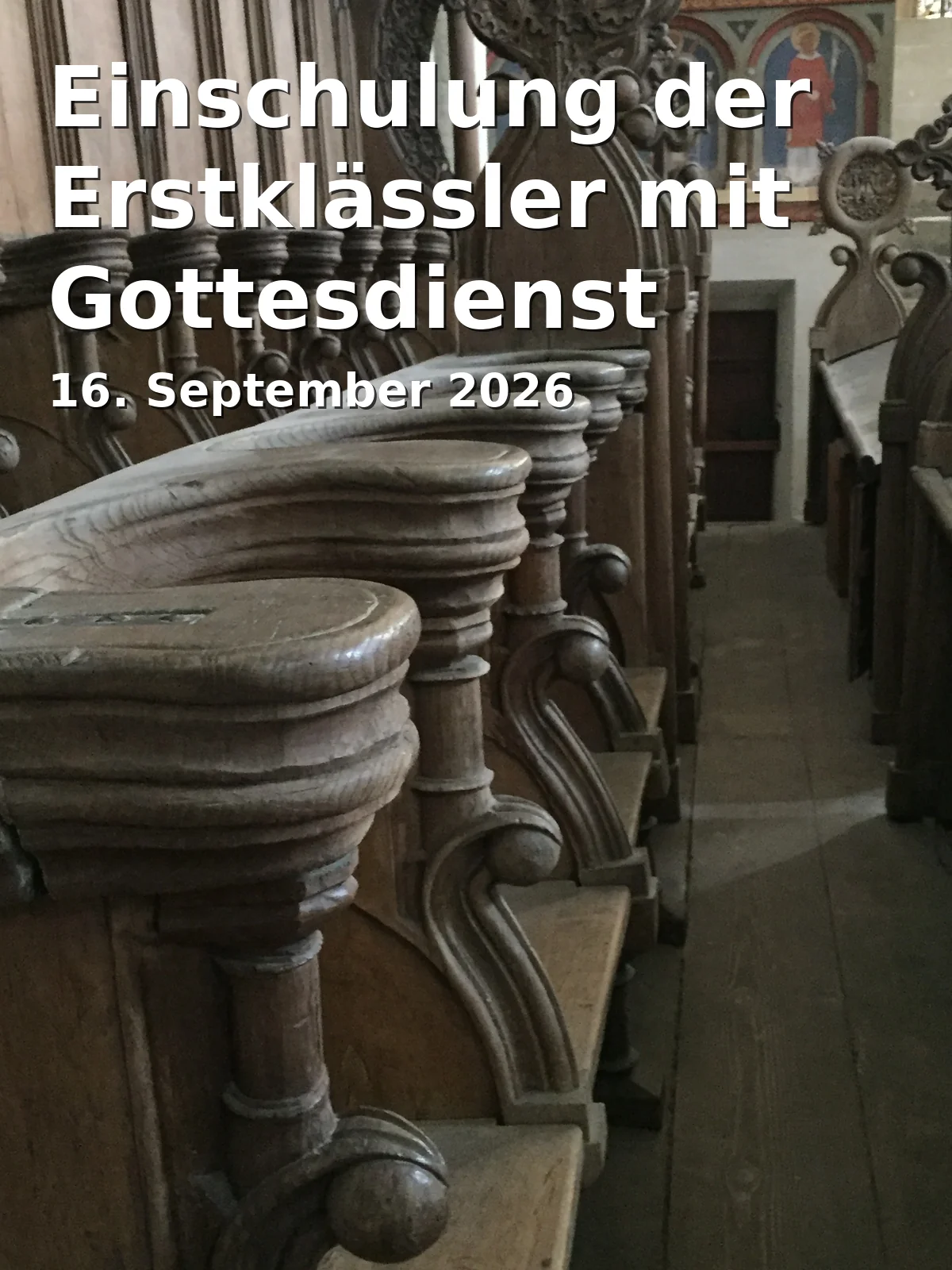
Enrollment of First Graders with Worship Service
A special school start full of blessings and community in Ebnat. Worship service for enrollment on 16.09.2026 at the Catholic Church of the Immaculate Conception. #SchoolStart

Senior Meeting
A friendly afternoon for seniors in Ebnat: coffee, cake, and community at the Catholic Community Center. Free admission, cozy and accessible. #Senior Meeting
Wine Tasting and Entertainment
An evening full of wine, conversations, and regional atmosphere awaits Ebnat on 19.09.2026. The Wine Tasting and Entertainment brings enjoyment and community together. #Aalen #Ebnat #WineEvening
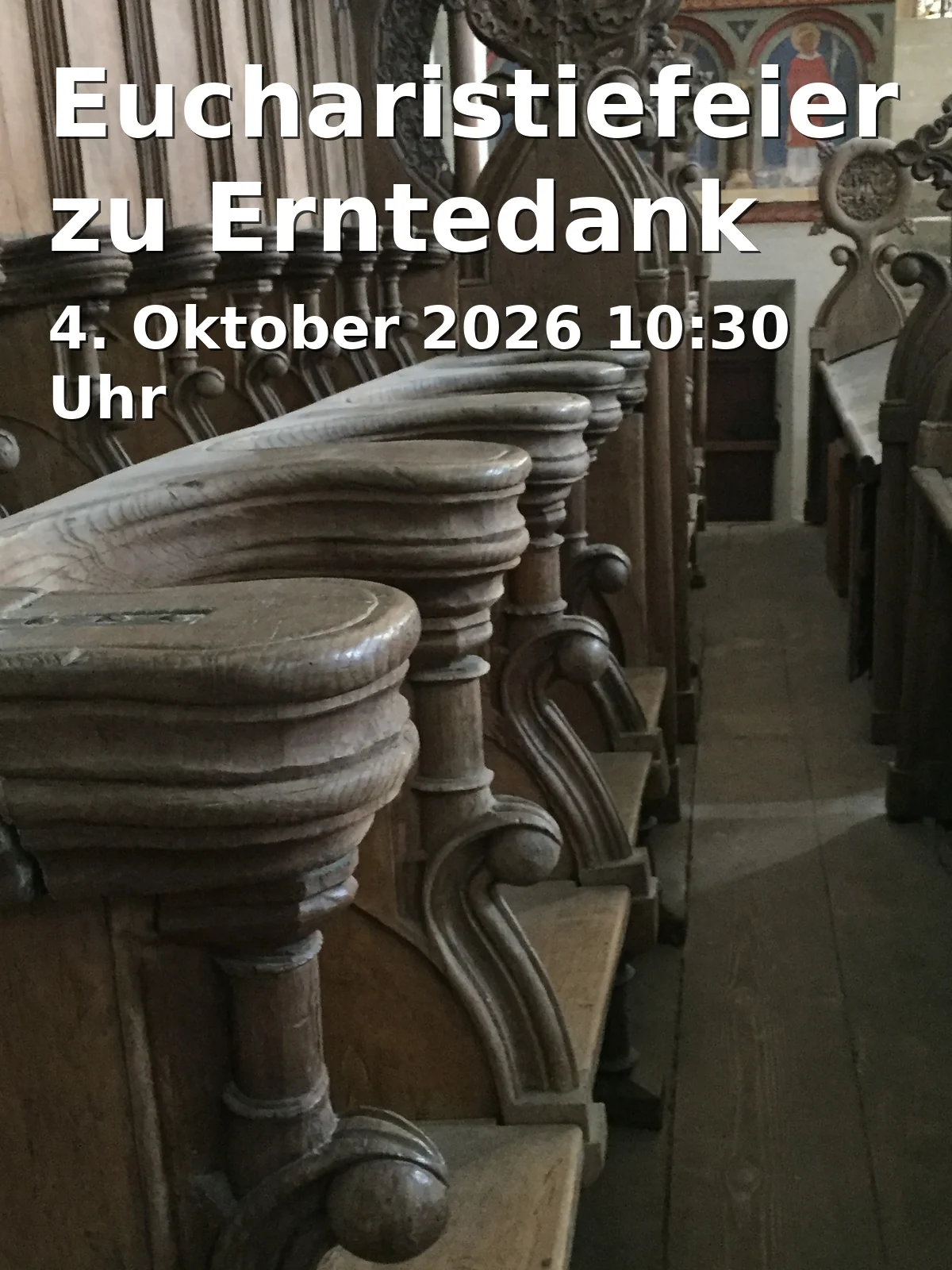
Eucharistic Celebration for Harvest Thanksgiving
Harvest Thanksgiving in Aalen-Ebnat: a solemn Eucharistic celebration with gratitude, prayer, and lived community. 04.10.2026, admission free. #HarvestThanksgiving
Frequently Asked Questions
Reviews
Markus Schwenke
15. December 2019
Beautiful church with a "new" simple extension. The old nave is beautifully decorated and the altar is intricately crafted. The current pastor is Indian and he does his job really well. He brings lightness and warmth to this church.
P 9800 PK
27. December 2019
Very beautiful new church where the old church is very well integrated.
Jürgen Hubrich
10. February 2020
Successful church extension, where the old baroque nave has been preserved and the new church space was added to the north.
Norbert Hagel
12. October 2020
Very beautiful organ
Achim (a Schwoab)
11. April 2024
A good place to talk to God