
Aalen
73432 Aalen, Deutschland
Maria Eich | Worship & Parking
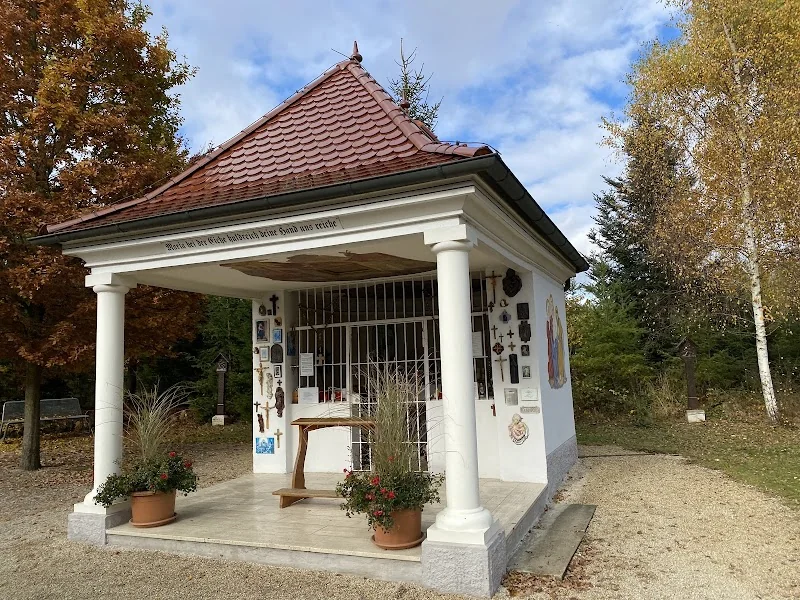
Maria Eich in Aalen-Ebnat is not an ordinary place on the map, but a vibrant pilgrimage site in the forest that has connected faith, nature, and community for centuries. Upon arrival, visitors first experience tranquility: benches under trees, a quiet place to linger, and a chapel intentionally designed as a place for reflection. The prayer site is located about one kilometer southwest of Ebnat in the middle of the forest and belongs to the local Catholic parish. For visitors seeking a spiritual place away from everyday life, Maria Eich is therefore more than just a destination for a short detour. It is a place where the path, prayer, and landscape are directly intertwined. The current chapel dates back to 1924/1925, but the history of the site goes much further back, beginning with a small group of shepherd children in the 17th century. This connection of humble origins and developed tradition continues to shape the place to this day. ([se-haertsfeld-kochertal.de](https://se-haertsfeld-kochertal.de/maria-eich))
History of Maria Eich: From the Oak to the Pilgrimage Site
The history of Maria Eich begins in 1686. At that time, three shepherd children from Ebnat met at an oak tree, prayed there repeatedly, and created a niche in the trunk for small figures of saints. From a very simple prayer place, a solid religious tradition developed. A few years later, the original image of grace of the Mother of God was added, which was placed in this niche by unknown persons in 1692. The site quickly became known because many people felt the impression of answered prayers and special support. By order of the bishop, the image of grace was transferred to the Ebnat parish church in 1745, where it remains today on the back wall of the apse above the high altar. Thus, Maria Eich remained not only a memorial site but also the origin of a pilgrimage that has permanently shaped Ebnat. ([se-haertsfeld-kochertal.de](https://se-haertsfeld-kochertal.de/maria-eich))
As time went on, the site grew step by step. Initially, a wooden chapel was built in 1738, which, however, had to be demolished again in 1745. Later, in 1854, a stone wayside shrine followed; the first pilgrimage took place there in 1859. These stages show how a small forest site gradually became a more established prayer site. Particularly important is the construction of the current open chapel in 1924/1925. This gave Maria Eich its present form as a forest chapel, which still appears intentionally open and inviting. The pastoral unit describes the site as a place of prayer that has become a destination for pilgrims far beyond the region. For visitors, this development is palpable, as the history is not only told but remains visible in the landscape. The transition from the simple oak to the chapel makes Maria Eich a place where regional piety and architectural history closely intertwine. ([se-haertsfeld-kochertal.de](https://se-haertsfeld-kochertal.de/maria-eich))
Even in the 20th century, the significance of the site remained alive. In the 1930s, Maria Eich experienced a strong influx; stations of the cross and wayside shrines were established on the grounds, some as votive offerings for answered prayers. Additionally, an image from the Schönstatt movement from 1936 was added, showcasing the spiritual diversity of the site. Another significant turning point was the theft of the old Madonna in April 1978. Since May 1979, the new Madonna has stood in the forest chapel and is now the familiar center of veneration. This restoration shows how important Maria Eich has remained to the people in Ebnat. The jubilee for the 100th anniversary of the forest chapel, celebrated in 2025, also underscores the deep roots of the site in local faith history. Therefore, Maria Eich is not only historically interesting but also an example of how a pilgrimage site is maintained and revitalized across generations. ([se-haertsfeld-kochertal.de](https://se-haertsfeld-kochertal.de/maria-eich))
Worship Services, Devotions, and Pilgrimages at Maria Eich
Maria Eich remains a place of prayer and communal devotion to this day. The official description emphasizes that numerous benches under old and young trees invite visitors to linger and attend worship services. This is what gives the place its special character: it is not just a monument but a spiritual space where quiet reflection is as possible as communal celebration. Visitors come here to pray, light candles, or simply to gain some distance from everyday life. The chapel is experienced by many as a place of comfort and peace. The daily care by dedicated community members also shows that Maria Eich does not appear museum-like but is understood as a living place of faith. This mix of easy accessibility and deep religious significance ensures that pilgrims, walkers, and locals visit the same place for different reasons. ([maria-eich.de](https://www.maria-eich.de/))
The pastoral unit and the city of Aalen regularly announce worship services, processions, and devotions at Maria Eich. This includes high masses on church festivals, rosary devotions, candlelight processions, and petition processions. A current city event announcement describes a petition procession to Maria Eich with a Eucharistic celebration, which leads from the parking lot at the St. Martin kindergarten to the forest chapel. Church communications also mention devotions at the chapel and other festive formats. This shows that Maria Eich is not only a historical pilgrimage site but a place with lived liturgy throughout the year. For visitors, this means: those who want to experience a devotion will find a place here with genuine church practice and not just a historical backdrop. ([aalen.de](https://www.aalen.de/bittprozession-nach-maria-eich-mit-eucharistiefeier.247732.htm?utm_source=openai))
A special role is played by the Festival of Ebnater Joy, which is connected to the history of Maria Eich. For the 100th anniversary of the forest chapel, around 400 believers gathered in 2025; the celebration was accompanied by a procession from the parish church to the pilgrimage site. Reports from the parish highlight that Maria Eich is a spiritual home for many people and remains connected to the long-standing veneration of Mary in the Härtsfeld region. These festivals particularly show how strongly local custom, processions, and pilgrimage culture support each other here. Therefore, understanding Maria Eich also means understanding something of the religious identity of Ebnat: it is not just about buildings but about paths, rituals, and the experience of being on a journey together. This is precisely where the attraction of the place lies to this day. ([schwaebische-post.de](https://www.schwaebische-post.de/ostalb/haertsfeld/ebnat/ebnat-und-umgebung-feiern-100-jahre-waldkapelle-maria-eich-93753008.html))
Chapel, Annual Crib, and Special Features on Site
The current chapel of Maria Eich was built in 1924/1925 and stands in the middle of the forest southwest of Ebnat. Its appearance is intentionally simple and open, so that the place does not isolate but invites. Upon arrival, one encounters a space that brings together prayer and nature without a hard boundary. The parish describes the site as a place of prayer that has grown since 1686 and is now known far beyond the region. Important is also the care by volunteers who take care of order, cleanliness, and the external condition. This makes the site appear not neglected but inhabited and respected. For visitors, this is pleasant because they experience a place that is actively maintained while retaining its tranquility. The combination of chapel, forest, and prayer site creates an atmosphere suitable for both short visits and longer stays. ([se-haertsfeld-kochertal.de](https://se-haertsfeld-kochertal.de/maria-eich))
The features include not only the chapel itself but also stations of the cross, wayside shrines, and other signs of faith on the grounds. The parish points out that additional stations and votive offerings have accumulated there in the 1930s, documenting answered prayers. Such elements make Maria Eich a vivid place of religious memory culture. The new Madonna, which has stood in the forest chapel since 1979, is also one of the defining characteristics. It continues the tradition that was interrupted by the theft of the older figure. Additionally, the open design of the site does not appear monumental but rather emphasizes closeness and humility. This precisely distinguishes Maria Eich from many other pilgrimage sites: the features are not designed for representation but for meditative accessibility. Those who linger here see how every detail is oriented towards prayer, paths, and gathering. ([se-haertsfeld-kochertal.de](https://se-haertsfeld-kochertal.de/maria-eich))
Another important aspect is the connection between place and memory. Maria Eich is explicitly described in the pastoral unit as a destination for pilgrims that has significance beyond the region. This is also evident in the fact that the site is repeatedly chosen for special worship services, memorial celebrations, and church paths. The open benches in front of the chapel, the forest location, and the visible traces of piety ensure that visitors find not only a beautiful place but a concrete spiritual environment. This is particularly crucial for people seeking a short break: there is space to sit, space to pray, and space to reflect. Combined with the historical development, this creates a place that is both simple and deeply meaningful. Maria Eich thrives on the fact that everything necessary for a pilgrimage site is present, but nothing superfluous disturbs the peace. ([maria-eich.de](https://www.maria-eich.de/))
Directions, Parking, and Path to the Pilgrimage Site
Maria Eich is located in Aalen-Ebnat in the forest, about one kilometer southwest of the town center. The location makes the visit particularly appealing, as one can perceive the path itself as part of the experience. An official route description from the region names the forest path intersection between Unterkochen and Ebnat as the starting point and simultaneously refers to a bus stop Maria Eich and a parking option. This is helpful for pilgrimages and walks, as the site can be accessed not only on foot but also via public transport or by car. The combination of forest location and good accessibility is one of the reasons why Maria Eich is attractive to both pilgrims and hikers. However, visitors should always pay attention to the current signage and local indications, as uses in the forest area may change. It remains crucial: Maria Eich is not a remote secret destination but a well-accessible place for a short, conscious journey. ([drs.de](https://www.drs.de/ansicht/artikel/ausruhen-bei-maria.html))
For church paths, Maria Eich is also specifically used as a destination for processions. A current city announcement names the parking lot at the St. Martin kindergarten as the starting point for a petition procession to the forest chapel. In another route description, a pilgrimage and hiking tour begins at the hiking parking lot Maria Eich between Unterkochen and Ebnat; from there, the chapel can be reached in about fifteen minutes on foot. This shows that there are various access points depending on whether one plans a worship service, a pilgrimage, or a simple hike. This is precisely why the question of parking and access is so important for Maria Eich: the visit begins with the choice of the appropriate starting point. Those who want to not only see the chapel but experience it should consciously walk the last meters on foot. The path through the forest enhances the special atmosphere and turns the approach into a small pilgrimage route. ([aalen.de](https://www.aalen.de/bittprozession-nach-maria-eich-mit-eucharistiefeier.247732.htm?utm_source=openai))
Since Maria Eich is a place in the forest, a large parking lot is not the focus, but rather its integration into a network of walking paths, pilgrimage routes, and forest paths. This fits the character of the site: it is about arriving rather than passing through. For visitors coming from Aalen or the surrounding area, it is therefore sensible to view the journey as a calm transition into the forest landscape. The official parish and the pastoral unit also regularly publish information about events and places that one can check in advance. Therefore, those who wish to attend a worship service, a devotion, or a procession should pay attention to the respective starting address. This way, the practical question of parking and access becomes part of the experience itself: Maria Eich is particularly special because one does not consume the place while passing by but approaches it step by step. ([se-haertsfeld-kochertal.de](https://se-haertsfeld-kochertal.de/ebnat-kirchen-und-mehr))
Hiking, Tranquility, and the Significance of Maria Eich for Ebnat
Maria Eich is interesting not only for believers but also for people who enjoy hiking, walking, or simply seeking a quiet place. The official description explicitly mentions hiking and cycling paths as well as good walking opportunities in the area. Reports from the diocese describe Maria Eich as a stopping point for hikers and cyclists, where peace and comfort can be experienced. This is an important part of its appeal: the chapel is not isolated but embedded in a landscape that connects movement and reflection. Those who come here experience the forest not just as a backdrop but as part of the atmosphere. The benches in front of the chapel, the proximity to the forest, and the clear orientation towards prayer make Maria Eich a place where one can linger briefly or consciously stay longer. This makes it attractive for different visitor groups. ([maria-eich.de](https://www.maria-eich.de/))
For Ebnat, Maria Eich has a significant identity-forming importance. The parish and local reporting emphasize that the site has been a destination for pilgrims for centuries and that the veneration extends far beyond the village. At the jubilee in 2025, Maria Eich was referred to as a spiritual home, and this formulation gets to the core: the place is for many people more than just a chapel because it brings together faith, memory, and local connection. This is also evident in the processions, regular devotions, and church festivals that repeatedly lead to Maria Eich throughout the year. Those who visit the site quickly understand that here not only a religious custom is preserved but also a piece of regional culture. Maria Eich exemplifies a pilgrimage site that appears small yet has a great impact. ([schwaebische-post.de](https://www.schwaebische-post.de/ostalb/haertsfeld/ebnat/ebnat-und-umgebung-feiern-100-jahre-waldkapelle-maria-eich-93753008.html))
Especially in the interplay of history and present, the unique strength of Maria Eich is revealed. Since the shepherd children of 1686, the image of grace from 1692, the chapel from 1924/1925, and the new Madonna from 1979, the site has transformed repeatedly without losing its essence. Today, it is simultaneously a pilgrimage site, a place of tranquility, and a destination for short breaks in nature. For visitors, this means: Maria Eich is suitable for a quiet walk, for a prayer, for a procession, or simply for a moment of distance from everyday life. The open chapel, the forest location, and the lived local piety make the place unmistakable. Those who want to understand Aalen-Ebnat should know Maria Eich, as a large part of the local religious history is condensed in this single, quiet, yet very lively place. ([se-haertsfeld-kochertal.de](https://se-haertsfeld-kochertal.de/maria-eich))
Sources:
- SE Härtsfeld-Kochertal - Maria Eich
- SE Härtsfeld-Kochertal - Ebnat Churches and More
- Diocese of Rottenburg-Stuttgart - Resting at Maria
- City of Aalen - Petition Procession to Maria Eich with Eucharistic Celebration
- Swabian Post - Ebnat and Surroundings Celebrate 100 Years of the Forest Chapel Maria Eich
Mehr anzeigenWeniger anzeigen
Maria Eich | Worship & Parking
Maria Eich in Aalen-Ebnat is not an ordinary place on the map, but a vibrant pilgrimage site in the forest that has connected faith, nature, and community for centuries. Upon arrival, visitors first experience tranquility: benches under trees, a quiet place to linger, and a chapel intentionally designed as a place for reflection. The prayer site is located about one kilometer southwest of Ebnat in the middle of the forest and belongs to the local Catholic parish. For visitors seeking a spiritual place away from everyday life, Maria Eich is therefore more than just a destination for a short detour. It is a place where the path, prayer, and landscape are directly intertwined. The current chapel dates back to 1924/1925, but the history of the site goes much further back, beginning with a small group of shepherd children in the 17th century. This connection of humble origins and developed tradition continues to shape the place to this day. ([se-haertsfeld-kochertal.de](https://se-haertsfeld-kochertal.de/maria-eich))
History of Maria Eich: From the Oak to the Pilgrimage Site
The history of Maria Eich begins in 1686. At that time, three shepherd children from Ebnat met at an oak tree, prayed there repeatedly, and created a niche in the trunk for small figures of saints. From a very simple prayer place, a solid religious tradition developed. A few years later, the original image of grace of the Mother of God was added, which was placed in this niche by unknown persons in 1692. The site quickly became known because many people felt the impression of answered prayers and special support. By order of the bishop, the image of grace was transferred to the Ebnat parish church in 1745, where it remains today on the back wall of the apse above the high altar. Thus, Maria Eich remained not only a memorial site but also the origin of a pilgrimage that has permanently shaped Ebnat. ([se-haertsfeld-kochertal.de](https://se-haertsfeld-kochertal.de/maria-eich))
As time went on, the site grew step by step. Initially, a wooden chapel was built in 1738, which, however, had to be demolished again in 1745. Later, in 1854, a stone wayside shrine followed; the first pilgrimage took place there in 1859. These stages show how a small forest site gradually became a more established prayer site. Particularly important is the construction of the current open chapel in 1924/1925. This gave Maria Eich its present form as a forest chapel, which still appears intentionally open and inviting. The pastoral unit describes the site as a place of prayer that has become a destination for pilgrims far beyond the region. For visitors, this development is palpable, as the history is not only told but remains visible in the landscape. The transition from the simple oak to the chapel makes Maria Eich a place where regional piety and architectural history closely intertwine. ([se-haertsfeld-kochertal.de](https://se-haertsfeld-kochertal.de/maria-eich))
Even in the 20th century, the significance of the site remained alive. In the 1930s, Maria Eich experienced a strong influx; stations of the cross and wayside shrines were established on the grounds, some as votive offerings for answered prayers. Additionally, an image from the Schönstatt movement from 1936 was added, showcasing the spiritual diversity of the site. Another significant turning point was the theft of the old Madonna in April 1978. Since May 1979, the new Madonna has stood in the forest chapel and is now the familiar center of veneration. This restoration shows how important Maria Eich has remained to the people in Ebnat. The jubilee for the 100th anniversary of the forest chapel, celebrated in 2025, also underscores the deep roots of the site in local faith history. Therefore, Maria Eich is not only historically interesting but also an example of how a pilgrimage site is maintained and revitalized across generations. ([se-haertsfeld-kochertal.de](https://se-haertsfeld-kochertal.de/maria-eich))
Worship Services, Devotions, and Pilgrimages at Maria Eich
Maria Eich remains a place of prayer and communal devotion to this day. The official description emphasizes that numerous benches under old and young trees invite visitors to linger and attend worship services. This is what gives the place its special character: it is not just a monument but a spiritual space where quiet reflection is as possible as communal celebration. Visitors come here to pray, light candles, or simply to gain some distance from everyday life. The chapel is experienced by many as a place of comfort and peace. The daily care by dedicated community members also shows that Maria Eich does not appear museum-like but is understood as a living place of faith. This mix of easy accessibility and deep religious significance ensures that pilgrims, walkers, and locals visit the same place for different reasons. ([maria-eich.de](https://www.maria-eich.de/))
The pastoral unit and the city of Aalen regularly announce worship services, processions, and devotions at Maria Eich. This includes high masses on church festivals, rosary devotions, candlelight processions, and petition processions. A current city event announcement describes a petition procession to Maria Eich with a Eucharistic celebration, which leads from the parking lot at the St. Martin kindergarten to the forest chapel. Church communications also mention devotions at the chapel and other festive formats. This shows that Maria Eich is not only a historical pilgrimage site but a place with lived liturgy throughout the year. For visitors, this means: those who want to experience a devotion will find a place here with genuine church practice and not just a historical backdrop. ([aalen.de](https://www.aalen.de/bittprozession-nach-maria-eich-mit-eucharistiefeier.247732.htm?utm_source=openai))
A special role is played by the Festival of Ebnater Joy, which is connected to the history of Maria Eich. For the 100th anniversary of the forest chapel, around 400 believers gathered in 2025; the celebration was accompanied by a procession from the parish church to the pilgrimage site. Reports from the parish highlight that Maria Eich is a spiritual home for many people and remains connected to the long-standing veneration of Mary in the Härtsfeld region. These festivals particularly show how strongly local custom, processions, and pilgrimage culture support each other here. Therefore, understanding Maria Eich also means understanding something of the religious identity of Ebnat: it is not just about buildings but about paths, rituals, and the experience of being on a journey together. This is precisely where the attraction of the place lies to this day. ([schwaebische-post.de](https://www.schwaebische-post.de/ostalb/haertsfeld/ebnat/ebnat-und-umgebung-feiern-100-jahre-waldkapelle-maria-eich-93753008.html))
Chapel, Annual Crib, and Special Features on Site
The current chapel of Maria Eich was built in 1924/1925 and stands in the middle of the forest southwest of Ebnat. Its appearance is intentionally simple and open, so that the place does not isolate but invites. Upon arrival, one encounters a space that brings together prayer and nature without a hard boundary. The parish describes the site as a place of prayer that has grown since 1686 and is now known far beyond the region. Important is also the care by volunteers who take care of order, cleanliness, and the external condition. This makes the site appear not neglected but inhabited and respected. For visitors, this is pleasant because they experience a place that is actively maintained while retaining its tranquility. The combination of chapel, forest, and prayer site creates an atmosphere suitable for both short visits and longer stays. ([se-haertsfeld-kochertal.de](https://se-haertsfeld-kochertal.de/maria-eich))
The features include not only the chapel itself but also stations of the cross, wayside shrines, and other signs of faith on the grounds. The parish points out that additional stations and votive offerings have accumulated there in the 1930s, documenting answered prayers. Such elements make Maria Eich a vivid place of religious memory culture. The new Madonna, which has stood in the forest chapel since 1979, is also one of the defining characteristics. It continues the tradition that was interrupted by the theft of the older figure. Additionally, the open design of the site does not appear monumental but rather emphasizes closeness and humility. This precisely distinguishes Maria Eich from many other pilgrimage sites: the features are not designed for representation but for meditative accessibility. Those who linger here see how every detail is oriented towards prayer, paths, and gathering. ([se-haertsfeld-kochertal.de](https://se-haertsfeld-kochertal.de/maria-eich))
Another important aspect is the connection between place and memory. Maria Eich is explicitly described in the pastoral unit as a destination for pilgrims that has significance beyond the region. This is also evident in the fact that the site is repeatedly chosen for special worship services, memorial celebrations, and church paths. The open benches in front of the chapel, the forest location, and the visible traces of piety ensure that visitors find not only a beautiful place but a concrete spiritual environment. This is particularly crucial for people seeking a short break: there is space to sit, space to pray, and space to reflect. Combined with the historical development, this creates a place that is both simple and deeply meaningful. Maria Eich thrives on the fact that everything necessary for a pilgrimage site is present, but nothing superfluous disturbs the peace. ([maria-eich.de](https://www.maria-eich.de/))
Directions, Parking, and Path to the Pilgrimage Site
Maria Eich is located in Aalen-Ebnat in the forest, about one kilometer southwest of the town center. The location makes the visit particularly appealing, as one can perceive the path itself as part of the experience. An official route description from the region names the forest path intersection between Unterkochen and Ebnat as the starting point and simultaneously refers to a bus stop Maria Eich and a parking option. This is helpful for pilgrimages and walks, as the site can be accessed not only on foot but also via public transport or by car. The combination of forest location and good accessibility is one of the reasons why Maria Eich is attractive to both pilgrims and hikers. However, visitors should always pay attention to the current signage and local indications, as uses in the forest area may change. It remains crucial: Maria Eich is not a remote secret destination but a well-accessible place for a short, conscious journey. ([drs.de](https://www.drs.de/ansicht/artikel/ausruhen-bei-maria.html))
For church paths, Maria Eich is also specifically used as a destination for processions. A current city announcement names the parking lot at the St. Martin kindergarten as the starting point for a petition procession to the forest chapel. In another route description, a pilgrimage and hiking tour begins at the hiking parking lot Maria Eich between Unterkochen and Ebnat; from there, the chapel can be reached in about fifteen minutes on foot. This shows that there are various access points depending on whether one plans a worship service, a pilgrimage, or a simple hike. This is precisely why the question of parking and access is so important for Maria Eich: the visit begins with the choice of the appropriate starting point. Those who want to not only see the chapel but experience it should consciously walk the last meters on foot. The path through the forest enhances the special atmosphere and turns the approach into a small pilgrimage route. ([aalen.de](https://www.aalen.de/bittprozession-nach-maria-eich-mit-eucharistiefeier.247732.htm?utm_source=openai))
Since Maria Eich is a place in the forest, a large parking lot is not the focus, but rather its integration into a network of walking paths, pilgrimage routes, and forest paths. This fits the character of the site: it is about arriving rather than passing through. For visitors coming from Aalen or the surrounding area, it is therefore sensible to view the journey as a calm transition into the forest landscape. The official parish and the pastoral unit also regularly publish information about events and places that one can check in advance. Therefore, those who wish to attend a worship service, a devotion, or a procession should pay attention to the respective starting address. This way, the practical question of parking and access becomes part of the experience itself: Maria Eich is particularly special because one does not consume the place while passing by but approaches it step by step. ([se-haertsfeld-kochertal.de](https://se-haertsfeld-kochertal.de/ebnat-kirchen-und-mehr))
Hiking, Tranquility, and the Significance of Maria Eich for Ebnat
Maria Eich is interesting not only for believers but also for people who enjoy hiking, walking, or simply seeking a quiet place. The official description explicitly mentions hiking and cycling paths as well as good walking opportunities in the area. Reports from the diocese describe Maria Eich as a stopping point for hikers and cyclists, where peace and comfort can be experienced. This is an important part of its appeal: the chapel is not isolated but embedded in a landscape that connects movement and reflection. Those who come here experience the forest not just as a backdrop but as part of the atmosphere. The benches in front of the chapel, the proximity to the forest, and the clear orientation towards prayer make Maria Eich a place where one can linger briefly or consciously stay longer. This makes it attractive for different visitor groups. ([maria-eich.de](https://www.maria-eich.de/))
For Ebnat, Maria Eich has a significant identity-forming importance. The parish and local reporting emphasize that the site has been a destination for pilgrims for centuries and that the veneration extends far beyond the village. At the jubilee in 2025, Maria Eich was referred to as a spiritual home, and this formulation gets to the core: the place is for many people more than just a chapel because it brings together faith, memory, and local connection. This is also evident in the processions, regular devotions, and church festivals that repeatedly lead to Maria Eich throughout the year. Those who visit the site quickly understand that here not only a religious custom is preserved but also a piece of regional culture. Maria Eich exemplifies a pilgrimage site that appears small yet has a great impact. ([schwaebische-post.de](https://www.schwaebische-post.de/ostalb/haertsfeld/ebnat/ebnat-und-umgebung-feiern-100-jahre-waldkapelle-maria-eich-93753008.html))
Especially in the interplay of history and present, the unique strength of Maria Eich is revealed. Since the shepherd children of 1686, the image of grace from 1692, the chapel from 1924/1925, and the new Madonna from 1979, the site has transformed repeatedly without losing its essence. Today, it is simultaneously a pilgrimage site, a place of tranquility, and a destination for short breaks in nature. For visitors, this means: Maria Eich is suitable for a quiet walk, for a prayer, for a procession, or simply for a moment of distance from everyday life. The open chapel, the forest location, and the lived local piety make the place unmistakable. Those who want to understand Aalen-Ebnat should know Maria Eich, as a large part of the local religious history is condensed in this single, quiet, yet very lively place. ([se-haertsfeld-kochertal.de](https://se-haertsfeld-kochertal.de/maria-eich))
Sources:
- SE Härtsfeld-Kochertal - Maria Eich
- SE Härtsfeld-Kochertal - Ebnat Churches and More
- Diocese of Rottenburg-Stuttgart - Resting at Maria
- City of Aalen - Petition Procession to Maria Eich with Eucharistic Celebration
- Swabian Post - Ebnat and Surroundings Celebrate 100 Years of the Forest Chapel Maria Eich
Maria Eich | Worship & Parking
Maria Eich in Aalen-Ebnat is not an ordinary place on the map, but a vibrant pilgrimage site in the forest that has connected faith, nature, and community for centuries. Upon arrival, visitors first experience tranquility: benches under trees, a quiet place to linger, and a chapel intentionally designed as a place for reflection. The prayer site is located about one kilometer southwest of Ebnat in the middle of the forest and belongs to the local Catholic parish. For visitors seeking a spiritual place away from everyday life, Maria Eich is therefore more than just a destination for a short detour. It is a place where the path, prayer, and landscape are directly intertwined. The current chapel dates back to 1924/1925, but the history of the site goes much further back, beginning with a small group of shepherd children in the 17th century. This connection of humble origins and developed tradition continues to shape the place to this day. ([se-haertsfeld-kochertal.de](https://se-haertsfeld-kochertal.de/maria-eich))
History of Maria Eich: From the Oak to the Pilgrimage Site
The history of Maria Eich begins in 1686. At that time, three shepherd children from Ebnat met at an oak tree, prayed there repeatedly, and created a niche in the trunk for small figures of saints. From a very simple prayer place, a solid religious tradition developed. A few years later, the original image of grace of the Mother of God was added, which was placed in this niche by unknown persons in 1692. The site quickly became known because many people felt the impression of answered prayers and special support. By order of the bishop, the image of grace was transferred to the Ebnat parish church in 1745, where it remains today on the back wall of the apse above the high altar. Thus, Maria Eich remained not only a memorial site but also the origin of a pilgrimage that has permanently shaped Ebnat. ([se-haertsfeld-kochertal.de](https://se-haertsfeld-kochertal.de/maria-eich))
As time went on, the site grew step by step. Initially, a wooden chapel was built in 1738, which, however, had to be demolished again in 1745. Later, in 1854, a stone wayside shrine followed; the first pilgrimage took place there in 1859. These stages show how a small forest site gradually became a more established prayer site. Particularly important is the construction of the current open chapel in 1924/1925. This gave Maria Eich its present form as a forest chapel, which still appears intentionally open and inviting. The pastoral unit describes the site as a place of prayer that has become a destination for pilgrims far beyond the region. For visitors, this development is palpable, as the history is not only told but remains visible in the landscape. The transition from the simple oak to the chapel makes Maria Eich a place where regional piety and architectural history closely intertwine. ([se-haertsfeld-kochertal.de](https://se-haertsfeld-kochertal.de/maria-eich))
Even in the 20th century, the significance of the site remained alive. In the 1930s, Maria Eich experienced a strong influx; stations of the cross and wayside shrines were established on the grounds, some as votive offerings for answered prayers. Additionally, an image from the Schönstatt movement from 1936 was added, showcasing the spiritual diversity of the site. Another significant turning point was the theft of the old Madonna in April 1978. Since May 1979, the new Madonna has stood in the forest chapel and is now the familiar center of veneration. This restoration shows how important Maria Eich has remained to the people in Ebnat. The jubilee for the 100th anniversary of the forest chapel, celebrated in 2025, also underscores the deep roots of the site in local faith history. Therefore, Maria Eich is not only historically interesting but also an example of how a pilgrimage site is maintained and revitalized across generations. ([se-haertsfeld-kochertal.de](https://se-haertsfeld-kochertal.de/maria-eich))
Worship Services, Devotions, and Pilgrimages at Maria Eich
Maria Eich remains a place of prayer and communal devotion to this day. The official description emphasizes that numerous benches under old and young trees invite visitors to linger and attend worship services. This is what gives the place its special character: it is not just a monument but a spiritual space where quiet reflection is as possible as communal celebration. Visitors come here to pray, light candles, or simply to gain some distance from everyday life. The chapel is experienced by many as a place of comfort and peace. The daily care by dedicated community members also shows that Maria Eich does not appear museum-like but is understood as a living place of faith. This mix of easy accessibility and deep religious significance ensures that pilgrims, walkers, and locals visit the same place for different reasons. ([maria-eich.de](https://www.maria-eich.de/))
The pastoral unit and the city of Aalen regularly announce worship services, processions, and devotions at Maria Eich. This includes high masses on church festivals, rosary devotions, candlelight processions, and petition processions. A current city event announcement describes a petition procession to Maria Eich with a Eucharistic celebration, which leads from the parking lot at the St. Martin kindergarten to the forest chapel. Church communications also mention devotions at the chapel and other festive formats. This shows that Maria Eich is not only a historical pilgrimage site but a place with lived liturgy throughout the year. For visitors, this means: those who want to experience a devotion will find a place here with genuine church practice and not just a historical backdrop. ([aalen.de](https://www.aalen.de/bittprozession-nach-maria-eich-mit-eucharistiefeier.247732.htm?utm_source=openai))
A special role is played by the Festival of Ebnater Joy, which is connected to the history of Maria Eich. For the 100th anniversary of the forest chapel, around 400 believers gathered in 2025; the celebration was accompanied by a procession from the parish church to the pilgrimage site. Reports from the parish highlight that Maria Eich is a spiritual home for many people and remains connected to the long-standing veneration of Mary in the Härtsfeld region. These festivals particularly show how strongly local custom, processions, and pilgrimage culture support each other here. Therefore, understanding Maria Eich also means understanding something of the religious identity of Ebnat: it is not just about buildings but about paths, rituals, and the experience of being on a journey together. This is precisely where the attraction of the place lies to this day. ([schwaebische-post.de](https://www.schwaebische-post.de/ostalb/haertsfeld/ebnat/ebnat-und-umgebung-feiern-100-jahre-waldkapelle-maria-eich-93753008.html))
Chapel, Annual Crib, and Special Features on Site
The current chapel of Maria Eich was built in 1924/1925 and stands in the middle of the forest southwest of Ebnat. Its appearance is intentionally simple and open, so that the place does not isolate but invites. Upon arrival, one encounters a space that brings together prayer and nature without a hard boundary. The parish describes the site as a place of prayer that has grown since 1686 and is now known far beyond the region. Important is also the care by volunteers who take care of order, cleanliness, and the external condition. This makes the site appear not neglected but inhabited and respected. For visitors, this is pleasant because they experience a place that is actively maintained while retaining its tranquility. The combination of chapel, forest, and prayer site creates an atmosphere suitable for both short visits and longer stays. ([se-haertsfeld-kochertal.de](https://se-haertsfeld-kochertal.de/maria-eich))
The features include not only the chapel itself but also stations of the cross, wayside shrines, and other signs of faith on the grounds. The parish points out that additional stations and votive offerings have accumulated there in the 1930s, documenting answered prayers. Such elements make Maria Eich a vivid place of religious memory culture. The new Madonna, which has stood in the forest chapel since 1979, is also one of the defining characteristics. It continues the tradition that was interrupted by the theft of the older figure. Additionally, the open design of the site does not appear monumental but rather emphasizes closeness and humility. This precisely distinguishes Maria Eich from many other pilgrimage sites: the features are not designed for representation but for meditative accessibility. Those who linger here see how every detail is oriented towards prayer, paths, and gathering. ([se-haertsfeld-kochertal.de](https://se-haertsfeld-kochertal.de/maria-eich))
Another important aspect is the connection between place and memory. Maria Eich is explicitly described in the pastoral unit as a destination for pilgrims that has significance beyond the region. This is also evident in the fact that the site is repeatedly chosen for special worship services, memorial celebrations, and church paths. The open benches in front of the chapel, the forest location, and the visible traces of piety ensure that visitors find not only a beautiful place but a concrete spiritual environment. This is particularly crucial for people seeking a short break: there is space to sit, space to pray, and space to reflect. Combined with the historical development, this creates a place that is both simple and deeply meaningful. Maria Eich thrives on the fact that everything necessary for a pilgrimage site is present, but nothing superfluous disturbs the peace. ([maria-eich.de](https://www.maria-eich.de/))
Directions, Parking, and Path to the Pilgrimage Site
Maria Eich is located in Aalen-Ebnat in the forest, about one kilometer southwest of the town center. The location makes the visit particularly appealing, as one can perceive the path itself as part of the experience. An official route description from the region names the forest path intersection between Unterkochen and Ebnat as the starting point and simultaneously refers to a bus stop Maria Eich and a parking option. This is helpful for pilgrimages and walks, as the site can be accessed not only on foot but also via public transport or by car. The combination of forest location and good accessibility is one of the reasons why Maria Eich is attractive to both pilgrims and hikers. However, visitors should always pay attention to the current signage and local indications, as uses in the forest area may change. It remains crucial: Maria Eich is not a remote secret destination but a well-accessible place for a short, conscious journey. ([drs.de](https://www.drs.de/ansicht/artikel/ausruhen-bei-maria.html))
For church paths, Maria Eich is also specifically used as a destination for processions. A current city announcement names the parking lot at the St. Martin kindergarten as the starting point for a petition procession to the forest chapel. In another route description, a pilgrimage and hiking tour begins at the hiking parking lot Maria Eich between Unterkochen and Ebnat; from there, the chapel can be reached in about fifteen minutes on foot. This shows that there are various access points depending on whether one plans a worship service, a pilgrimage, or a simple hike. This is precisely why the question of parking and access is so important for Maria Eich: the visit begins with the choice of the appropriate starting point. Those who want to not only see the chapel but experience it should consciously walk the last meters on foot. The path through the forest enhances the special atmosphere and turns the approach into a small pilgrimage route. ([aalen.de](https://www.aalen.de/bittprozession-nach-maria-eich-mit-eucharistiefeier.247732.htm?utm_source=openai))
Since Maria Eich is a place in the forest, a large parking lot is not the focus, but rather its integration into a network of walking paths, pilgrimage routes, and forest paths. This fits the character of the site: it is about arriving rather than passing through. For visitors coming from Aalen or the surrounding area, it is therefore sensible to view the journey as a calm transition into the forest landscape. The official parish and the pastoral unit also regularly publish information about events and places that one can check in advance. Therefore, those who wish to attend a worship service, a devotion, or a procession should pay attention to the respective starting address. This way, the practical question of parking and access becomes part of the experience itself: Maria Eich is particularly special because one does not consume the place while passing by but approaches it step by step. ([se-haertsfeld-kochertal.de](https://se-haertsfeld-kochertal.de/ebnat-kirchen-und-mehr))
Hiking, Tranquility, and the Significance of Maria Eich for Ebnat
Maria Eich is interesting not only for believers but also for people who enjoy hiking, walking, or simply seeking a quiet place. The official description explicitly mentions hiking and cycling paths as well as good walking opportunities in the area. Reports from the diocese describe Maria Eich as a stopping point for hikers and cyclists, where peace and comfort can be experienced. This is an important part of its appeal: the chapel is not isolated but embedded in a landscape that connects movement and reflection. Those who come here experience the forest not just as a backdrop but as part of the atmosphere. The benches in front of the chapel, the proximity to the forest, and the clear orientation towards prayer make Maria Eich a place where one can linger briefly or consciously stay longer. This makes it attractive for different visitor groups. ([maria-eich.de](https://www.maria-eich.de/))
For Ebnat, Maria Eich has a significant identity-forming importance. The parish and local reporting emphasize that the site has been a destination for pilgrims for centuries and that the veneration extends far beyond the village. At the jubilee in 2025, Maria Eich was referred to as a spiritual home, and this formulation gets to the core: the place is for many people more than just a chapel because it brings together faith, memory, and local connection. This is also evident in the processions, regular devotions, and church festivals that repeatedly lead to Maria Eich throughout the year. Those who visit the site quickly understand that here not only a religious custom is preserved but also a piece of regional culture. Maria Eich exemplifies a pilgrimage site that appears small yet has a great impact. ([schwaebische-post.de](https://www.schwaebische-post.de/ostalb/haertsfeld/ebnat/ebnat-und-umgebung-feiern-100-jahre-waldkapelle-maria-eich-93753008.html))
Especially in the interplay of history and present, the unique strength of Maria Eich is revealed. Since the shepherd children of 1686, the image of grace from 1692, the chapel from 1924/1925, and the new Madonna from 1979, the site has transformed repeatedly without losing its essence. Today, it is simultaneously a pilgrimage site, a place of tranquility, and a destination for short breaks in nature. For visitors, this means: Maria Eich is suitable for a quiet walk, for a prayer, for a procession, or simply for a moment of distance from everyday life. The open chapel, the forest location, and the lived local piety make the place unmistakable. Those who want to understand Aalen-Ebnat should know Maria Eich, as a large part of the local religious history is condensed in this single, quiet, yet very lively place. ([se-haertsfeld-kochertal.de](https://se-haertsfeld-kochertal.de/maria-eich))
Sources:
- SE Härtsfeld-Kochertal - Maria Eich
- SE Härtsfeld-Kochertal - Ebnat Churches and More
- Diocese of Rottenburg-Stuttgart - Resting at Maria
- City of Aalen - Petition Procession to Maria Eich with Eucharistic Celebration
- Swabian Post - Ebnat and Surroundings Celebrate 100 Years of the Forest Chapel Maria Eich
Upcoming Events
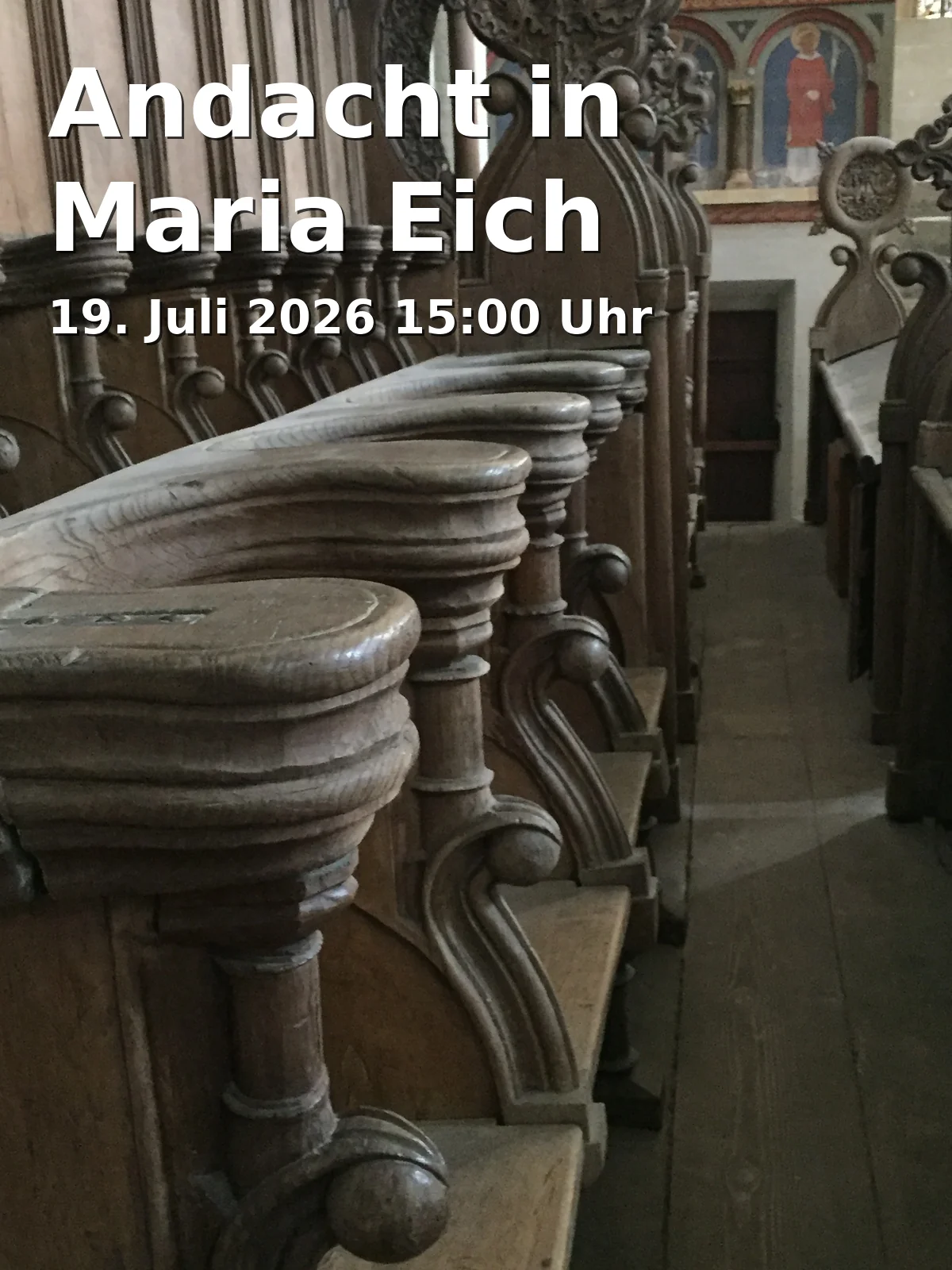
Devotion in Maria Eich
A quiet hour for heart and soul: The devotion in Maria Eich connects prayer, nature, and Catholic tradition. July 19, 2026, at 3:00 PM, free entry. #Aalen #MariaEich #Devotion
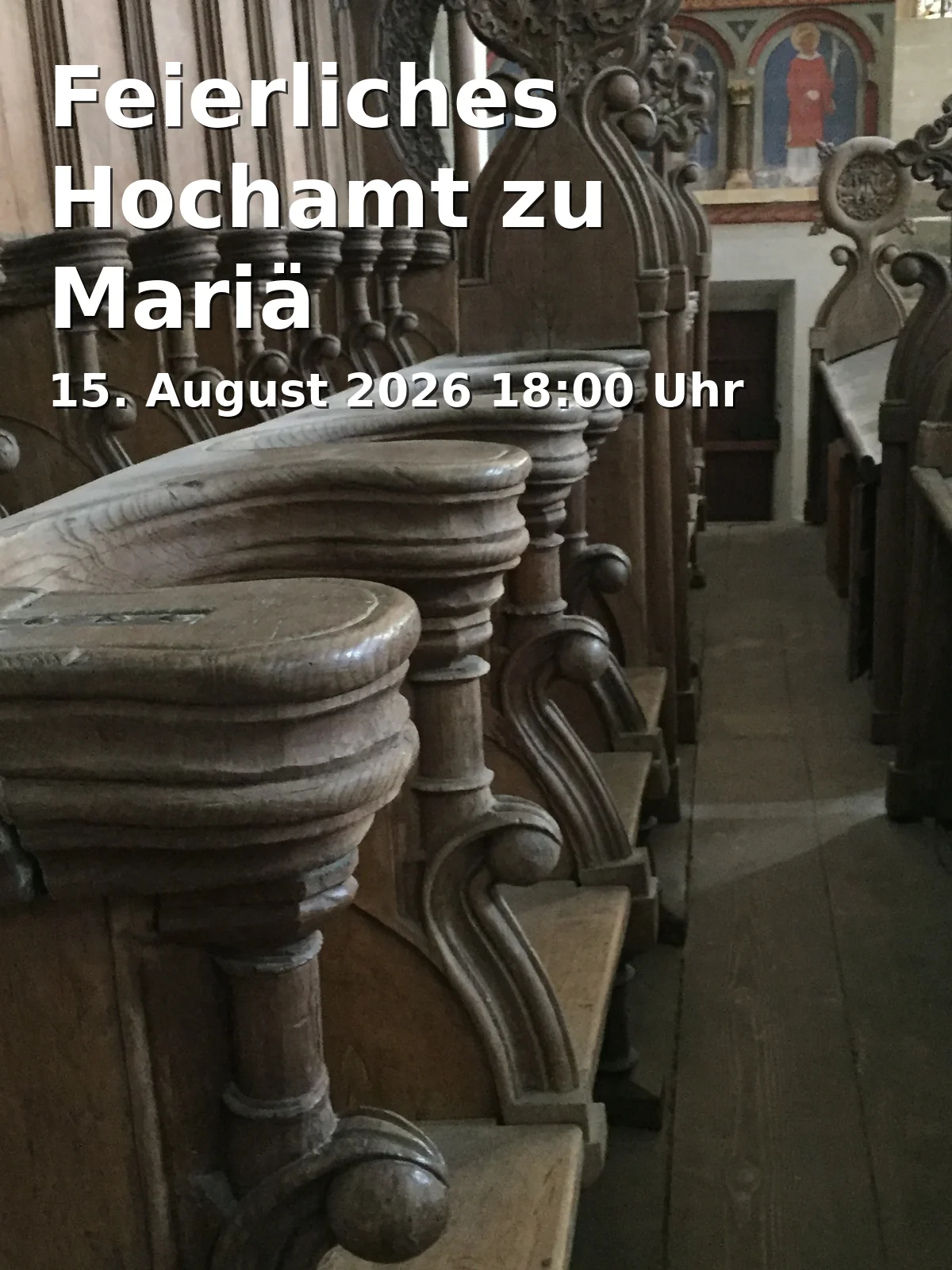
Celebratory High Mass for the Assumption of Mary with Sale and Blessing of Herb Bundles
A festive Marian evening in Maria Eich: High Mass, herb bundles, and lived community. On 08/15/2026 at 6:00 PM, visitors can expect a special faith experience. #AssumptionOfMary
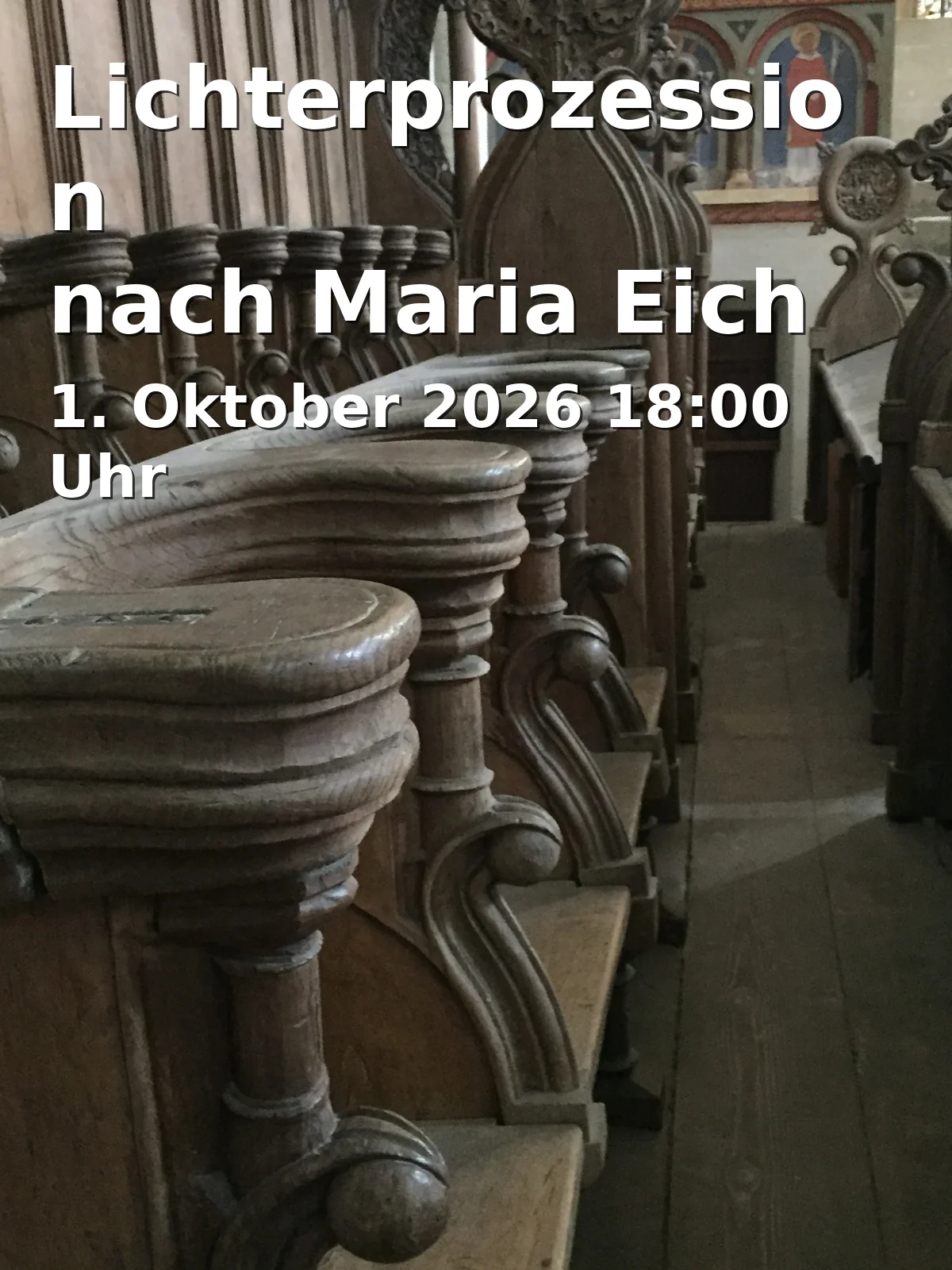
Candlelight Procession to Maria Eich with Rosary Devotion
Candles, forest, and prayer: The candlelight procession to Maria Eich invites you to a quiet devotion to Mary in deep community. 01.10.2026, admission free. #Faith
Frequently Asked Questions
Reviews
Sasha Zub
15. January 2026
The path to the chapel goes through the forest or along the road between the forest and Ebnat. Along the way, you see Christmas decorations made from various materials, in different shapes and sizes, dedicated to the birth of Christ. We discovered a winter fairy tale – I'm sharing the photos.
Heike P
4. February 2023
Could be a really lovely little place of worship, BUT this massive gate in front is absolutely ridiculous ‼️ It just doesn't belong in front of a place of worship! The 3 ⭐ are for the really beautiful forest path that leads from Ebnat to the chapel....
Ulrich Betzold
28. October 2020
A very beautiful chapel in the middle of the forest, great as a hiking destination.
Thomas Eckle
2. January 2024
It is a very beautiful place for reflection and "finding oneself," and it is maintained with a lot of love, time, and effort. A very nice place that is easily accessible on foot.
Sibylle Stahl
1. April 2021
Lovely little chapel in the middle of the forest, also great for hiking.