
Aalen
73432 Aalen, Germany
Kocherburg Ruins | Photos & Unterkochen
The Kocherburg ruins in Aalen-Unterkochen are not a classic excursion destination with a ticket office and glass facade, but a historical site that today resembles a quiet open-air chapter of the city's history. Those searching for kocherburg ruins photos, kocherburg unterkochen, or kocherburg ruins aalen will find not only a striking ruin in the forest but also a monument with surprisingly deep historical layers: The site likely dates back to the 11th century, was first mentioned in 1300 as castrum Kochenburch, and was later altered in several construction phases. Today, after archaeological preservation work, it is understandable in its original extent and can be explored by visitors on their own. This makes the Kocherburg a rare place where history is not displayed in a showcase but remains directly experienceable among wall remnants, forest light, and trail marks. At the same time, the Kocherburg ruins are a good example of how a historical site can transform into a modern leisure and cultural experience without losing its authenticity. The area is open, quiet, and surrounded by nature, yet embedded in the local culture of remembrance. This very contrast explains why the search for photos, directions, history, and hiking opportunities is so closely linked to the name Kocherburg. ([aalen-tourismus.de](https://www.aalen-tourismus.de/erlebnis-unterkochen.206133.htm))
Photos, Location, and First Impressions in Unterkochen
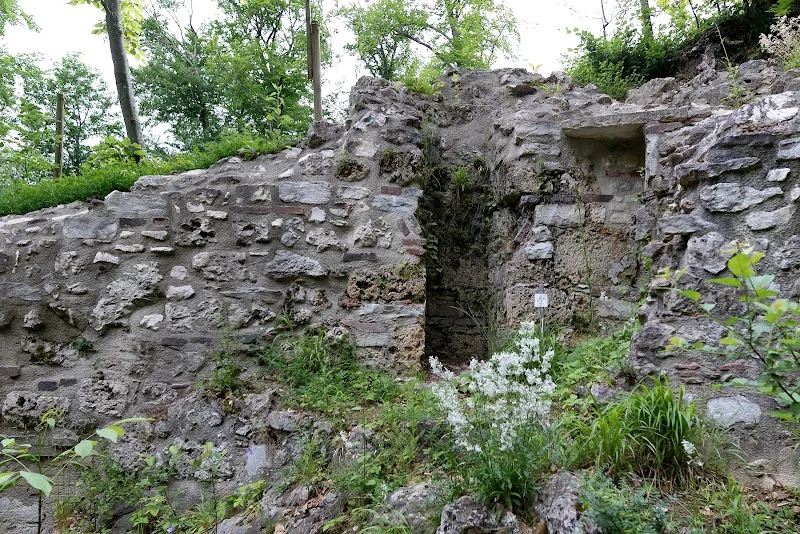
For most visitors, the allure of the Kocherburg ruins begins with the first view of the site itself. The city of Aalen describes the Kocherburg as the ruins of a hill castle in Unterkochen; at the same time, it is located in a dense beech forest, so the character of the place is strongly shaped by nature, shade, and the open spaces of the exposed wall sections. This very mix makes photos so attractive: old stone structures, forest floor, light spots between the trees, and the contrast between archaeological order and the grown forest atmosphere. The ruin is not an over-staged monument but a site where one can quietly read the traces of history. According to the city, an archaeological tour through and around the castle area is now possible, and there is even a treasure hunt for children on site. This is equally interesting for families and curious walkers because the visit consists not only of mere viewing but of discovering, comparing, and thinking further. Those who want to photograph the Kocherburg ruin benefit less from a monumental single view than from details: stairs, preserved foundations, embankments, trail markers, and the transition between open areas and forest. The official representation of the city also emphasizes that the ruin is again understandable in its original extent after the preservation measures. This is important for photos and experiences because it prevents the site from appearing as just any pile of stones, but rather as a clear, readable structure with historical depth. The tourist side of Aalen also highlights the Kocherburg as part of the Unterkochen experience and places it in a landscape that connects further destinations such as Kocherursprung, Schättere, and Viaduct. So those searching for kocherburg ruins photos or kocherburg photos are often actually looking for exactly this impression: a quiet place with history where nature and monument merge. The ruin is thus ideal for people who expect substance, atmosphere, and an authentic view of the Ostalb during their outing, rather than a loud staging. ([aalen-tourismus.de](https://www.aalen-tourismus.de/erlebnis-unterkochen.206133.htm))
History of the Kocherburg: From Fortification to Cultural Monument
The history of the Kocherburg ruins is unusually dense because it encompasses several epochs in the same area. According to the city of Aalen, the Kocherburg was built into a prehistoric fortification and was already used as a hill castle in the 11th century; it is first documented in 1300 as castrum Kochenburch. It is likely even older, as the roots of the name trace back to the Lords of Kochen, who around 1147 represented the interests of the Ellwangen Monastery in the region as vassals. In the Middle Ages, the site served not only as a fortification but also as a center of power and administration. By the mid-14th century, it lost its military character and became the seat of the Kochenburg office. In the early 17th century, decline began: In 1627, Prince-Provost Jakob Blarer von Wartensee had parts of the castle demolished and converted into a Renaissance palace, which was completed in 1632. However, the new palace did not last long, as it was destroyed by the Swedes in 1645 during the Thirty Years' War. After that began the time of the ruin. For many decades, and according to other sources for almost 250 years, the Kocherburg served as a quarry; material and building stones were extracted from the walls for other projects, causing its original function to be almost forgotten. This is precisely why the rediscovery by engaged citizens is so important. The city tells of the so-called Arthurian knights of the Kocherburg, who in 1882 hoisted a white flag on the ruins and romantically invited the old castle before Adolf Palm initiated a scientific investigation with Konrad Albert Koch in 1913. A new, very modern boost came from 2007 with the initiative Ruine Kocherburg within the Aalen Historical Society: With experts from Ostalb archaeology, the wall remnants were researched, secured, and prepared in their current form by 2022. In 2023, this civic engagement was even awarded the Silver Hemisphere of the German Prize for Monument Protection. This explains why the Kocherburg ruins are not only perceived as a romantic forest backdrop today but also as a serious architectural cultural monument with documented research and clear provenance. ([aalen.de](https://www.aalen.de/kocherburg))
The Legend of Junker Hans and Why It Belongs to the Place
Hardly any search term fits the character of the Kocherburg as well as the desire for kocherburg unterkochen or for stories surrounding the ruin. This is exactly where the legend of Junker Hans comes in, which is not told on the city’s website as a mere ornament but as part of the identity of the place. According to tradition, a cruel knight lived in the Kocherburg, who loved hunting above all else and would even pull the Unterkochener out of church to use them in drive hunts. The story is deliberately exaggerated, almost theatrical, and that is precisely why it is so memorable: It explains why a sense of tension, individuality, and local storytelling has persisted around the ruin to this day. The city makes it clear that the castle is not only made of stone but also of memory, of stories, and of a piece of regional imagination. For visitors, this is exciting because the legend emotionally charges the place without distorting it. Therefore, those searching for kocherburg ruins history will not only encounter archaeological data but also a narrative level that keeps the place alive. The ruin thus becomes a space where historical facts and historical ideas meet. This is precisely what makes it appealing for families, hikers, and history enthusiasts: One does not simply wander among old walls but moves in a space where regional memory continues to resonate. The tourist narrative about the Kocherburg consciously connects to this. The Junker-Hans-Weg bears the name of the legendary material, and the ruin is a station on a discovery path that conveys history not dryly but as a walking experience. This creates a strong connection between search terms and place: Those searching for Kocherburg photos, Kocherburg Aalen, or Kocherburg ruins Unterkochen are often looking for this mix of old architecture, local legend, and a backdrop that makes stories seem credible. The legend is thus not a decorative extra but an essential part of the cultural value that the Kocherburg ruins offer to visitors. ([aalen.de](https://www.aalen.de/kocherburg))
Directions, Parking, and the Junker-Hans-Weg
Those wishing to visit the Kocherburg ruins should not approach it like a classic event location but plan it as an excursion destination in the forest. The tourist side of the city of Aalen dedicates the Junker-Hans-Weg in Unterkochen to the Kocherburg, a historical discovery path of about six kilometers in length, where church, railway, and industrial history connects with the legendary world of the Kocherburg. The route also explains why searches often look for kocherburg unterkochen, kocherburg unterkochen, or directions: The site is scenically attractive but not directly on a major highway with convenient access. Instead, the guided hike officially begins at the Unterkochen sports hall. From there, it goes towards Glashütte, past the Stone Gate, to the former Schättere route, and further to the ruins. According to the city, the tour is family-friendly and suitable for children aged ten and above, making it particularly attractive for a half-day outing. For events, the arrival is clearly regulated: For the Kocherburg festival, the city requests that parking be used at the old sports field and at the sports hall; parking directly at the ruins is not possible. This is important information for anyone looking for kocherburg ruins photos or a spontaneous visit, as the way up is part of the experience here. Those seeking additional orientation will find further hiking offers around Unterkochen in Aalen Tourism, including the guided tour to Kocherursprung and to the Fräulein von der Kocherburg, which also starts at the sports hall and connects the ruin with Kocherursprung, the viaduct, and Schättere. Thus, it becomes clear: The Kocherburg is not an isolated point on the map but a hub in the trail network of Unterkochen. This makes the visit more than a short stop; it becomes a small hike that pleasantly links landscape, legends, and regional history. Those who plan the route in advance also have the advantage that the visit begins relaxed and without searching for parking, which can be crucial on weekends or during event times. ([aalen-tourismus.de](https://www.aalen-tourismus.de/junker-hans-weg.197609.htm))
Hiking, Kocherursprung, and Family-Friendly Outings Around the Kocherburg Ruins
The Kocherburg ruins thrive not only on their past but also on the way they are experienced today. The city of Aalen describes the site as an architectural cultural monument that offers an archaeological tour through and around the castle area. This is important for visitors because here, not just walls are viewed, but paths, areas, and structures can be read together. The place thus invites a calm yet attentive form of walking: One follows the line of former buildings, recognizes terrain forms, sees restored sections, and understands step by step how large the site must have once been. This is particularly attractive for families because children can experience a treasure hunt on site and discover the castle in a playful way. The tourist side of the city also emphasizes that the entire tour to Kocherursprung and to the Fräulein von der Kocherburg is family-friendly and works well for children aged ten and above. So those traveling with children find a realistic outing format here: not too long, historically exciting, and with clear stations. Furthermore, the Kocherburg is located in a landscape that Unterkochen itself describes as particularly beautiful, surrounded by high, wooded mountains and embedded in a part of the Swabian Ostalb that is excellent for walks and smaller hikes. This also explains why the search for kocherburg ruins aalen frequently occurs alongside nature terms. In the immediate vicinity are further notable destinations such as Kocherursprung, the old railway route Schättere, and the viaduct, which allow for a combination of history and nature. So those who do not limit the outing to just the ruins but plan a small loop get more variety, more viewpoints, and more opportunities for a break. The Kocherburg ruins are thus not a place for a hectic quick visit but a destination for people seeking a short yet content-rich cultural and nature outing. Precisely because the site lies openly in the terrain, the visit can be flexibly designed: once just the ascent and the ruins themselves, another time the complete round with Kocherursprung and Schättere. This freedom of choice is a significant advantage for families, hikers, and anyone who enjoys a day without a fixed program. ([aalen-tourismus.de](https://www.aalen-tourismus.de/erlebnis-unterkochen.206133.htm))
Events, Tours, and Practical Tips for the Visit
The Kocherburg ruins are not an event hall, but they are repeatedly used as a lively place. The city’s event page announces a Kocherburg festival in Unterkochen for May 9, 2026, from 11 a.m. to 6 p.m. with free admission. It is described as a festival with medieval journeymen, crafts, children's fun, and refreshments. Even this brief announcement shows how well the site is suited for historically themed formats: The ruins provide the backdrop, the landscape the framework, and history the content. Those wishing to participate in a guided tour can find a contact for castle tours on the city’s website; additionally, Aalen Tourism points to further bookable or at least established experience formats around the ruins with the Junker-Hans-Weg and the guided hike to Kocherursprung. It is particularly practical that the visitor information is clear and honestly formulated. It is not an indoor attraction with fixed opening hours but a freely accessible cultural monument in the forest that is best visited with suitable footwear, some time, and a desire for a tour. Those wanting to take photos should plan for the changing light conditions between forest and wall remnants; those traveling with children benefit from the treasure hunt and discovery elements on site; and those wishing to combine the Kocherburg with other destinations can choose the route to Kocherursprung or the combination with Schättere and the viaduct. If you are interested in local mediation, it is also worth taking a look at the Aalen Historical Society and the Ruine Kocherburg initiative, as this is where the civic core of the current site lies: research, preservation, care, and the passing on of the site to visitors. This makes the Kocherburg ruins a rare excursion destination that does not rely on mass appeal but on substance, quiet exploration, and genuine interest in regional history. For many guests, this is precisely the decisive difference from a regular photo stop: The ruins offer not only a beautiful backdrop but also content that can be uncovered during the tour. So those searching for kocherburg ruins photos, kocherburg ruins parking, or kocherburg ruins history will find a place that meets these interests all at once while remaining pleasantly unexcited. ([aalen.de](https://www.aalen.de/kocherburg-fest.237157.htm))
Sources:
- City of Aalen - The Kocherburg ([aalen.de](https://www.aalen.de/kocherburg))
- Aalen Tourism - Experience Unterkochen ([aalen-tourismus.de](https://www.aalen-tourismus.de/erlebnis-unterkochen.206133.htm))
- Aalen Tourism - Junker-Hans-Weg ([aalen-tourismus.de](https://www.aalen-tourismus.de/junker-hans-weg.197609.htm))
- Aalen Tourism - Guided Hike to Kocherursprung and to the Fräulein von der Kocherburg ([aalen-tourismus.de](https://www.aalen-tourismus.de/zum-kocherursprung-und-zum-fraeulein-von-der-kocherburg.201787.htm))
- Unterkochen - Kocherburg Festival in Unterkochen ([unterkochen.aalen.de](https://unterkochen.aalen.de/kocherburgfest-in-unterkochen.229818.264.htm?utm_source=openai))
- Swabian Alb Association - Scenic Tour in the Upper Kochertal ([karten.albverein.net](https://karten.albverein.net/wandertipps/aussichtstour-im-oberen-kochertal/))
Show moreShow less
Kocherburg Ruins | Photos & Unterkochen
The Kocherburg ruins in Aalen-Unterkochen are not a classic excursion destination with a ticket office and glass facade, but a historical site that today resembles a quiet open-air chapter of the city's history. Those searching for kocherburg ruins photos, kocherburg unterkochen, or kocherburg ruins aalen will find not only a striking ruin in the forest but also a monument with surprisingly deep historical layers: The site likely dates back to the 11th century, was first mentioned in 1300 as castrum Kochenburch, and was later altered in several construction phases. Today, after archaeological preservation work, it is understandable in its original extent and can be explored by visitors on their own. This makes the Kocherburg a rare place where history is not displayed in a showcase but remains directly experienceable among wall remnants, forest light, and trail marks. At the same time, the Kocherburg ruins are a good example of how a historical site can transform into a modern leisure and cultural experience without losing its authenticity. The area is open, quiet, and surrounded by nature, yet embedded in the local culture of remembrance. This very contrast explains why the search for photos, directions, history, and hiking opportunities is so closely linked to the name Kocherburg. ([aalen-tourismus.de](https://www.aalen-tourismus.de/erlebnis-unterkochen.206133.htm))
Photos, Location, and First Impressions in Unterkochen
For most visitors, the allure of the Kocherburg ruins begins with the first view of the site itself. The city of Aalen describes the Kocherburg as the ruins of a hill castle in Unterkochen; at the same time, it is located in a dense beech forest, so the character of the place is strongly shaped by nature, shade, and the open spaces of the exposed wall sections. This very mix makes photos so attractive: old stone structures, forest floor, light spots between the trees, and the contrast between archaeological order and the grown forest atmosphere. The ruin is not an over-staged monument but a site where one can quietly read the traces of history. According to the city, an archaeological tour through and around the castle area is now possible, and there is even a treasure hunt for children on site. This is equally interesting for families and curious walkers because the visit consists not only of mere viewing but of discovering, comparing, and thinking further. Those who want to photograph the Kocherburg ruin benefit less from a monumental single view than from details: stairs, preserved foundations, embankments, trail markers, and the transition between open areas and forest. The official representation of the city also emphasizes that the ruin is again understandable in its original extent after the preservation measures. This is important for photos and experiences because it prevents the site from appearing as just any pile of stones, but rather as a clear, readable structure with historical depth. The tourist side of Aalen also highlights the Kocherburg as part of the Unterkochen experience and places it in a landscape that connects further destinations such as Kocherursprung, Schättere, and Viaduct. So those searching for kocherburg ruins photos or kocherburg photos are often actually looking for exactly this impression: a quiet place with history where nature and monument merge. The ruin is thus ideal for people who expect substance, atmosphere, and an authentic view of the Ostalb during their outing, rather than a loud staging. ([aalen-tourismus.de](https://www.aalen-tourismus.de/erlebnis-unterkochen.206133.htm))
History of the Kocherburg: From Fortification to Cultural Monument
The history of the Kocherburg ruins is unusually dense because it encompasses several epochs in the same area. According to the city of Aalen, the Kocherburg was built into a prehistoric fortification and was already used as a hill castle in the 11th century; it is first documented in 1300 as castrum Kochenburch. It is likely even older, as the roots of the name trace back to the Lords of Kochen, who around 1147 represented the interests of the Ellwangen Monastery in the region as vassals. In the Middle Ages, the site served not only as a fortification but also as a center of power and administration. By the mid-14th century, it lost its military character and became the seat of the Kochenburg office. In the early 17th century, decline began: In 1627, Prince-Provost Jakob Blarer von Wartensee had parts of the castle demolished and converted into a Renaissance palace, which was completed in 1632. However, the new palace did not last long, as it was destroyed by the Swedes in 1645 during the Thirty Years' War. After that began the time of the ruin. For many decades, and according to other sources for almost 250 years, the Kocherburg served as a quarry; material and building stones were extracted from the walls for other projects, causing its original function to be almost forgotten. This is precisely why the rediscovery by engaged citizens is so important. The city tells of the so-called Arthurian knights of the Kocherburg, who in 1882 hoisted a white flag on the ruins and romantically invited the old castle before Adolf Palm initiated a scientific investigation with Konrad Albert Koch in 1913. A new, very modern boost came from 2007 with the initiative Ruine Kocherburg within the Aalen Historical Society: With experts from Ostalb archaeology, the wall remnants were researched, secured, and prepared in their current form by 2022. In 2023, this civic engagement was even awarded the Silver Hemisphere of the German Prize for Monument Protection. This explains why the Kocherburg ruins are not only perceived as a romantic forest backdrop today but also as a serious architectural cultural monument with documented research and clear provenance. ([aalen.de](https://www.aalen.de/kocherburg))
The Legend of Junker Hans and Why It Belongs to the Place
Hardly any search term fits the character of the Kocherburg as well as the desire for kocherburg unterkochen or for stories surrounding the ruin. This is exactly where the legend of Junker Hans comes in, which is not told on the city’s website as a mere ornament but as part of the identity of the place. According to tradition, a cruel knight lived in the Kocherburg, who loved hunting above all else and would even pull the Unterkochener out of church to use them in drive hunts. The story is deliberately exaggerated, almost theatrical, and that is precisely why it is so memorable: It explains why a sense of tension, individuality, and local storytelling has persisted around the ruin to this day. The city makes it clear that the castle is not only made of stone but also of memory, of stories, and of a piece of regional imagination. For visitors, this is exciting because the legend emotionally charges the place without distorting it. Therefore, those searching for kocherburg ruins history will not only encounter archaeological data but also a narrative level that keeps the place alive. The ruin thus becomes a space where historical facts and historical ideas meet. This is precisely what makes it appealing for families, hikers, and history enthusiasts: One does not simply wander among old walls but moves in a space where regional memory continues to resonate. The tourist narrative about the Kocherburg consciously connects to this. The Junker-Hans-Weg bears the name of the legendary material, and the ruin is a station on a discovery path that conveys history not dryly but as a walking experience. This creates a strong connection between search terms and place: Those searching for Kocherburg photos, Kocherburg Aalen, or Kocherburg ruins Unterkochen are often looking for this mix of old architecture, local legend, and a backdrop that makes stories seem credible. The legend is thus not a decorative extra but an essential part of the cultural value that the Kocherburg ruins offer to visitors. ([aalen.de](https://www.aalen.de/kocherburg))
Directions, Parking, and the Junker-Hans-Weg
Those wishing to visit the Kocherburg ruins should not approach it like a classic event location but plan it as an excursion destination in the forest. The tourist side of the city of Aalen dedicates the Junker-Hans-Weg in Unterkochen to the Kocherburg, a historical discovery path of about six kilometers in length, where church, railway, and industrial history connects with the legendary world of the Kocherburg. The route also explains why searches often look for kocherburg unterkochen, kocherburg unterkochen, or directions: The site is scenically attractive but not directly on a major highway with convenient access. Instead, the guided hike officially begins at the Unterkochen sports hall. From there, it goes towards Glashütte, past the Stone Gate, to the former Schättere route, and further to the ruins. According to the city, the tour is family-friendly and suitable for children aged ten and above, making it particularly attractive for a half-day outing. For events, the arrival is clearly regulated: For the Kocherburg festival, the city requests that parking be used at the old sports field and at the sports hall; parking directly at the ruins is not possible. This is important information for anyone looking for kocherburg ruins photos or a spontaneous visit, as the way up is part of the experience here. Those seeking additional orientation will find further hiking offers around Unterkochen in Aalen Tourism, including the guided tour to Kocherursprung and to the Fräulein von der Kocherburg, which also starts at the sports hall and connects the ruin with Kocherursprung, the viaduct, and Schättere. Thus, it becomes clear: The Kocherburg is not an isolated point on the map but a hub in the trail network of Unterkochen. This makes the visit more than a short stop; it becomes a small hike that pleasantly links landscape, legends, and regional history. Those who plan the route in advance also have the advantage that the visit begins relaxed and without searching for parking, which can be crucial on weekends or during event times. ([aalen-tourismus.de](https://www.aalen-tourismus.de/junker-hans-weg.197609.htm))
Hiking, Kocherursprung, and Family-Friendly Outings Around the Kocherburg Ruins
The Kocherburg ruins thrive not only on their past but also on the way they are experienced today. The city of Aalen describes the site as an architectural cultural monument that offers an archaeological tour through and around the castle area. This is important for visitors because here, not just walls are viewed, but paths, areas, and structures can be read together. The place thus invites a calm yet attentive form of walking: One follows the line of former buildings, recognizes terrain forms, sees restored sections, and understands step by step how large the site must have once been. This is particularly attractive for families because children can experience a treasure hunt on site and discover the castle in a playful way. The tourist side of the city also emphasizes that the entire tour to Kocherursprung and to the Fräulein von der Kocherburg is family-friendly and works well for children aged ten and above. So those traveling with children find a realistic outing format here: not too long, historically exciting, and with clear stations. Furthermore, the Kocherburg is located in a landscape that Unterkochen itself describes as particularly beautiful, surrounded by high, wooded mountains and embedded in a part of the Swabian Ostalb that is excellent for walks and smaller hikes. This also explains why the search for kocherburg ruins aalen frequently occurs alongside nature terms. In the immediate vicinity are further notable destinations such as Kocherursprung, the old railway route Schättere, and the viaduct, which allow for a combination of history and nature. So those who do not limit the outing to just the ruins but plan a small loop get more variety, more viewpoints, and more opportunities for a break. The Kocherburg ruins are thus not a place for a hectic quick visit but a destination for people seeking a short yet content-rich cultural and nature outing. Precisely because the site lies openly in the terrain, the visit can be flexibly designed: once just the ascent and the ruins themselves, another time the complete round with Kocherursprung and Schättere. This freedom of choice is a significant advantage for families, hikers, and anyone who enjoys a day without a fixed program. ([aalen-tourismus.de](https://www.aalen-tourismus.de/erlebnis-unterkochen.206133.htm))
Events, Tours, and Practical Tips for the Visit
The Kocherburg ruins are not an event hall, but they are repeatedly used as a lively place. The city’s event page announces a Kocherburg festival in Unterkochen for May 9, 2026, from 11 a.m. to 6 p.m. with free admission. It is described as a festival with medieval journeymen, crafts, children's fun, and refreshments. Even this brief announcement shows how well the site is suited for historically themed formats: The ruins provide the backdrop, the landscape the framework, and history the content. Those wishing to participate in a guided tour can find a contact for castle tours on the city’s website; additionally, Aalen Tourism points to further bookable or at least established experience formats around the ruins with the Junker-Hans-Weg and the guided hike to Kocherursprung. It is particularly practical that the visitor information is clear and honestly formulated. It is not an indoor attraction with fixed opening hours but a freely accessible cultural monument in the forest that is best visited with suitable footwear, some time, and a desire for a tour. Those wanting to take photos should plan for the changing light conditions between forest and wall remnants; those traveling with children benefit from the treasure hunt and discovery elements on site; and those wishing to combine the Kocherburg with other destinations can choose the route to Kocherursprung or the combination with Schättere and the viaduct. If you are interested in local mediation, it is also worth taking a look at the Aalen Historical Society and the Ruine Kocherburg initiative, as this is where the civic core of the current site lies: research, preservation, care, and the passing on of the site to visitors. This makes the Kocherburg ruins a rare excursion destination that does not rely on mass appeal but on substance, quiet exploration, and genuine interest in regional history. For many guests, this is precisely the decisive difference from a regular photo stop: The ruins offer not only a beautiful backdrop but also content that can be uncovered during the tour. So those searching for kocherburg ruins photos, kocherburg ruins parking, or kocherburg ruins history will find a place that meets these interests all at once while remaining pleasantly unexcited. ([aalen.de](https://www.aalen.de/kocherburg-fest.237157.htm))
Sources:
- City of Aalen - The Kocherburg ([aalen.de](https://www.aalen.de/kocherburg))
- Aalen Tourism - Experience Unterkochen ([aalen-tourismus.de](https://www.aalen-tourismus.de/erlebnis-unterkochen.206133.htm))
- Aalen Tourism - Junker-Hans-Weg ([aalen-tourismus.de](https://www.aalen-tourismus.de/junker-hans-weg.197609.htm))
- Aalen Tourism - Guided Hike to Kocherursprung and to the Fräulein von der Kocherburg ([aalen-tourismus.de](https://www.aalen-tourismus.de/zum-kocherursprung-und-zum-fraeulein-von-der-kocherburg.201787.htm))
- Unterkochen - Kocherburg Festival in Unterkochen ([unterkochen.aalen.de](https://unterkochen.aalen.de/kocherburgfest-in-unterkochen.229818.264.htm?utm_source=openai))
- Swabian Alb Association - Scenic Tour in the Upper Kochertal ([karten.albverein.net](https://karten.albverein.net/wandertipps/aussichtstour-im-oberen-kochertal/))
Kocherburg Ruins | Photos & Unterkochen
The Kocherburg ruins in Aalen-Unterkochen are not a classic excursion destination with a ticket office and glass facade, but a historical site that today resembles a quiet open-air chapter of the city's history. Those searching for kocherburg ruins photos, kocherburg unterkochen, or kocherburg ruins aalen will find not only a striking ruin in the forest but also a monument with surprisingly deep historical layers: The site likely dates back to the 11th century, was first mentioned in 1300 as castrum Kochenburch, and was later altered in several construction phases. Today, after archaeological preservation work, it is understandable in its original extent and can be explored by visitors on their own. This makes the Kocherburg a rare place where history is not displayed in a showcase but remains directly experienceable among wall remnants, forest light, and trail marks. At the same time, the Kocherburg ruins are a good example of how a historical site can transform into a modern leisure and cultural experience without losing its authenticity. The area is open, quiet, and surrounded by nature, yet embedded in the local culture of remembrance. This very contrast explains why the search for photos, directions, history, and hiking opportunities is so closely linked to the name Kocherburg. ([aalen-tourismus.de](https://www.aalen-tourismus.de/erlebnis-unterkochen.206133.htm))
Photos, Location, and First Impressions in Unterkochen
For most visitors, the allure of the Kocherburg ruins begins with the first view of the site itself. The city of Aalen describes the Kocherburg as the ruins of a hill castle in Unterkochen; at the same time, it is located in a dense beech forest, so the character of the place is strongly shaped by nature, shade, and the open spaces of the exposed wall sections. This very mix makes photos so attractive: old stone structures, forest floor, light spots between the trees, and the contrast between archaeological order and the grown forest atmosphere. The ruin is not an over-staged monument but a site where one can quietly read the traces of history. According to the city, an archaeological tour through and around the castle area is now possible, and there is even a treasure hunt for children on site. This is equally interesting for families and curious walkers because the visit consists not only of mere viewing but of discovering, comparing, and thinking further. Those who want to photograph the Kocherburg ruin benefit less from a monumental single view than from details: stairs, preserved foundations, embankments, trail markers, and the transition between open areas and forest. The official representation of the city also emphasizes that the ruin is again understandable in its original extent after the preservation measures. This is important for photos and experiences because it prevents the site from appearing as just any pile of stones, but rather as a clear, readable structure with historical depth. The tourist side of Aalen also highlights the Kocherburg as part of the Unterkochen experience and places it in a landscape that connects further destinations such as Kocherursprung, Schättere, and Viaduct. So those searching for kocherburg ruins photos or kocherburg photos are often actually looking for exactly this impression: a quiet place with history where nature and monument merge. The ruin is thus ideal for people who expect substance, atmosphere, and an authentic view of the Ostalb during their outing, rather than a loud staging. ([aalen-tourismus.de](https://www.aalen-tourismus.de/erlebnis-unterkochen.206133.htm))
History of the Kocherburg: From Fortification to Cultural Monument
The history of the Kocherburg ruins is unusually dense because it encompasses several epochs in the same area. According to the city of Aalen, the Kocherburg was built into a prehistoric fortification and was already used as a hill castle in the 11th century; it is first documented in 1300 as castrum Kochenburch. It is likely even older, as the roots of the name trace back to the Lords of Kochen, who around 1147 represented the interests of the Ellwangen Monastery in the region as vassals. In the Middle Ages, the site served not only as a fortification but also as a center of power and administration. By the mid-14th century, it lost its military character and became the seat of the Kochenburg office. In the early 17th century, decline began: In 1627, Prince-Provost Jakob Blarer von Wartensee had parts of the castle demolished and converted into a Renaissance palace, which was completed in 1632. However, the new palace did not last long, as it was destroyed by the Swedes in 1645 during the Thirty Years' War. After that began the time of the ruin. For many decades, and according to other sources for almost 250 years, the Kocherburg served as a quarry; material and building stones were extracted from the walls for other projects, causing its original function to be almost forgotten. This is precisely why the rediscovery by engaged citizens is so important. The city tells of the so-called Arthurian knights of the Kocherburg, who in 1882 hoisted a white flag on the ruins and romantically invited the old castle before Adolf Palm initiated a scientific investigation with Konrad Albert Koch in 1913. A new, very modern boost came from 2007 with the initiative Ruine Kocherburg within the Aalen Historical Society: With experts from Ostalb archaeology, the wall remnants were researched, secured, and prepared in their current form by 2022. In 2023, this civic engagement was even awarded the Silver Hemisphere of the German Prize for Monument Protection. This explains why the Kocherburg ruins are not only perceived as a romantic forest backdrop today but also as a serious architectural cultural monument with documented research and clear provenance. ([aalen.de](https://www.aalen.de/kocherburg))
The Legend of Junker Hans and Why It Belongs to the Place
Hardly any search term fits the character of the Kocherburg as well as the desire for kocherburg unterkochen or for stories surrounding the ruin. This is exactly where the legend of Junker Hans comes in, which is not told on the city’s website as a mere ornament but as part of the identity of the place. According to tradition, a cruel knight lived in the Kocherburg, who loved hunting above all else and would even pull the Unterkochener out of church to use them in drive hunts. The story is deliberately exaggerated, almost theatrical, and that is precisely why it is so memorable: It explains why a sense of tension, individuality, and local storytelling has persisted around the ruin to this day. The city makes it clear that the castle is not only made of stone but also of memory, of stories, and of a piece of regional imagination. For visitors, this is exciting because the legend emotionally charges the place without distorting it. Therefore, those searching for kocherburg ruins history will not only encounter archaeological data but also a narrative level that keeps the place alive. The ruin thus becomes a space where historical facts and historical ideas meet. This is precisely what makes it appealing for families, hikers, and history enthusiasts: One does not simply wander among old walls but moves in a space where regional memory continues to resonate. The tourist narrative about the Kocherburg consciously connects to this. The Junker-Hans-Weg bears the name of the legendary material, and the ruin is a station on a discovery path that conveys history not dryly but as a walking experience. This creates a strong connection between search terms and place: Those searching for Kocherburg photos, Kocherburg Aalen, or Kocherburg ruins Unterkochen are often looking for this mix of old architecture, local legend, and a backdrop that makes stories seem credible. The legend is thus not a decorative extra but an essential part of the cultural value that the Kocherburg ruins offer to visitors. ([aalen.de](https://www.aalen.de/kocherburg))
Directions, Parking, and the Junker-Hans-Weg
Those wishing to visit the Kocherburg ruins should not approach it like a classic event location but plan it as an excursion destination in the forest. The tourist side of the city of Aalen dedicates the Junker-Hans-Weg in Unterkochen to the Kocherburg, a historical discovery path of about six kilometers in length, where church, railway, and industrial history connects with the legendary world of the Kocherburg. The route also explains why searches often look for kocherburg unterkochen, kocherburg unterkochen, or directions: The site is scenically attractive but not directly on a major highway with convenient access. Instead, the guided hike officially begins at the Unterkochen sports hall. From there, it goes towards Glashütte, past the Stone Gate, to the former Schättere route, and further to the ruins. According to the city, the tour is family-friendly and suitable for children aged ten and above, making it particularly attractive for a half-day outing. For events, the arrival is clearly regulated: For the Kocherburg festival, the city requests that parking be used at the old sports field and at the sports hall; parking directly at the ruins is not possible. This is important information for anyone looking for kocherburg ruins photos or a spontaneous visit, as the way up is part of the experience here. Those seeking additional orientation will find further hiking offers around Unterkochen in Aalen Tourism, including the guided tour to Kocherursprung and to the Fräulein von der Kocherburg, which also starts at the sports hall and connects the ruin with Kocherursprung, the viaduct, and Schättere. Thus, it becomes clear: The Kocherburg is not an isolated point on the map but a hub in the trail network of Unterkochen. This makes the visit more than a short stop; it becomes a small hike that pleasantly links landscape, legends, and regional history. Those who plan the route in advance also have the advantage that the visit begins relaxed and without searching for parking, which can be crucial on weekends or during event times. ([aalen-tourismus.de](https://www.aalen-tourismus.de/junker-hans-weg.197609.htm))
Hiking, Kocherursprung, and Family-Friendly Outings Around the Kocherburg Ruins
The Kocherburg ruins thrive not only on their past but also on the way they are experienced today. The city of Aalen describes the site as an architectural cultural monument that offers an archaeological tour through and around the castle area. This is important for visitors because here, not just walls are viewed, but paths, areas, and structures can be read together. The place thus invites a calm yet attentive form of walking: One follows the line of former buildings, recognizes terrain forms, sees restored sections, and understands step by step how large the site must have once been. This is particularly attractive for families because children can experience a treasure hunt on site and discover the castle in a playful way. The tourist side of the city also emphasizes that the entire tour to Kocherursprung and to the Fräulein von der Kocherburg is family-friendly and works well for children aged ten and above. So those traveling with children find a realistic outing format here: not too long, historically exciting, and with clear stations. Furthermore, the Kocherburg is located in a landscape that Unterkochen itself describes as particularly beautiful, surrounded by high, wooded mountains and embedded in a part of the Swabian Ostalb that is excellent for walks and smaller hikes. This also explains why the search for kocherburg ruins aalen frequently occurs alongside nature terms. In the immediate vicinity are further notable destinations such as Kocherursprung, the old railway route Schättere, and the viaduct, which allow for a combination of history and nature. So those who do not limit the outing to just the ruins but plan a small loop get more variety, more viewpoints, and more opportunities for a break. The Kocherburg ruins are thus not a place for a hectic quick visit but a destination for people seeking a short yet content-rich cultural and nature outing. Precisely because the site lies openly in the terrain, the visit can be flexibly designed: once just the ascent and the ruins themselves, another time the complete round with Kocherursprung and Schättere. This freedom of choice is a significant advantage for families, hikers, and anyone who enjoys a day without a fixed program. ([aalen-tourismus.de](https://www.aalen-tourismus.de/erlebnis-unterkochen.206133.htm))
Events, Tours, and Practical Tips for the Visit
The Kocherburg ruins are not an event hall, but they are repeatedly used as a lively place. The city’s event page announces a Kocherburg festival in Unterkochen for May 9, 2026, from 11 a.m. to 6 p.m. with free admission. It is described as a festival with medieval journeymen, crafts, children's fun, and refreshments. Even this brief announcement shows how well the site is suited for historically themed formats: The ruins provide the backdrop, the landscape the framework, and history the content. Those wishing to participate in a guided tour can find a contact for castle tours on the city’s website; additionally, Aalen Tourism points to further bookable or at least established experience formats around the ruins with the Junker-Hans-Weg and the guided hike to Kocherursprung. It is particularly practical that the visitor information is clear and honestly formulated. It is not an indoor attraction with fixed opening hours but a freely accessible cultural monument in the forest that is best visited with suitable footwear, some time, and a desire for a tour. Those wanting to take photos should plan for the changing light conditions between forest and wall remnants; those traveling with children benefit from the treasure hunt and discovery elements on site; and those wishing to combine the Kocherburg with other destinations can choose the route to Kocherursprung or the combination with Schättere and the viaduct. If you are interested in local mediation, it is also worth taking a look at the Aalen Historical Society and the Ruine Kocherburg initiative, as this is where the civic core of the current site lies: research, preservation, care, and the passing on of the site to visitors. This makes the Kocherburg ruins a rare excursion destination that does not rely on mass appeal but on substance, quiet exploration, and genuine interest in regional history. For many guests, this is precisely the decisive difference from a regular photo stop: The ruins offer not only a beautiful backdrop but also content that can be uncovered during the tour. So those searching for kocherburg ruins photos, kocherburg ruins parking, or kocherburg ruins history will find a place that meets these interests all at once while remaining pleasantly unexcited. ([aalen.de](https://www.aalen.de/kocherburg-fest.237157.htm))
Sources:
- City of Aalen - The Kocherburg ([aalen.de](https://www.aalen.de/kocherburg))
- Aalen Tourism - Experience Unterkochen ([aalen-tourismus.de](https://www.aalen-tourismus.de/erlebnis-unterkochen.206133.htm))
- Aalen Tourism - Junker-Hans-Weg ([aalen-tourismus.de](https://www.aalen-tourismus.de/junker-hans-weg.197609.htm))
- Aalen Tourism - Guided Hike to Kocherursprung and to the Fräulein von der Kocherburg ([aalen-tourismus.de](https://www.aalen-tourismus.de/zum-kocherursprung-und-zum-fraeulein-von-der-kocherburg.201787.htm))
- Unterkochen - Kocherburg Festival in Unterkochen ([unterkochen.aalen.de](https://unterkochen.aalen.de/kocherburgfest-in-unterkochen.229818.264.htm?utm_source=openai))
- Swabian Alb Association - Scenic Tour in the Upper Kochertal ([karten.albverein.net](https://karten.albverein.net/wandertipps/aussichtstour-im-oberen-kochertal/))
Upcoming Events
No events found
Frequently Asked Questions
Reviews
Rand Flory
19. March 2024
There is not much here. Some old ruins of a building. An old castle or something. Yet it is totally fascinating! I am so glad I had the opportunity to stop and see this dig site of buildings from the 13th century. There are no guards, no admission, no glaring docents, no WC's, no anything other than some stones, some stairs, and some signage. It is pretty much a come at your own risk type of place, but when you are there, you may start to feel a bit of connection to the place and its medieval history. Just up the road a bit is another bit of history as well, but much older. There are the remnants of an ancient Celtic wall that had been erected although no one really knows why. In all, the experience of the place is interesting and slightly educational. I was glad I had the opportunity to pay the place a brief visit.
Planet Earth my beautiful life
3. October 2021
Amazing places with beautiful "words" of history 🌈🤗
Ondřej Novotný
28. June 2025
Kochenburgbruine – a pleasant surprise in the middle of nature. Parking is conveniently possible under the hill by the stadium. From there, an easy path leads along the red tourist trail, approximately 500 meters up a gentle hill. The climb itself is pleasant, but the real surprise awaits at the top – the castle ruin itself is in very good condition. I was pleased with the well-maintained benches, railings and safe stairs, which allow comfortable movement even with children. There are also educational elements – brochures or boards for the youngest visitors. The surroundings are well-maintained, with flowers and views of nature. Kochenburgbruine is an ideal place for a short trip, relaxation or picnic. Quiet, clean and with a pleasant atmosphere. I recommend it to everyone who is looking for a quiet corner in nature with a bit of history.
Erkan Ates
25. October 2025
A beautiful gem. Everything here is magically beautiful. Thanks to those who preserve this cultural heritage.
Ingrid Lösch
29. July 2024
This was my very first time visiting this idyllic spot after a trip to the white source of the Kocher River in Unterkochen ❤️. It's incredibly peaceful there and not crowded at all. The perfect place to unwind 🙏. The path leads through the forest to Kocherburg Castle 🏰.