
Aalen
Alfred-Delp-Straße 8, 73430 Aalen, Deutschland
Johanneskirche Aalen | Services & Directions
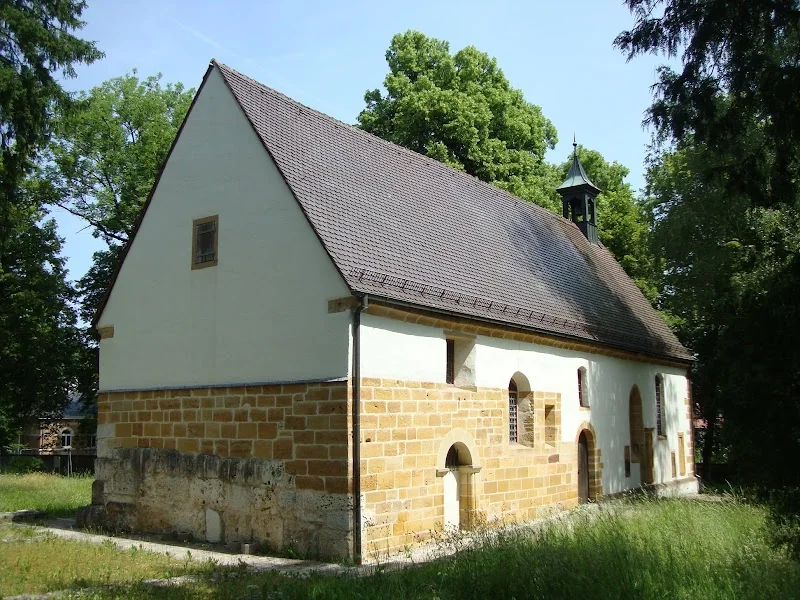
The Johanneskirche in Aalen belongs to the Protestant Church Community Aalen, which consists of four parish districts in the city center and has around 6,100 members. The community refers to the city church St. Nikolaus and to St. Johann as the oldest church in the city from the 12th century. This connection of vibrant community work and early city memory makes the Johanneskirche a place where faith, history, and everyday life are closely intertwined. Therefore, those searching for Johanneskirche Aalen find not only a name but a church with a clear role in the Protestant life of the city. ([ev-aa.de](https://www.ev-aa.de/wir-%C3%BCber-uns/?utm_source=openai))
Practically, the Johanneskirche is particularly interesting because it regularly appears in the official service schedule and is simultaneously perceived as a historical site. In the current overviews of the community, it is listed for Saturday evenings, usually at 6:30 PM, and is designated as a fixed service location. The location below the Limes Museum also ensures that the church is well integrated into the urban space and can be combined with a visit to the city center. This makes it relevant for both community members and guests looking for programs, history, or a special atmosphere. ([ev-aa.de](https://www.ev-aa.de/gottesdienst/%C3%BCbersicht/?utm_source=openai))
Services at Johanneskirche Aalen
Those interested in the Johanneskirche first encounter the service calendar. The official page of the Protestant Church Community Aalen lists the Johanneskirche as a regular location for the service at the end of the week, specifically on Saturdays at 6:30 PM. The general overview additionally states that on this date, a baptism may also take place on the fourth Saturday evening of the month. This is a significant advantage for visitors, as the rhythm appears clear and reliable, giving the church a fixed place in the weekly routine of the community. ([ev-aa.de](https://www.ev-aa.de/gottesdienst/%C3%BCbersicht/?utm_source=openai))
The current services also show that the Johanneskirche is not a peripheral location but a vibrant part of community work. On the page with the current dates, it repeatedly appears with specific pastors, keeping it at the visible center of church practice. This is important for people who seek a church not just as a building but as a place of lived community. There is a clear distinction between historical walls and current community life: the Johanneskirche combines both the old space and the regularly occurring liturgy. ([ev-aa.de](https://www.ev-aa.de/gottesdienst/aktuell/?utm_source=openai))
Moreover, the community does not only use the Johanneskirche in the normal weekly rhythm. An archive report describes how, after the closure due to COVID-19, the doors of the Johanneskirche were reopened and how the community used a beautiful space behind the church for outdoor services in the meantime. This shows that the Johanneskirche is not rigidly reduced to a single form of use. It can serve as a church space, meeting point, and starting point for open-air services. Such transitions between indoor space and open area make the Johanneskirche particularly tangible for many visitors. ([ev-aa.de](https://www.ev-aa.de/archiv/berichte-2021/?utm_source=openai))
History of the Oldest Church in Aalen
The Protestant Church Community Aalen explicitly describes St. Johann as the oldest church in the city and dates it to the 12th century. This is central to the perception of the place, as the Johanneskirche represents far more than an ordinary community house or a later suburban church. It stands for the earliest Christian and urban presence in the core of Aalen and is thus a significant part of local identity. Therefore, when visiting the church, one encounters not only a functional worship space but a place where several centuries of city history remain visible. ([ev-aa.de](https://www.ev-aa.de/wir-%C3%BCber-uns/?utm_source=openai))
A report from the community for the Day of Open Monuments underscores this historical significance once again. It describes the space behind the Johanneskirche as the location where the oldest building in the city stands and represents a very special monument. This classification also explains why the church in Aalen is often mentioned in connection with history, monument preservation, and local memory. Such formulations are not merely ornamental words but expressions of a genuine monument perspective that takes the building seriously as part of public memory. ([ev-aa.de](https://www.ev-aa.de/archiv/berichte-2021/?utm_source=openai))
The community also points out that the citizens of the Free Imperial City of Aalen already decided for the Protestant faith in 1575. In this context, the city church St. Nikolaus and the Johanneskirche are mentioned as formative places of the Protestant tradition. Therefore, the Johanneskirche cannot be viewed in isolation but as part of a long development of reformation, community formation, and urban religious history. Thus, when visiting the building, one gains not only a glimpse into an old church house but also access to the overall Protestant history of Aalen. ([ev-aa.de](https://www.ev-aa.de/wir-%C3%BCber-uns/?utm_source=openai))
Location, Address, and Orientation
For practical orientation, the official information is particularly important. The city of Aalen and the Protestant Church Community list the Johanneskirche at St.-Johann-Straße 1 in 73430 Aalen; the church is also located below the Limes Museum. In an event entry, Alfred-Delp-Straße 8 also appears, which is why different address information can be found online. Therefore, for the actual approach, it makes sense to look at the current community page, as it provides the most reliable orientation for visitors who want to arrive without detours. ([ev-aa.de](https://www.ev-aa.de/gottesdienst/%C3%BCbersicht/?utm_source=openai))
The location below the Limes Museum is not just a geographical description but also a hint at the integration of the church into the urban space of Aalen. When coming to the city center, one reaches the Johanneskirche in an environment that is historically and culturally shaped. This makes the location attractive: it is close to other destinations while remaining recognizable as its own, quiet place. For visitors, this means that a service, a walk through the city, or a cultural appointment can be easily combined. ([ev-aa.de](https://www.ev-aa.de/gottesdienst/%C3%BCbersicht/?utm_source=openai))
The church and community pages also show that the Johanneskirche is not treated as a hidden special place but as a clearly named part of the urban structure. Both the community overview and the detail page for the church itself make it clear that searching for Johanneskirche Aalen is most sensible through the official address and the reference to the Limes Museum. Especially with changing entries in various directories, this clear orientation is helpful. For SEO and visitor guidance, the combination of name, street, and city center is particularly strong. ([ev-aa.de](https://www.ev-aa.de/gottesdienst/%C3%BCbersicht/?utm_source=openai))
Parking at Johanneskirche
For drivers, the city center of Aalen is well equipped according to the city. The official parking page mentions a sufficient number of public parking spaces, short walking distances to many destinations, a dynamic parking guidance system, and several designated disabled parking spaces. This is relevant for the Johanneskirche because it is located in the inner-city area, and visitors usually arrive via the normal parking options in the city center. Therefore, those arriving on time can expect a well-organized parking situation. ([aalen.de](https://www.aalen.de/anfahrt-und-parken-in-aalen.565.25.htm?utm_source=openai))
The city mentions several central parking garages, including Rathaus Tiefgarage and Parkplatz KUBUS (P1), Parkhaus Reichsstädter Markt (P2), Tiefgarage Spritzenhausplatz (P3), Parkhaus Spitalstraße (P5), and the P&R parking garage at the main train station (P6). This selection is particularly useful for guests who want to combine a service, a concert appointment, or a visit to the church with a stay in the city center. The parking garages are located in an area from which the paths to destinations in the city remain manageable, which is a clear advantage for a central church like the Johanneskirche. ([aalen.de](https://www.aalen.de/anfahrt-und-parken-in-aalen.565.25.htm?utm_source=openai))
The evaluated official pages do not highlight a dedicated church parking lot. This can be practically interpreted to mean that visitors should plan their arrival using the city’s parking infrastructure. This is not a disadvantage but rather an indication of the church's inner-city location: those visiting something at the Johanneskirche are right in the middle of Aalen and therefore use the normal paths and parking spaces of the city center. Especially for Saturday services or events, a quick check of the parking guidance system is advisable, as it makes available spaces easier to find in real-time. ([aalen.de](https://www.aalen.de/anfahrt-und-parken-in-aalen.565.25.htm?utm_source=openai))
Church Music, Concerts, and Forum Johanneskirche
The Johanneskirche not only stands for services but also for a strong musical profile. The official page of the Protestant Church Music Aalen mentions, among other things, international organ concerts, the Bach cycle, the hour of church music, organ music during market time, and the Forum Johanneskirche. Together, these formats create a clear cultural offering that makes the church interesting beyond the narrower community circle. Therefore, those searching for church music at Johanneskirche Aalen will find a genuine substantive answer here. ([aalen.de](https://www.aalen.de/evangelische-kirchenmusik-aalen.3260.25.htm?utm_source=openai))
It is particularly striking that the Protestant Church Music Aalen works with six choirs: Wichtel-, Mädchen-, Knaben-, Jugend-, Senior- and Aalener Kantorei. This shows that the musical work in Aalen is broadly established and supported by different age groups. For the Johanneskirche, this means that it is part of a developed musical infrastructure and is not just used once a year for a single concert. In the SEO context, this connection of church space, concert series, and choir practice is very valuable as it consolidates different search intentions. ([aalen.de](https://www.aalen.de/evangelische-kirchenmusik-aalen.3260.25.htm?utm_source=openai))
The Forum Johanneskirche and the other concert formats make the place simultaneously sacred and culturally readable. A church with regular services, historical significance, and additional musical tradition appeals to various target groups: community members, art and culture enthusiasts, organ and choir friends, as well as visitors who want to experience an authentic city location. In a city like Aalen, where the city center is compact, this creates an attractive overall picture of history, sound, and encounter. ([aalen.de](https://www.aalen.de/evangelische-kirchenmusik-aalen.3260.25.htm?utm_source=openai))
Community Life, Current Dates, and Visiting Tips
The Johanneskirche is a building block within a larger Protestant structure. The Church Community Aalen reminds that the city center consists of four parish districts and that besides the Johanneskirche, the city church St. Nikolaus also belongs to the community. Additionally, since 1986, the Protestant Church Community has been operating the ecumenical community center Peter and Paul together with the Catholic Church Community. This shows that the Johanneskirche does not function in isolation but is integrated into a dense network of community work, ecumenism, and city church. ([ev-aa.de](https://www.ev-aa.de/wir-%C3%BCber-uns/?utm_source=openai))
For visitors, it is especially important that the current dates are continuously maintained. The community itself points out that the displayed services and times should be checked, and the current date page regularly lists the Johanneskirche with specific Saturday times. This note is sensible, especially for a church with changing special services, music formats, and seasonal deviations. Therefore, to be sure, one should always open the current calendar page of the community before visiting, rather than relying on older entries or third-party portals. ([ev-aa.de](https://www.ev-aa.de/gottesdienst/aktuell/?utm_source=openai))
The Johanneskirche thus appears both traditional and current. It is the oldest church in Aalen, it is a service location with clear times, it belongs to a vibrant musical offering, and it is present as a monument in the cityscape. This mixture explains why so many search queries target programs, directions, parking, history, and special events. Therefore, those visiting the Johanneskirche experience not only a historical space but a place where Aalen makes its religious, cultural, and urban continuity visible. ([ev-aa.de](https://www.ev-aa.de/wir-%C3%BCber-uns/?utm_source=openai))
Sources:
- Protestant Church Community Aalen – About Us
- Protestant Church Community Aalen – Regular Services
- City of Aalen – Protestant Johanneskirche
- City of Aalen – Directions and Parking in Aalen
- City of Aalen – Protestant Church Music Aalen
- Protestant Church Community Aalen – The Doors of the Johanneskirche Will Reopen
Mehr anzeigenWeniger anzeigen
Johanneskirche Aalen | Services & Directions
The Johanneskirche in Aalen belongs to the Protestant Church Community Aalen, which consists of four parish districts in the city center and has around 6,100 members. The community refers to the city church St. Nikolaus and to St. Johann as the oldest church in the city from the 12th century. This connection of vibrant community work and early city memory makes the Johanneskirche a place where faith, history, and everyday life are closely intertwined. Therefore, those searching for Johanneskirche Aalen find not only a name but a church with a clear role in the Protestant life of the city. ([ev-aa.de](https://www.ev-aa.de/wir-%C3%BCber-uns/?utm_source=openai))
Practically, the Johanneskirche is particularly interesting because it regularly appears in the official service schedule and is simultaneously perceived as a historical site. In the current overviews of the community, it is listed for Saturday evenings, usually at 6:30 PM, and is designated as a fixed service location. The location below the Limes Museum also ensures that the church is well integrated into the urban space and can be combined with a visit to the city center. This makes it relevant for both community members and guests looking for programs, history, or a special atmosphere. ([ev-aa.de](https://www.ev-aa.de/gottesdienst/%C3%BCbersicht/?utm_source=openai))
Services at Johanneskirche Aalen
Those interested in the Johanneskirche first encounter the service calendar. The official page of the Protestant Church Community Aalen lists the Johanneskirche as a regular location for the service at the end of the week, specifically on Saturdays at 6:30 PM. The general overview additionally states that on this date, a baptism may also take place on the fourth Saturday evening of the month. This is a significant advantage for visitors, as the rhythm appears clear and reliable, giving the church a fixed place in the weekly routine of the community. ([ev-aa.de](https://www.ev-aa.de/gottesdienst/%C3%BCbersicht/?utm_source=openai))
The current services also show that the Johanneskirche is not a peripheral location but a vibrant part of community work. On the page with the current dates, it repeatedly appears with specific pastors, keeping it at the visible center of church practice. This is important for people who seek a church not just as a building but as a place of lived community. There is a clear distinction between historical walls and current community life: the Johanneskirche combines both the old space and the regularly occurring liturgy. ([ev-aa.de](https://www.ev-aa.de/gottesdienst/aktuell/?utm_source=openai))
Moreover, the community does not only use the Johanneskirche in the normal weekly rhythm. An archive report describes how, after the closure due to COVID-19, the doors of the Johanneskirche were reopened and how the community used a beautiful space behind the church for outdoor services in the meantime. This shows that the Johanneskirche is not rigidly reduced to a single form of use. It can serve as a church space, meeting point, and starting point for open-air services. Such transitions between indoor space and open area make the Johanneskirche particularly tangible for many visitors. ([ev-aa.de](https://www.ev-aa.de/archiv/berichte-2021/?utm_source=openai))
History of the Oldest Church in Aalen
The Protestant Church Community Aalen explicitly describes St. Johann as the oldest church in the city and dates it to the 12th century. This is central to the perception of the place, as the Johanneskirche represents far more than an ordinary community house or a later suburban church. It stands for the earliest Christian and urban presence in the core of Aalen and is thus a significant part of local identity. Therefore, when visiting the church, one encounters not only a functional worship space but a place where several centuries of city history remain visible. ([ev-aa.de](https://www.ev-aa.de/wir-%C3%BCber-uns/?utm_source=openai))
A report from the community for the Day of Open Monuments underscores this historical significance once again. It describes the space behind the Johanneskirche as the location where the oldest building in the city stands and represents a very special monument. This classification also explains why the church in Aalen is often mentioned in connection with history, monument preservation, and local memory. Such formulations are not merely ornamental words but expressions of a genuine monument perspective that takes the building seriously as part of public memory. ([ev-aa.de](https://www.ev-aa.de/archiv/berichte-2021/?utm_source=openai))
The community also points out that the citizens of the Free Imperial City of Aalen already decided for the Protestant faith in 1575. In this context, the city church St. Nikolaus and the Johanneskirche are mentioned as formative places of the Protestant tradition. Therefore, the Johanneskirche cannot be viewed in isolation but as part of a long development of reformation, community formation, and urban religious history. Thus, when visiting the building, one gains not only a glimpse into an old church house but also access to the overall Protestant history of Aalen. ([ev-aa.de](https://www.ev-aa.de/wir-%C3%BCber-uns/?utm_source=openai))
Location, Address, and Orientation
For practical orientation, the official information is particularly important. The city of Aalen and the Protestant Church Community list the Johanneskirche at St.-Johann-Straße 1 in 73430 Aalen; the church is also located below the Limes Museum. In an event entry, Alfred-Delp-Straße 8 also appears, which is why different address information can be found online. Therefore, for the actual approach, it makes sense to look at the current community page, as it provides the most reliable orientation for visitors who want to arrive without detours. ([ev-aa.de](https://www.ev-aa.de/gottesdienst/%C3%BCbersicht/?utm_source=openai))
The location below the Limes Museum is not just a geographical description but also a hint at the integration of the church into the urban space of Aalen. When coming to the city center, one reaches the Johanneskirche in an environment that is historically and culturally shaped. This makes the location attractive: it is close to other destinations while remaining recognizable as its own, quiet place. For visitors, this means that a service, a walk through the city, or a cultural appointment can be easily combined. ([ev-aa.de](https://www.ev-aa.de/gottesdienst/%C3%BCbersicht/?utm_source=openai))
The church and community pages also show that the Johanneskirche is not treated as a hidden special place but as a clearly named part of the urban structure. Both the community overview and the detail page for the church itself make it clear that searching for Johanneskirche Aalen is most sensible through the official address and the reference to the Limes Museum. Especially with changing entries in various directories, this clear orientation is helpful. For SEO and visitor guidance, the combination of name, street, and city center is particularly strong. ([ev-aa.de](https://www.ev-aa.de/gottesdienst/%C3%BCbersicht/?utm_source=openai))
Parking at Johanneskirche
For drivers, the city center of Aalen is well equipped according to the city. The official parking page mentions a sufficient number of public parking spaces, short walking distances to many destinations, a dynamic parking guidance system, and several designated disabled parking spaces. This is relevant for the Johanneskirche because it is located in the inner-city area, and visitors usually arrive via the normal parking options in the city center. Therefore, those arriving on time can expect a well-organized parking situation. ([aalen.de](https://www.aalen.de/anfahrt-und-parken-in-aalen.565.25.htm?utm_source=openai))
The city mentions several central parking garages, including Rathaus Tiefgarage and Parkplatz KUBUS (P1), Parkhaus Reichsstädter Markt (P2), Tiefgarage Spritzenhausplatz (P3), Parkhaus Spitalstraße (P5), and the P&R parking garage at the main train station (P6). This selection is particularly useful for guests who want to combine a service, a concert appointment, or a visit to the church with a stay in the city center. The parking garages are located in an area from which the paths to destinations in the city remain manageable, which is a clear advantage for a central church like the Johanneskirche. ([aalen.de](https://www.aalen.de/anfahrt-und-parken-in-aalen.565.25.htm?utm_source=openai))
The evaluated official pages do not highlight a dedicated church parking lot. This can be practically interpreted to mean that visitors should plan their arrival using the city’s parking infrastructure. This is not a disadvantage but rather an indication of the church's inner-city location: those visiting something at the Johanneskirche are right in the middle of Aalen and therefore use the normal paths and parking spaces of the city center. Especially for Saturday services or events, a quick check of the parking guidance system is advisable, as it makes available spaces easier to find in real-time. ([aalen.de](https://www.aalen.de/anfahrt-und-parken-in-aalen.565.25.htm?utm_source=openai))
Church Music, Concerts, and Forum Johanneskirche
The Johanneskirche not only stands for services but also for a strong musical profile. The official page of the Protestant Church Music Aalen mentions, among other things, international organ concerts, the Bach cycle, the hour of church music, organ music during market time, and the Forum Johanneskirche. Together, these formats create a clear cultural offering that makes the church interesting beyond the narrower community circle. Therefore, those searching for church music at Johanneskirche Aalen will find a genuine substantive answer here. ([aalen.de](https://www.aalen.de/evangelische-kirchenmusik-aalen.3260.25.htm?utm_source=openai))
It is particularly striking that the Protestant Church Music Aalen works with six choirs: Wichtel-, Mädchen-, Knaben-, Jugend-, Senior- and Aalener Kantorei. This shows that the musical work in Aalen is broadly established and supported by different age groups. For the Johanneskirche, this means that it is part of a developed musical infrastructure and is not just used once a year for a single concert. In the SEO context, this connection of church space, concert series, and choir practice is very valuable as it consolidates different search intentions. ([aalen.de](https://www.aalen.de/evangelische-kirchenmusik-aalen.3260.25.htm?utm_source=openai))
The Forum Johanneskirche and the other concert formats make the place simultaneously sacred and culturally readable. A church with regular services, historical significance, and additional musical tradition appeals to various target groups: community members, art and culture enthusiasts, organ and choir friends, as well as visitors who want to experience an authentic city location. In a city like Aalen, where the city center is compact, this creates an attractive overall picture of history, sound, and encounter. ([aalen.de](https://www.aalen.de/evangelische-kirchenmusik-aalen.3260.25.htm?utm_source=openai))
Community Life, Current Dates, and Visiting Tips
The Johanneskirche is a building block within a larger Protestant structure. The Church Community Aalen reminds that the city center consists of four parish districts and that besides the Johanneskirche, the city church St. Nikolaus also belongs to the community. Additionally, since 1986, the Protestant Church Community has been operating the ecumenical community center Peter and Paul together with the Catholic Church Community. This shows that the Johanneskirche does not function in isolation but is integrated into a dense network of community work, ecumenism, and city church. ([ev-aa.de](https://www.ev-aa.de/wir-%C3%BCber-uns/?utm_source=openai))
For visitors, it is especially important that the current dates are continuously maintained. The community itself points out that the displayed services and times should be checked, and the current date page regularly lists the Johanneskirche with specific Saturday times. This note is sensible, especially for a church with changing special services, music formats, and seasonal deviations. Therefore, to be sure, one should always open the current calendar page of the community before visiting, rather than relying on older entries or third-party portals. ([ev-aa.de](https://www.ev-aa.de/gottesdienst/aktuell/?utm_source=openai))
The Johanneskirche thus appears both traditional and current. It is the oldest church in Aalen, it is a service location with clear times, it belongs to a vibrant musical offering, and it is present as a monument in the cityscape. This mixture explains why so many search queries target programs, directions, parking, history, and special events. Therefore, those visiting the Johanneskirche experience not only a historical space but a place where Aalen makes its religious, cultural, and urban continuity visible. ([ev-aa.de](https://www.ev-aa.de/wir-%C3%BCber-uns/?utm_source=openai))
Sources:
- Protestant Church Community Aalen – About Us
- Protestant Church Community Aalen – Regular Services
- City of Aalen – Protestant Johanneskirche
- City of Aalen – Directions and Parking in Aalen
- City of Aalen – Protestant Church Music Aalen
- Protestant Church Community Aalen – The Doors of the Johanneskirche Will Reopen
Johanneskirche Aalen | Services & Directions
The Johanneskirche in Aalen belongs to the Protestant Church Community Aalen, which consists of four parish districts in the city center and has around 6,100 members. The community refers to the city church St. Nikolaus and to St. Johann as the oldest church in the city from the 12th century. This connection of vibrant community work and early city memory makes the Johanneskirche a place where faith, history, and everyday life are closely intertwined. Therefore, those searching for Johanneskirche Aalen find not only a name but a church with a clear role in the Protestant life of the city. ([ev-aa.de](https://www.ev-aa.de/wir-%C3%BCber-uns/?utm_source=openai))
Practically, the Johanneskirche is particularly interesting because it regularly appears in the official service schedule and is simultaneously perceived as a historical site. In the current overviews of the community, it is listed for Saturday evenings, usually at 6:30 PM, and is designated as a fixed service location. The location below the Limes Museum also ensures that the church is well integrated into the urban space and can be combined with a visit to the city center. This makes it relevant for both community members and guests looking for programs, history, or a special atmosphere. ([ev-aa.de](https://www.ev-aa.de/gottesdienst/%C3%BCbersicht/?utm_source=openai))
Services at Johanneskirche Aalen
Those interested in the Johanneskirche first encounter the service calendar. The official page of the Protestant Church Community Aalen lists the Johanneskirche as a regular location for the service at the end of the week, specifically on Saturdays at 6:30 PM. The general overview additionally states that on this date, a baptism may also take place on the fourth Saturday evening of the month. This is a significant advantage for visitors, as the rhythm appears clear and reliable, giving the church a fixed place in the weekly routine of the community. ([ev-aa.de](https://www.ev-aa.de/gottesdienst/%C3%BCbersicht/?utm_source=openai))
The current services also show that the Johanneskirche is not a peripheral location but a vibrant part of community work. On the page with the current dates, it repeatedly appears with specific pastors, keeping it at the visible center of church practice. This is important for people who seek a church not just as a building but as a place of lived community. There is a clear distinction between historical walls and current community life: the Johanneskirche combines both the old space and the regularly occurring liturgy. ([ev-aa.de](https://www.ev-aa.de/gottesdienst/aktuell/?utm_source=openai))
Moreover, the community does not only use the Johanneskirche in the normal weekly rhythm. An archive report describes how, after the closure due to COVID-19, the doors of the Johanneskirche were reopened and how the community used a beautiful space behind the church for outdoor services in the meantime. This shows that the Johanneskirche is not rigidly reduced to a single form of use. It can serve as a church space, meeting point, and starting point for open-air services. Such transitions between indoor space and open area make the Johanneskirche particularly tangible for many visitors. ([ev-aa.de](https://www.ev-aa.de/archiv/berichte-2021/?utm_source=openai))
History of the Oldest Church in Aalen
The Protestant Church Community Aalen explicitly describes St. Johann as the oldest church in the city and dates it to the 12th century. This is central to the perception of the place, as the Johanneskirche represents far more than an ordinary community house or a later suburban church. It stands for the earliest Christian and urban presence in the core of Aalen and is thus a significant part of local identity. Therefore, when visiting the church, one encounters not only a functional worship space but a place where several centuries of city history remain visible. ([ev-aa.de](https://www.ev-aa.de/wir-%C3%BCber-uns/?utm_source=openai))
A report from the community for the Day of Open Monuments underscores this historical significance once again. It describes the space behind the Johanneskirche as the location where the oldest building in the city stands and represents a very special monument. This classification also explains why the church in Aalen is often mentioned in connection with history, monument preservation, and local memory. Such formulations are not merely ornamental words but expressions of a genuine monument perspective that takes the building seriously as part of public memory. ([ev-aa.de](https://www.ev-aa.de/archiv/berichte-2021/?utm_source=openai))
The community also points out that the citizens of the Free Imperial City of Aalen already decided for the Protestant faith in 1575. In this context, the city church St. Nikolaus and the Johanneskirche are mentioned as formative places of the Protestant tradition. Therefore, the Johanneskirche cannot be viewed in isolation but as part of a long development of reformation, community formation, and urban religious history. Thus, when visiting the building, one gains not only a glimpse into an old church house but also access to the overall Protestant history of Aalen. ([ev-aa.de](https://www.ev-aa.de/wir-%C3%BCber-uns/?utm_source=openai))
Location, Address, and Orientation
For practical orientation, the official information is particularly important. The city of Aalen and the Protestant Church Community list the Johanneskirche at St.-Johann-Straße 1 in 73430 Aalen; the church is also located below the Limes Museum. In an event entry, Alfred-Delp-Straße 8 also appears, which is why different address information can be found online. Therefore, for the actual approach, it makes sense to look at the current community page, as it provides the most reliable orientation for visitors who want to arrive without detours. ([ev-aa.de](https://www.ev-aa.de/gottesdienst/%C3%BCbersicht/?utm_source=openai))
The location below the Limes Museum is not just a geographical description but also a hint at the integration of the church into the urban space of Aalen. When coming to the city center, one reaches the Johanneskirche in an environment that is historically and culturally shaped. This makes the location attractive: it is close to other destinations while remaining recognizable as its own, quiet place. For visitors, this means that a service, a walk through the city, or a cultural appointment can be easily combined. ([ev-aa.de](https://www.ev-aa.de/gottesdienst/%C3%BCbersicht/?utm_source=openai))
The church and community pages also show that the Johanneskirche is not treated as a hidden special place but as a clearly named part of the urban structure. Both the community overview and the detail page for the church itself make it clear that searching for Johanneskirche Aalen is most sensible through the official address and the reference to the Limes Museum. Especially with changing entries in various directories, this clear orientation is helpful. For SEO and visitor guidance, the combination of name, street, and city center is particularly strong. ([ev-aa.de](https://www.ev-aa.de/gottesdienst/%C3%BCbersicht/?utm_source=openai))
Parking at Johanneskirche
For drivers, the city center of Aalen is well equipped according to the city. The official parking page mentions a sufficient number of public parking spaces, short walking distances to many destinations, a dynamic parking guidance system, and several designated disabled parking spaces. This is relevant for the Johanneskirche because it is located in the inner-city area, and visitors usually arrive via the normal parking options in the city center. Therefore, those arriving on time can expect a well-organized parking situation. ([aalen.de](https://www.aalen.de/anfahrt-und-parken-in-aalen.565.25.htm?utm_source=openai))
The city mentions several central parking garages, including Rathaus Tiefgarage and Parkplatz KUBUS (P1), Parkhaus Reichsstädter Markt (P2), Tiefgarage Spritzenhausplatz (P3), Parkhaus Spitalstraße (P5), and the P&R parking garage at the main train station (P6). This selection is particularly useful for guests who want to combine a service, a concert appointment, or a visit to the church with a stay in the city center. The parking garages are located in an area from which the paths to destinations in the city remain manageable, which is a clear advantage for a central church like the Johanneskirche. ([aalen.de](https://www.aalen.de/anfahrt-und-parken-in-aalen.565.25.htm?utm_source=openai))
The evaluated official pages do not highlight a dedicated church parking lot. This can be practically interpreted to mean that visitors should plan their arrival using the city’s parking infrastructure. This is not a disadvantage but rather an indication of the church's inner-city location: those visiting something at the Johanneskirche are right in the middle of Aalen and therefore use the normal paths and parking spaces of the city center. Especially for Saturday services or events, a quick check of the parking guidance system is advisable, as it makes available spaces easier to find in real-time. ([aalen.de](https://www.aalen.de/anfahrt-und-parken-in-aalen.565.25.htm?utm_source=openai))
Church Music, Concerts, and Forum Johanneskirche
The Johanneskirche not only stands for services but also for a strong musical profile. The official page of the Protestant Church Music Aalen mentions, among other things, international organ concerts, the Bach cycle, the hour of church music, organ music during market time, and the Forum Johanneskirche. Together, these formats create a clear cultural offering that makes the church interesting beyond the narrower community circle. Therefore, those searching for church music at Johanneskirche Aalen will find a genuine substantive answer here. ([aalen.de](https://www.aalen.de/evangelische-kirchenmusik-aalen.3260.25.htm?utm_source=openai))
It is particularly striking that the Protestant Church Music Aalen works with six choirs: Wichtel-, Mädchen-, Knaben-, Jugend-, Senior- and Aalener Kantorei. This shows that the musical work in Aalen is broadly established and supported by different age groups. For the Johanneskirche, this means that it is part of a developed musical infrastructure and is not just used once a year for a single concert. In the SEO context, this connection of church space, concert series, and choir practice is very valuable as it consolidates different search intentions. ([aalen.de](https://www.aalen.de/evangelische-kirchenmusik-aalen.3260.25.htm?utm_source=openai))
The Forum Johanneskirche and the other concert formats make the place simultaneously sacred and culturally readable. A church with regular services, historical significance, and additional musical tradition appeals to various target groups: community members, art and culture enthusiasts, organ and choir friends, as well as visitors who want to experience an authentic city location. In a city like Aalen, where the city center is compact, this creates an attractive overall picture of history, sound, and encounter. ([aalen.de](https://www.aalen.de/evangelische-kirchenmusik-aalen.3260.25.htm?utm_source=openai))
Community Life, Current Dates, and Visiting Tips
The Johanneskirche is a building block within a larger Protestant structure. The Church Community Aalen reminds that the city center consists of four parish districts and that besides the Johanneskirche, the city church St. Nikolaus also belongs to the community. Additionally, since 1986, the Protestant Church Community has been operating the ecumenical community center Peter and Paul together with the Catholic Church Community. This shows that the Johanneskirche does not function in isolation but is integrated into a dense network of community work, ecumenism, and city church. ([ev-aa.de](https://www.ev-aa.de/wir-%C3%BCber-uns/?utm_source=openai))
For visitors, it is especially important that the current dates are continuously maintained. The community itself points out that the displayed services and times should be checked, and the current date page regularly lists the Johanneskirche with specific Saturday times. This note is sensible, especially for a church with changing special services, music formats, and seasonal deviations. Therefore, to be sure, one should always open the current calendar page of the community before visiting, rather than relying on older entries or third-party portals. ([ev-aa.de](https://www.ev-aa.de/gottesdienst/aktuell/?utm_source=openai))
The Johanneskirche thus appears both traditional and current. It is the oldest church in Aalen, it is a service location with clear times, it belongs to a vibrant musical offering, and it is present as a monument in the cityscape. This mixture explains why so many search queries target programs, directions, parking, history, and special events. Therefore, those visiting the Johanneskirche experience not only a historical space but a place where Aalen makes its religious, cultural, and urban continuity visible. ([ev-aa.de](https://www.ev-aa.de/wir-%C3%BCber-uns/?utm_source=openai))
Sources:
- Protestant Church Community Aalen – About Us
- Protestant Church Community Aalen – Regular Services
- City of Aalen – Protestant Johanneskirche
- City of Aalen – Directions and Parking in Aalen
- City of Aalen – Protestant Church Music Aalen
- Protestant Church Community Aalen – The Doors of the Johanneskirche Will Reopen

Frequently Asked Questions
Reviews
No reviews found