
Kurt Jooss
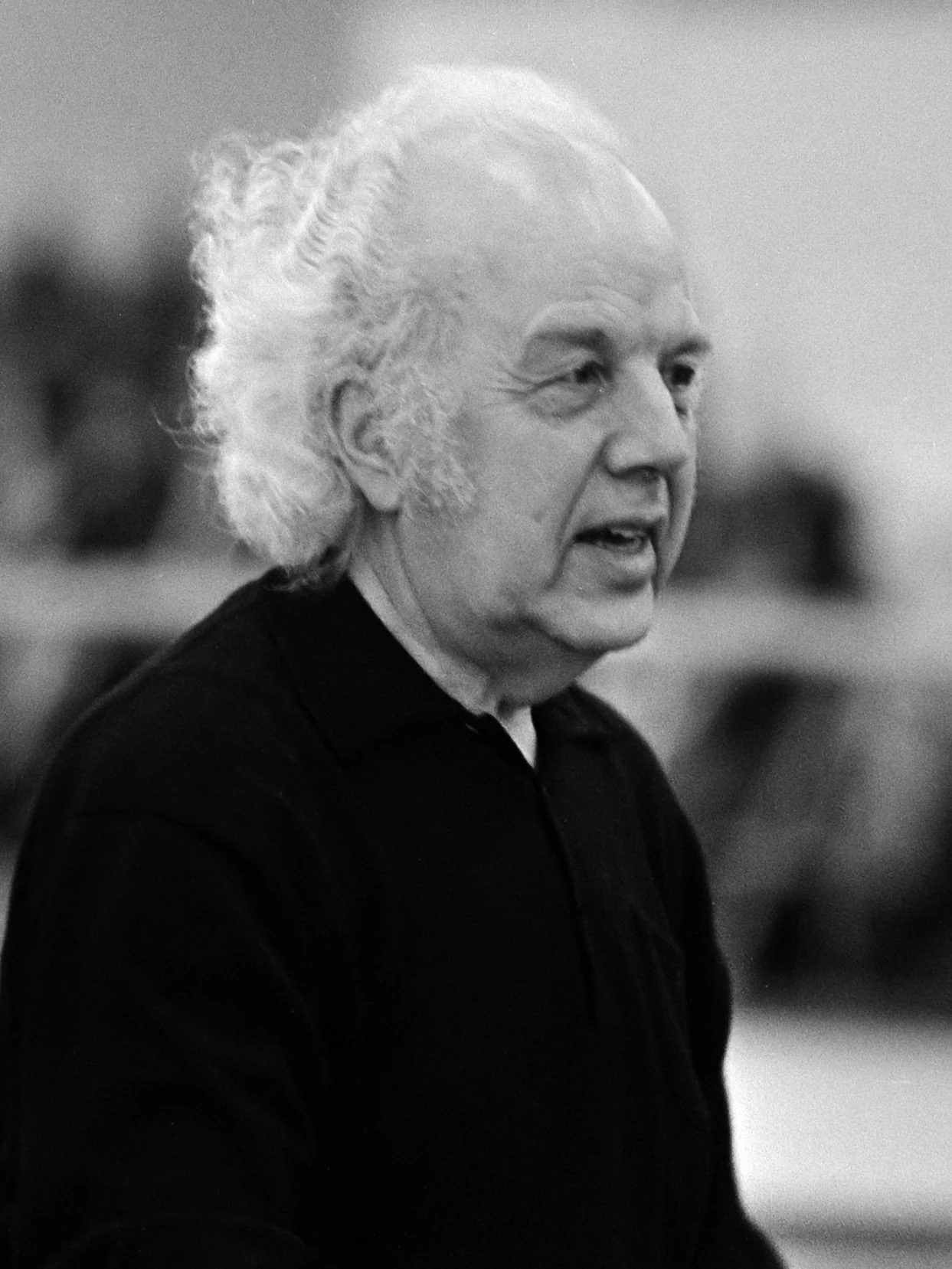
Image from Wikipedia
Image from Wikipedia
Kurt Jooss: The Architect of Modern Dance Theater
Kurt Jooss and the Revolution of Expressionist Dance
Kurt Jooss was one of the defining figures of German dance in the 20th century. As a dancer, choreographer, and dance educator, he combined classical formality with the emotional power of expressionist dance, creating an independent, socially conscious dance theater. His work continues to resonate today, as it not only organized movement but also brought attitude, conflict, and the spirit of the times to the stage.
Born on January 12, 1901, in Wasseralfingen and died on May 22, 1979, in Heilbronn, Jooss developed an artistic language that understood dance as an art form and as a social statement. He was a co-founder of the Folkwang School of Music, Dance, and Speech and founded the experimental Folkwang Dance Studio, which became a center for modern dance culture. His name is associated with the moment when dance in Germany became an intellectual, dramatic, and politically charged stage medium.
Early Influences and Artistic Exploration
Jooss shaped his artistry in an era when dance was seeking new forms of expression. His proximity to Rudolf von Laban and the reform ideas of expressionist dance influenced his understanding of the body, space, and inner movement. From an early age, he viewed dance not as an ornamental sequence of steps but as a compositional art form where gesture, posture, and rhythm gained a psychological dimension.
This perspective led him to a consistent artistic development that inseparably linked technique and meaning. Jooss sought a movement language that made people visible within their social context. This was the modernity of his work: it was formally precise and at the same time imbued with great existential tension.
The Folkwang Idea: Dance, Music, and Language as a Unity
A central milestone in his broader artistic career was the co-founding of the Westphalian Academy for Movement, Language, and Music in Münster in 1925. In 1927, he founded the Folkwang School of Music, Dance, and Speech in Essen, where Jooss took on a key role as the head of the dance department. Here, his interdisciplinary thinking became evident: dance, music, and language should not stand isolated next to each other but should enhance one another.
Under his influence, the Folkwang School became a laboratory for artistic renewal. Jooss emphasized discipline, precision, and content density. From this ethos emerged a pedagogical model that shaped generations of dancers and later prepared the development of dance theater in Germany.
The Big Breakthrough: “The Green Table”
With “The Green Table,” Kurt Jooss achieved his most internationally renowned work in 1932. The choreography is regarded as a key anti-war piece in dance history and one of the major successes of modern dance theater. The work condensed political experience into dramatic movement, utilized masks, archetypes, and clear scenic contrasts, and demonstrated how dance can serve as an accusation.
Winning first place at the Concours de Chorégraphie in Paris in 1932 marked his international breakthrough. The work became a symbol of his artistic attitude: dance as a morally charged form, as a mirror of social violence, and as a finely composed stage drama. To this day, “The Green Table” is among the most performed and discussed choreographies of the 20th century.
Exile, Resistance, and a New Beginning in England
In 1933, his work in Germany came to a sudden end. Jooss left the country after refusing to part with his Jewish collaborators. This step highlights his biographical integrity: artistic conviction and human attitude coincided for him. In Dartington Hall, England, he continued his work and maintained a new training and working form with the Jooss-Leeder School of Dance.
The exile did not signify a break in his artistic trajectory, but rather an expansion of his influence. Numerous students and collaborators followed him, allowing his ideas to spread internationally. Thus, a school of dance emerged that imparted not only style but also ethos: the body as a bearer of inner truth, the stage as a place of social reflection.
Return to Germany and Late Impact
In 1949, Kurt Jooss returned to Germany and again took over the leadership of the Folkwang dance department. Until his retirement in 1968, he remained a pivotal authority in the German dance scene. In this phase, he no longer worked solely as a choreographer but as an institution against which the succeeding generation had to measure itself.
His influence on later pioneers of dance theater is particularly significant. The Folkwang tradition has been continued by personalities such as Pina Bausch, who grew up in an environment shaped by Jooss. His aesthetics thus continued not only in his own works but also in an entire school of thought and movement.
Dance Discography: Key Works and Repertoire
Although Kurt Jooss left no discography in the musical sense, his choreographic work holds a similarly canonical rank. Some of his most significant works include “The Green Table,” as well as other pieces like “Ball in Old Vienna,” “The Mirror,” “Colombinade,” and “Way in the Fog.” These works showcase the range of his art between satire, elegance, reflection, and existential density.
“The Green Table” remains the center of his oeuvre because it embodies political statement, dramatic intensification, and choreographic clarity in ideal form. Other pieces complement this profile with poetic and theatrical facets. Together, they form a repertoire that exemplarily traces the development of modern dance theater.
Style, Composition, and Choreographic Signature
Jooss’ style combines classical discipline with expressive emphasis. His compositions utilize precise group formations, symbolic figures, and a strong dramaturgy of space. For him, dance becomes a choreography of thought: each movement carries meaning, each form arises from inner content.
Characteristic of him is his understanding of movement as a response to emotional and social tension. Instead of pure virtuosity, Jooss emphasized expression, structure, and scenic readability. This blend made him a master of dance theater, whose works remain not only aesthetically but also historically interpretable.
Cultural Influence and Legacy
Kurt Jooss significantly shaped German dance theater, creating a bridge between ballet, expressionist dance, and dramatic stage narrative. The Folkwang tradition that emerged from his work continues to resonate today and is still visible at the Folkwang University of the Arts. There, his artistic attitude serves as a reference point for modern dance technique and contemporary education.
His legacy consists not only of individual choreographies but of an aesthetic foundational idea: dance can articulate stance, reflect history, and question society. For this reason, Jooss remains a key figure in dance history. Those who study his works encounter not just a great choreographer but a renewer of stage art.
Conclusion: Why Kurt Jooss Continues to Captivate Today
Kurt Jooss is intriguing because he combined artistic rigor with humanistic conviction. He understood dance as a form of perception, as a politically aware and emotionally intelligent medium. His works, especially “The Green Table,” exhibit a timelessness that touches contemporary audiences directly.
Anyone seeking to understand modern dance history, choreographic mastery, and the emergence of dance theater cannot overlook Kurt Jooss. His art demands attention, and his legacy continues to inspire to this day. A artist like him is not only experienced in the archive but continually comes alive on stage.
Official Channels of Kurt Jooss:
- Instagram: No official profile found
- Facebook: No official profile found
- YouTube: No official profile found
- Spotify: No official profile found
- TikTok: No official profile found
Sources:
Upcoming Events
Opening of the exhibition "What Could They Do? Resistance Against National Socialism 1939 – 1945" with a special section on Kurt Jooss (Choreographer)
What could they do? Resistance against National Socialism 1939 – 1945
Experience in Wasseralfingen an exhibition about courage, stance, and Kurt Jooss. Resistance, dance history, and remembrance culture from 26.09. to 04.10.2026. #Art
Exhibition: What Could They Do? Resistance Against National Socialism 1939–1945 with Special Section on Kurt Jooss
Experience resistance, dance history, and local remembrance in Wasseralfingen. The exhibition with the Kurt Jooss special section opens on 27.09.2026. #Art #History
Exhibition: What Could They Do? Resistance Against National Socialism 1939–1945 with Special Section on Kurt Jooss
A remarkable exhibition about courage, responsibility, and Kurt Jooss awaits you in Wasseralfingen. 02.–04.10.2026, free admission. #Culture #History
Exhibition: What Could They Do? Resistance Against National Socialism 1939–1945 with Special Section on Kurt Jooss
Resistance, memory, and Kurt Jooss: This exhibition in Wasseralfingen touches and educates at the same time. On 03.10.2026, admission free. #Culture
What could they do? Resistance against National Socialism 1939–1945
An impressive exhibition about resistance and Kurt Jooss in Wasseralfingen: historically clear, artistically smart, moving. 04.10.2026, free entry. #MemorialCulture