
Dornröschen
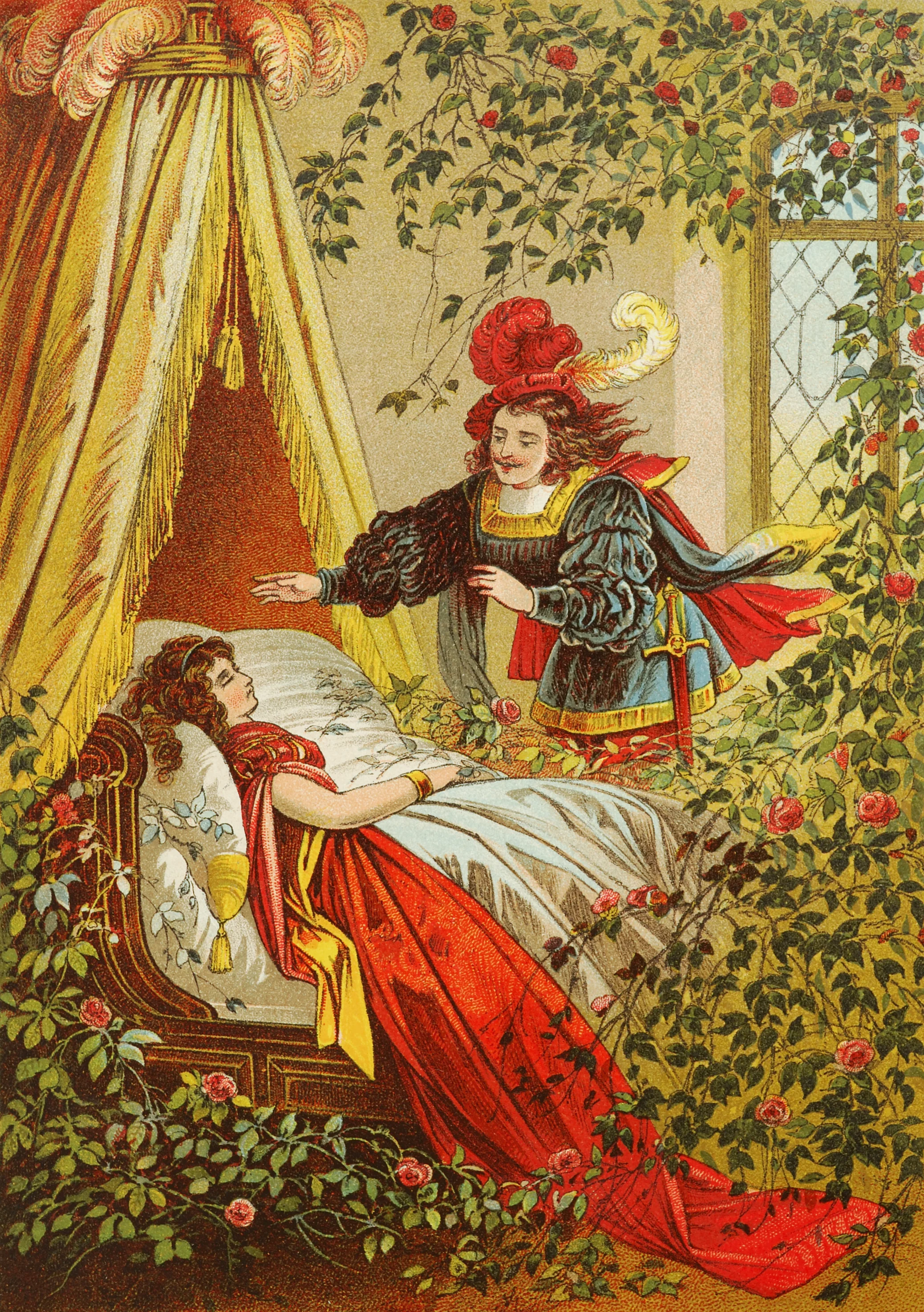
Image from Wikipedia
Image from Wikipedia
Sleeping Beauty – The Timeless Tale of Sleep, Curse, and Awakening
Introduction: Why Sleeping Beauty Continues to Fascinate
Sleeping Beauty is one of the most famous fairy tales in the European canon and has been included as KHM 50 in the Children's and Household Tales by the Brothers Grimm since the first edition in 1812. The tale intertwines archaic motifs such as cursing, sleep, transformation, and redemption into a narrative that has maintained its symbolic power across generations. In research, it is classified as an ATU 410 type fairy tale, which is a variant of the internationally spread “Sleeping Beauty” tradition. ([grimmstories.com](https://www.grimmstories.com/de/grimm_maerchen/dornroschen?utm_source=openai))
The story is much more than a children's fairy tale. It demonstrates how oral tradition, literary adaptation, and cultural transmission interweave until an older substance becomes a canonical text form. Through Marie Hassenpflug, the Grimm version traces back to Charles Perrault's La belle au bois dormant, published in 1697 in Contes de ma mère l’Oye; Ludwig Bechstein later included the story as Das Dornröschen in his German Fairy Tale Book. ([de.wikipedia.org](https://de.wikipedia.org/wiki/Dornr%C3%B6schen?utm_source=openai))
Biographical Origins of a World Fairy Tale
The origin of Sleeping Beauty does not lie in a single authorial gesture, but in a long tradition of storytelling. Charles Perrault shaped the material in 17th-century France into a courtly-literary fairy tale version, published in 1697, which remains a key text of European fairy tale literature to this day. The Grimms adopted the motif into their collection and gave it the form in the German-speaking world that has influenced generations of readers. ([kids.britannica.com](https://kids.britannica.com/students/article/Tales-of-Mother-Goose/337936?utm_source=openai))
The Grimm version impressively combines folk tradition and literary editing. The text has occupied position 50 in the collection since 1812, demonstrating its early canonization, and has subsequently become a fixed part of German-speaking fairy tale culture. Ludwig Bechstein's later adaptation further showcases the enormous reach of the material in the 19th century and its popularity as both a literary and popular narrative core. ([grimmstories.com](https://www.grimmstories.com/de/grimm_maerchen/dornroschen?utm_source=openai))
From Courtly Fairy Tale to Folk Tradition
Perrault's version bears the hallmark of courtly elegance and moral focus, while the Grimms more strongly nest the material within the realm of folk tales. It is precisely this transition that makes Sleeping Beauty culturally and historically intriguing: The fairy tale traverses salons, children's books, folk books, and stages. In this movement, its extraordinary enduring presence arises, as each epoch can read and interpret the material anew. ([kids.britannica.com](https://kids.britannica.com/students/article/Tales-of-Mother-Goose/337936?utm_source=openai))
Bechstein's adaptation also belongs to this history of transformation. Das Dornröschen appeared in his German Fairy Tale Book, demonstrating how attractive the material remained for German collectors and storytellers. The continuity between Perrault, Grimm, and Bechstein reflects a fairy tale that functions not as a rigid object but rather as a living cultural format. ([maerchen.com](https://maerchen.com/bechstein/das-dornroeschen.php?utm_source=openai))
The Narrative Arc: Curse, Sleep, and Redemption
At its core, Sleeping Beauty tells the story of a princess who falls into a hundred-year sleep due to a curse after a celebration is disrupted by the disregarded thirteenth wise woman. The hedge of thorns surrounding the castle becomes a powerful symbol of exclusion, stagnation, and waiting for the right turn of events. Only the prince who finds a way through breaks the rigid order of enchantment and initiates redemption. ([grimmstories.com](https://www.grimmstories.com/de/grimm_maerchen/dornroschen?utm_source=openai))
This dramatic structure makes the text so powerful: It utilizes tension, delay, and the motif of awakening as a turning point. The fairy tale thrives on the poetic force of images and the clear, almost musical structure of its narrative flow. The plot unfolds like a series of precisely set motives, whose recognizability establishes the fairy tale's classic status. ([grimmstories.com](https://www.grimmstories.com/de/grimm_maerchen/dornroschen?utm_source=openai))
Literary Development and Cultural Imprint
Sleeping Beauty is a prime example of how a narrative transforms through various cultural contexts without losing its basic figure. Perrault's French version belongs to the highly significant collection Contes de ma mère l’Oye, published in 1697 and containing several of the most famous European fairy tales. The Grimm inclusion in 1812 and Bechstein's later adaptation made the material even more accessible in the German-speaking world. ([kids.britannica.com](https://kids.britannica.com/students/article/Tales-of-Mother-Goose/337936?utm_source=openai))
The impact of the fairy tale extends far beyond literature. Stage adaptations, illustrations, and later interpretations demonstrate how adaptable the narrative is for theater, opera, and visual culture. A cultural-historical perspective reveals: Sleeping Beauty functions not only as a text but also as a visual machine, symbol reservoir, and projection surface for ideas of beauty, time, fate, and female passivity. ([goethezeitportal.de](https://www.goethezeitportal.de/wissen/illustrationen/legenden-maerchen-und-sagenmotive/dornroeschen.html?utm_source=openai))
Symbolism: Thorns, Sleep, and Awakening
The hedge of thorns is one of the most potent images in the fairy tale tradition. It separates the inner world of the castle from the outside world and transforms the realm into a place of frozen time. The hundred-year sleep symbolizes latency, interruption, and the hope that what is lost remains returnable. ([grimmstories.com](https://www.grimmstories.com/de/grimm_maerchen/dornroschen?utm_source=openai))
The awakening at the end thus possesses not only narrative but also symbolic weight. It marks the return of movement, relationship, and future. It is precisely in this condensation that the fairy tale's enduring fascination lies: it tells of a radical standstill and simultaneously the complete restoration of life. ([grimmstories.com](https://www.grimmstories.com/de/grimm_maerchen/dornroschen?utm_source=openai))
Style and Narrative Technique: Classic Fairy Tale Economy
Sleeping Beauty operates with a concentrated fairy tale economy. Characters are not psychologically developed but are instead functionally placed: King, Queen, Fairies, Princess, Prince. This creates a clear, easily memorable structure that makes the fairy tale ideal for oral transmission, children's literature, and later adaptations. ([grimmstories.com](https://www.grimmstories.com/de/grimm_maerchen/dornroschen?utm_source=openai))
This reduction to the essential gives the text its elegance. Instead of abundance, precision dominates; instead of embellishment, there is a strictly constructed sequence of events. In fairy tale research, this very form is considered a reason why classic narratives maintain their impact over centuries. ([tvtropes.org](https://tvtropes.org/pmwiki/pmwiki.php/Analysis/DisneyPrincess?utm_source=openai))
Discography of Tradition: The Key Versions of the Narrative
If one reads Sleeping Beauty as a cultural "discography," three versions stand out: Perrault's La belle au bois dormant from 1697, the Grimm version in the Children's and Household Tales from 1812, and Bechstein's Das Dornröschen in the German Fairy Tale Book of 1845. These milestones form the canonical chain of the material in the European literary memory. ([kids.britannica.com](https://kids.britannica.com/students/article/Tales-of-Mother-Goose/337936?utm_source=openai))
Each of these versions shapes the material differently. Perrault anchors it in the French fairy tale culture of the 17th century, the Grimm edition standardizes the German reception, and Bechstein expands its popularity in the 19th century. For readers, this creates a historical resonance space where a single fairy tale resonates anew across more than two centuries. ([britannica.com](https://www.britannica.com/art/childrens-literature/France?utm_source=openai))
Critical Reception and Cultural Influence
The critical reception of Sleeping Beauty is closely tied to the general assessment of fairy tales as a literary form. The Perrault collection is considered a central starting point of the classical French fairy tale tradition, while the Grimms’ Children's and Household Tales ranks among the most influential works of German literature. Sleeping Beauty benefits from this dual tradition and hence is one of the most internationally well-known fairy tales. ([kids.britannica.com](https://kids.britannica.com/students/article/Tales-of-Mother-Goose/337936?utm_source=openai))
Its cultural influence is evident in the ongoing reuse of the motif. The fairy tale appears in illustrations, stage adaptations, and modern reinterpretations, thereby remaining present in cultural memory. It has shaped the language of popular culture without losing its roots in the European storytelling tradition. ([goethezeitportal.de](https://www.goethezeitportal.de/wissen/illustrationen/legenden-maerchen-und-sagenmotive/dornroeschen.html?utm_source=openai))
Why Sleeping Beauty is Still Relevant Today
Sleeping Beauty fascinates because it encapsulates fundamental questions of human existence in a simple, powerful form: What happens to a life that is interrupted? How does time return? And what role does hope play in moments of stagnation? These questions make the fairy tale timeless and continuously interpretable. ([grimmstories.com](https://www.grimmstories.com/de/grimm_maerchen/dornroschen?utm_source=openai))
Readers of Sleeping Beauty today encounter not only a classic of children's and household tales but also a narrative with profound cultural depth. This is where its strength lies: the fairy tale combines poetic beauty, symbolic density, and historical impact into a story that continues to shine. For literature and fairy tale enthusiasts, it remains a work worth rediscovering again and again. ([grimmstories.com](https://www.grimmstories.com/de/grimm_maerchen/dornroschen?utm_source=openai))
Conclusion: The Fairy Tale as an Eternal Classic
Sleeping Beauty is compelling because it is much more than the story of a sleeping princess. It is a key text of the European fairy tale tradition, an example of literary transformation over centuries, and a symbol of the unbroken power of storytelling. The connection of curse, beauty, time, and awakening gives the material an allure that continues to resonate today. ([grimmstories.com](https://www.grimmstories.com/de/grimm_maerchen/dornroschen?utm_source=openai))
Those who love the fairy tale should read it in its various versions and perceive the subtle differences between Perrault, Grimm, and Bechstein. That is where the full strength of this classic reveals itself: in its adaptability, its visual power, and its cultural endurance. Sleeping Beauty warrants every renewed encounter. ([kids.britannica.com](https://kids.britannica.com/students/article/Tales-of-Mother-Goose/337936?utm_source=openai))
Official Channels of Sleeping Beauty:
- Instagram: No official profile found
- Facebook: No official profile found
- YouTube: No official profile found
- Spotify: No official profile found
- TikTok: No official profile found